Why a shofar’s sound carries meaning
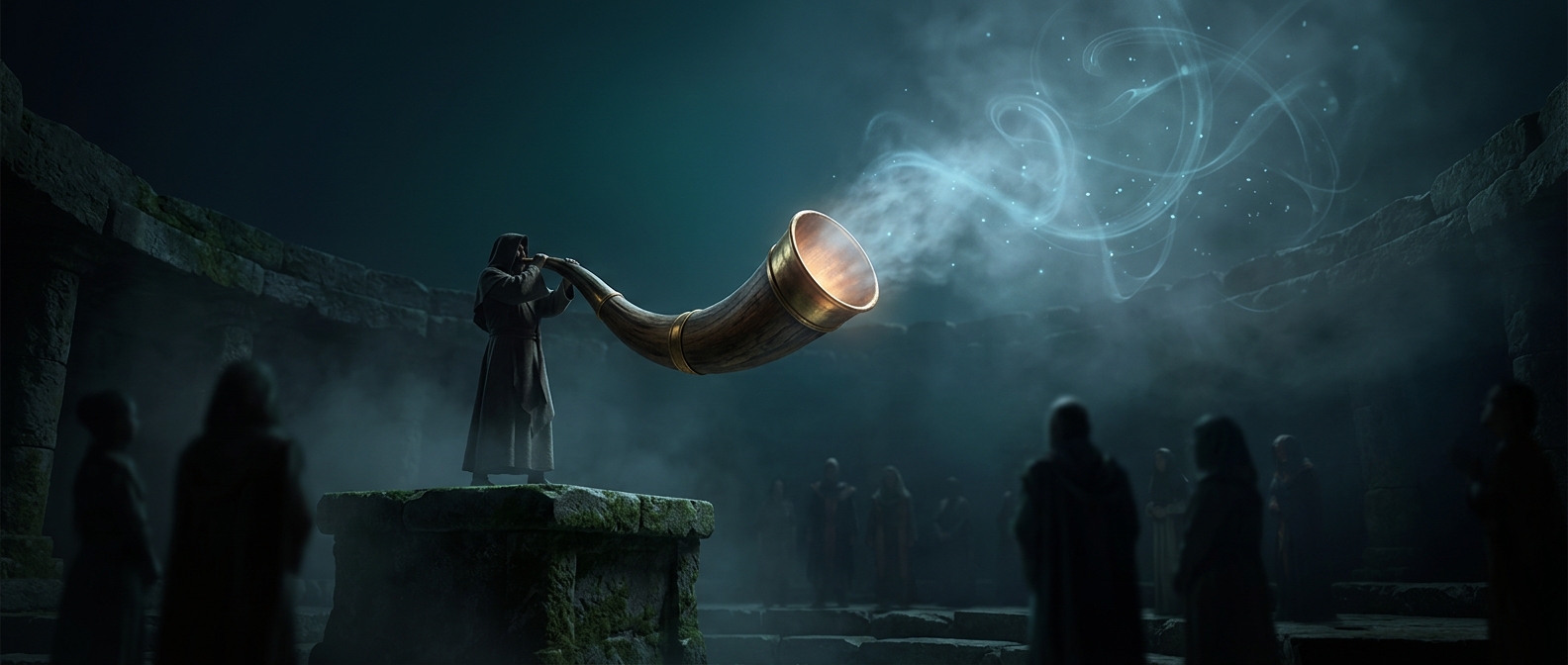
A shofar is a wind instrument made from a hollowed animal horn, most often a ram’s horn, and it has no keys or finger holes. The player presses their lips to the narrow end and makes them vibrate, much as a brass player does. The horn shapes and amplifies those vibrations, producing a raw, uneven tone rather than a smooth musical note.
That sound is part of the instrument’s purpose. In Jewish tradition, the shofar is used especially during the High Holy Days, including Rosh Hashanah, the Jewish New Year. Its blasts are not a spoken announcement or a tune to follow; they create a moment of attention within the service.
A signal that invites reflection
The shofar’s sound is commonly understood as a call to awaken spiritually: to pause, examine one’s actions, and consider the year ahead. That meaning comes from religious tradition, not from any special physical property of the horn. Its forceful, unmistakable tone gives the ritual a signal that words alone might not provide.
The blasts are sounded in prescribed patterns, with longer, wavering, and broken notes. Their contrast makes the sequence recognizable even to listeners who do not know the prayers. The instrument turns a brief breath into a communal cue: the service has reached a moment meant to be heard, not merely read.