A joke built to look like a real coin
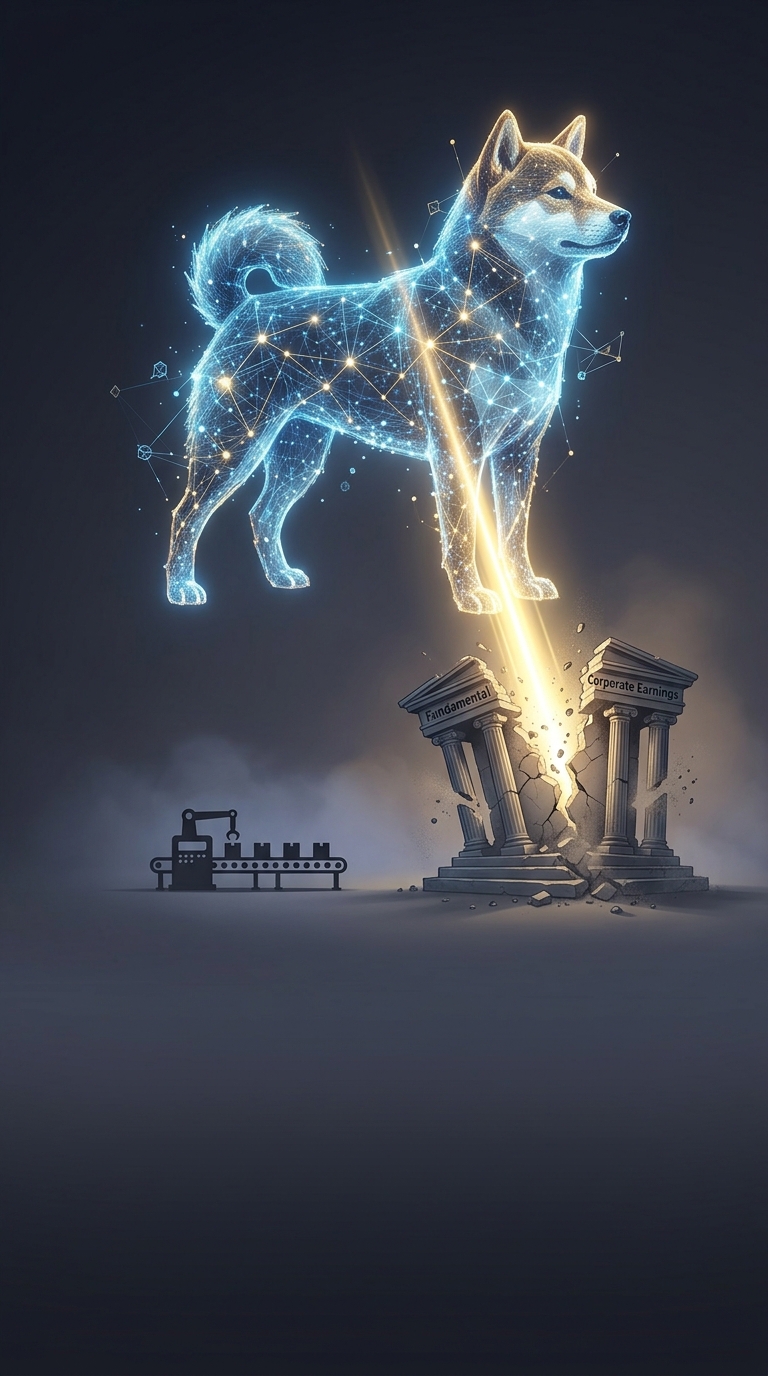
The Shiba Inu meme gave Dogecoin an identity that was deliberately less solemn than the language of finance surrounding cryptocurrencies. Underneath the joke, however, it still behaved like a tradable digital asset: people could hold it, send it, and buy or sell it on markets. The technical barrier was low enough that its creators could assemble the software in a few hours, but making a coin easy to create did not make its future value easy to predict.
That contrast was central to the joke. In a market where new digital assets could attract attention and money with little more than a compelling pitch, a coin named after an internet dog made the speculative atmosphere itself part of the punch line.
How a joke acquires a price
A cryptocurrency’s market price is set by trades between buyers and sellers. If buyers are willing to pay more, the quoted price rises; if enthusiasm ebbs, it can fall. The market capitalization—the headline figure often used to describe a coin’s size—is generally calculated by multiplying its current price by the number of coins counted as circulating. It is not a measure of how much cash has been invested: a relatively small amount of trading can move the quoted price, which then changes the value assigned to every coin in that calculation.
For a meme-based asset, attention can become part of the economic engine. The joke makes the coin memorable and easy to share; that visibility can bring in more buyers. If people expect others to keep buying, they may pay more in anticipation of future demand. But the same loop can reverse when attention or confidence fades, because the coin’s market price depends on what buyers will pay rather than on the joke’s original intent.
When the punch line outgrew its makers’ expectations
The creators expected the experiment to disappear. Instead, trading carried it far beyond its playful origins, and its market capitalization eventually exceeded $80 billion. That figure captures how large the market’s collective valuation became—not a pile of money waiting to be withdrawn, nor proof that the creators had planned a lasting financial product.
The striking consequence is that a joke can become economically consequential without ever becoming serious in its design. Once enough people treat an asset as worth trading, their shared expectations can give it a price that its creators never intended.