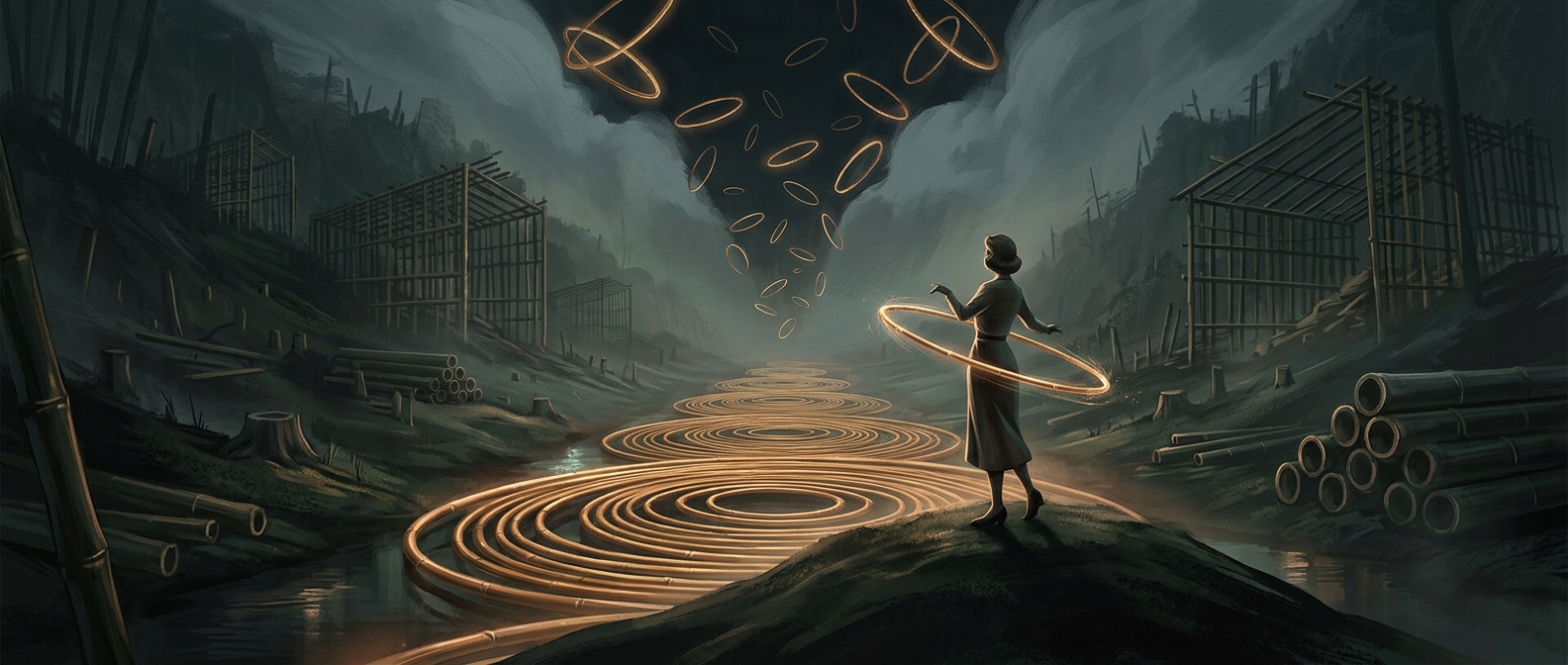
A simple toy created a supply problem
A hula hoop looks like one unremarkable ring, but a sudden rush to make them meant finding enough material for millions of rings. Early manufacturers used bamboo, a natural material that had to be obtained in large quantities and shaped into hoops. When the fad surged, demand rose faster than available supplies could comfortably meet it, and manufacturers began importing bamboo to keep production going.
The strain came from the mismatch between a short-lived craze and a material supply that could not instantly expand. More hoops meant more bamboo to source and prepare; a spike in popularity could therefore ripple backward from toy shops to suppliers.
Plastic changed the bottleneck
Manufacturers eventually switched to extruded plastic. Extrusion is a process that pushes softened plastic through a shaped opening to form a long, continuous tube. That tube could then be made into hoops, allowing factories to rely less on scarce bamboo and more on a material they could produce in a controlled stream.
The change was more than a different look or feel. It altered how quickly hoops could be made: instead of depending on a sudden influx of a natural material, production could draw on a repeatable manufacturing process. A toy craze had briefly pressed on the bamboo supply—and helped push its makers toward mass-produced plastic.