The host’s choice carries information
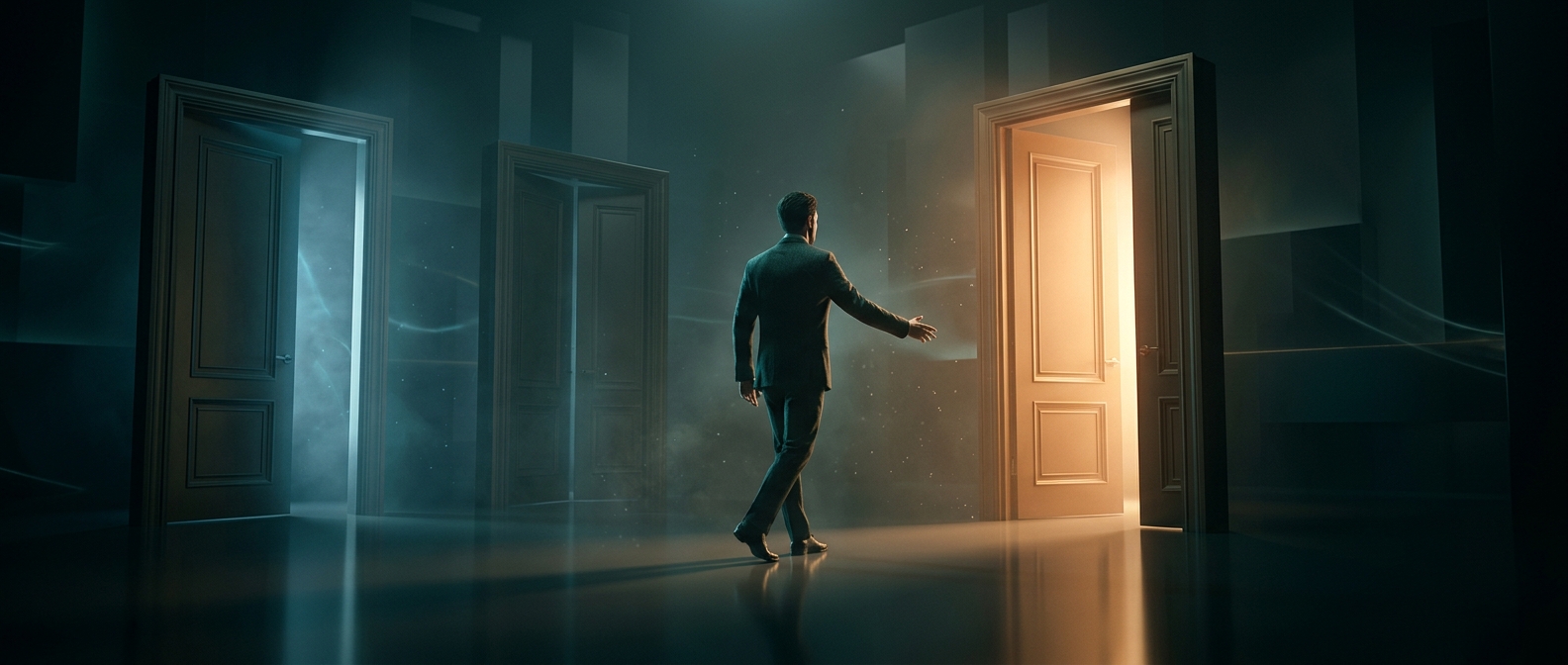
The apparent symmetry after one door opens is misleading. The two closed doors did not arrive at that moment by chance: one is the door you picked, while the other is the door left after a host who knows where the prize is deliberately reveals a losing door.
At the start, your pick has a 1-in-3 chance of being right. The two doors you didn’t pick together hold the other 2-in-3 chance. When the host opens one of those doors and shows it is a loser, that original 2-in-3 chance concentrates on the one unopened door among them. The host has removed a losing option, not erased the uncertainty attached to your first choice.
Why the odds are not 50–50
There are two meaningful cases. If your first choice was right—a 1-in-3 chance—switching loses. If it was wrong—a 2-in-3 chance—the host must open the other losing door, leaving the prize behind the door you can switch to. So switching wins in the more common case.
This result depends on the host following the stated rules: knowing where the prize is, always opening a losing door, and always offering you the chance to switch. A host who opens a door at random, or offers a switch only in certain situations, may provide different information. The key is not simply that one door has disappeared; it is that an informed host chose which door to remove.