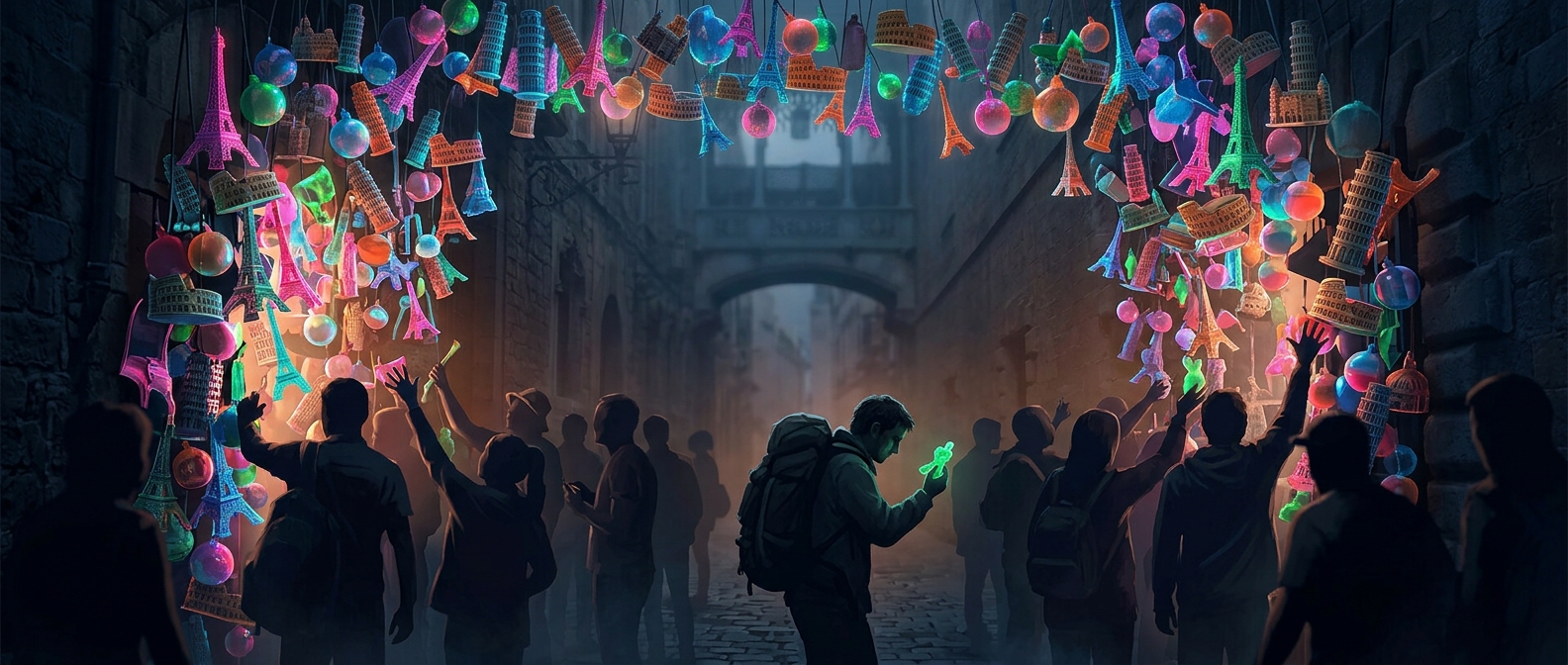
Why Souvenir Stalls Cluster Near the Sights
A crowded attraction puts visitors in a particular mood: they have just seen something memorable and want a small object to carry that memory home. Shops and stalls nearby can turn that impulse into a quick purchase, especially when travelers are moving with a group or have little time to compare options. The souvenir’s appeal is often less about craftsmanship than about its immediate connection to the place.
How a Trinket Gets So Cheap
Low prices usually depend on keeping each item inexpensive to make and easy to sell in volume. Lightweight plastic is simple to shape, color, and package, and a familiar design can be produced repeatedly. A small price also lowers the hesitation at the point of sale: a visitor may accept a modest risk of poor quality in exchange for a souvenir bought on the spot.
That tradeoff can be easy to miss in a busy shop. Thin parts, weak joins, and decorative pieces made for display rather than regular handling may not withstand a packed suitcase or much use. The price can be a clue to what the item is built to do—not a guarantee that it will last.
A Keepsake With a Short Shelf Life
For travelers, the practical question is whether the object is meant to be used or simply to mark a moment. Checking how firmly its pieces are attached and whether it feels sturdy can help set expectations before buying. A cheap souvenir may still serve as a reminder of a trip, but its most durable part may be the memory it represents, not the plastic itself.