Why the pineal gland attracts spiritual meaning
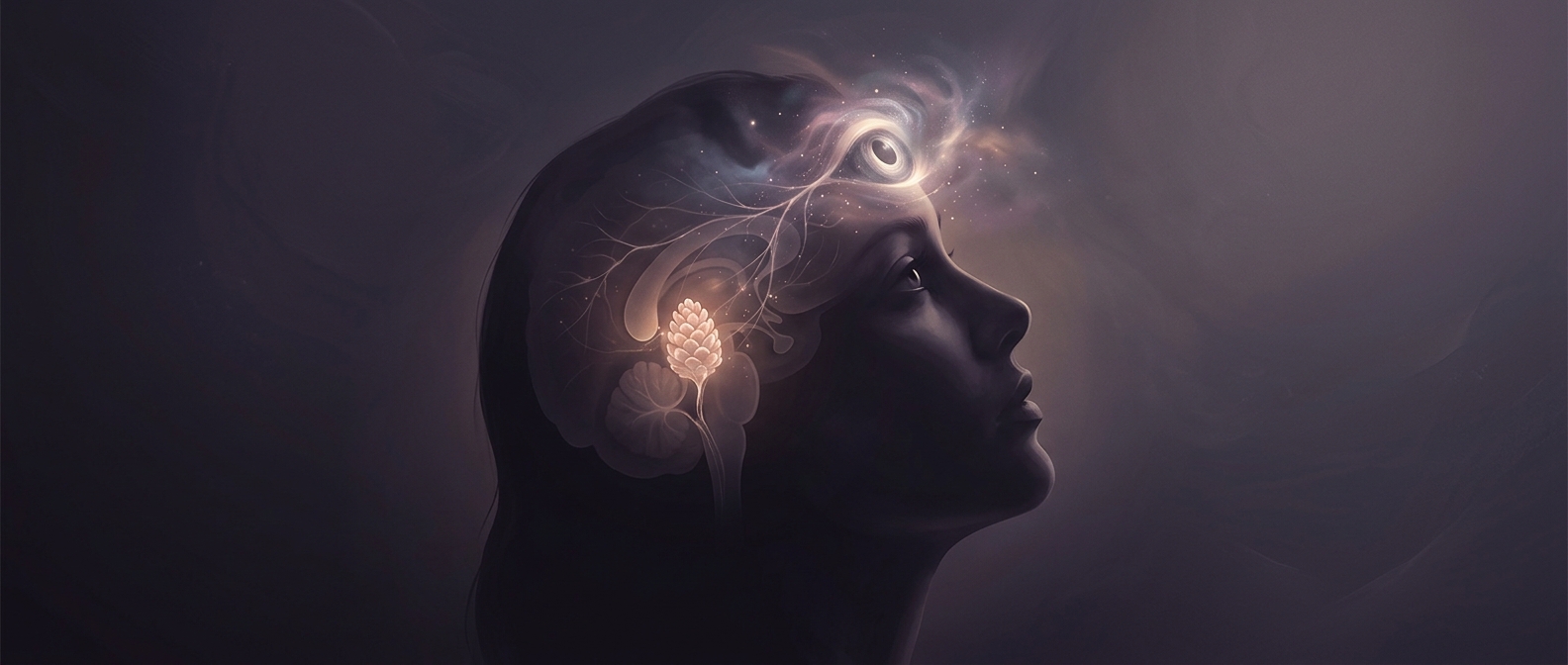
The pineal gland is a small structure near the center of the brain. Its best-established role is producing melatonin, a hormone that helps coordinate the body’s sleep–wake timing as light and darkness change. Because it responds to the day-night cycle and sits hidden inside the head, it can readily invite a symbolic interpretation: an inner point associated with awareness, dreams, or perception beyond ordinary sight.
In spiritual teaching, calling it a “window” usually expresses that interpretation. The image suggests that inward attention might open onto a wider reality—not that the gland is a literal opening or that melatonin gives someone access to another realm. Different teachers may attach different meanings to the same image, so it is best understood as a belief or metaphor rather than a single established doctrine.
One organ, two kinds of explanation
Biology describes what the gland does in the body; spiritual accounts give it significance within a view of consciousness or the sacred. Those explanations answer different questions. The biological account can explain why the gland is linked to darkness and sleep, while the spiritual account uses that connection to make a claim about inner life.
That contrast is what makes the image memorable: a tiny organ involved in the body’s nightly shift becomes, in some teachings, a symbol of looking inward for insight.