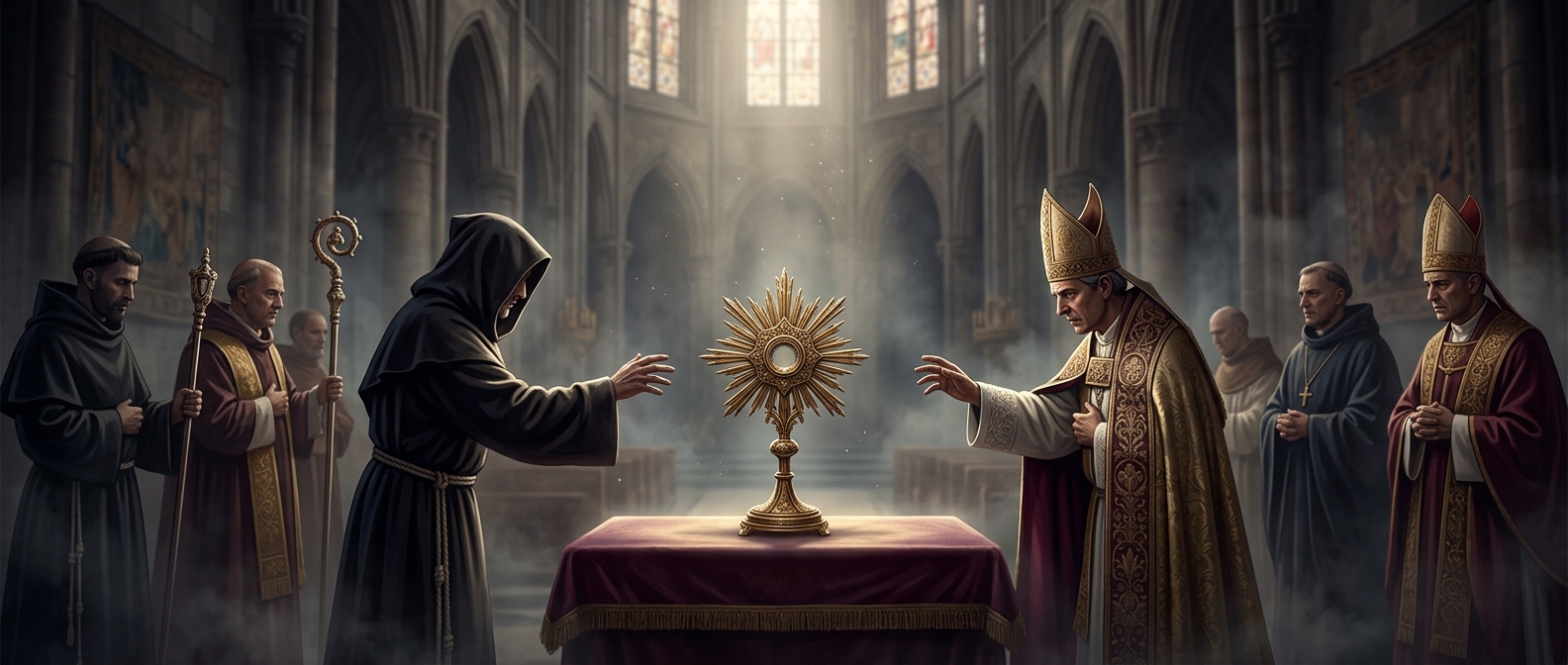
Why the foreskin became a relic
In Christian tradition, Jesus was circumcised as an infant, following Jewish custom. That created an unusual question for medieval Christians: if his body later ascended to heaven, what became of the piece removed at his circumcision? Some believers treated it as a sacred relic—the physical remains of a holy person, valued for its connection to that person and sometimes believed to carry spiritual power.
Relics mattered in medieval religious life. Churches displayed them for prayer and pilgrimage, and possessing a celebrated relic could draw visitors and prestige. A relic linked directly to Jesus was especially potent, so claims to possess his foreskin could put churches and religious communities in competition.
More than one claim, no way to settle it
The object was often called the Holy Prepuce; prepuce is a formal word for foreskin. Different churches and communities at various times claimed to hold it. Such rival claims were part of a wider relic culture in which sacred remains circulated, were divided, or were attributed to particular holy figures. For an object said to come from Jesus, however, there was no independent method to establish its identity.
That uncertainty did not make the relic meaningless to the people who revered it. Its importance rested on religious tradition and devotion, not on a test that could prove its origin. The rivalry was therefore about more than ownership of an object: it concerned which community could offer worshippers a tangible connection to the life of Christ. One of the most intimate episodes in the story of Jesus became, for medieval churches, a source of spiritual distinction—and competing claims.