Digestion as a Second Cooking
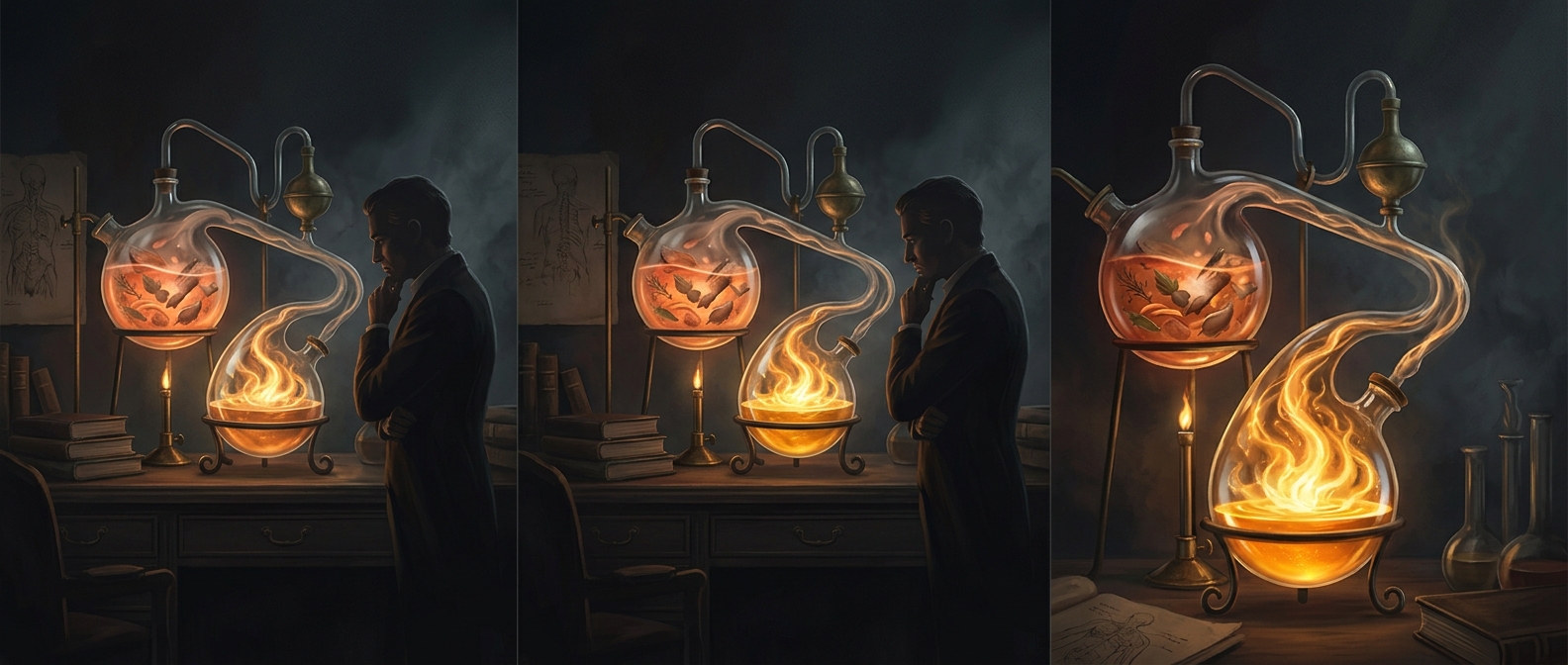
Some early medical and esoteric accounts treated digestion as a kind of cooking. Food was first prepared over an ordinary fire; once swallowed, it entered the stomach, where the body’s own heat was thought to soften and transform it again. The “second oven” was a metaphor for this internal work, not a claim that the stomach literally boiled like a pot.
From Food to Bodily Nourishment
The model helped explain how a meal could become something the body could use. In this way of thinking, digestion was not simply food being ground up or passed along: it was a process of concoction, the gradual transformation of raw material by heat. A meal’s change inside the body seemed comparable to ingredients changing as they simmered in a kitchen.
That comparison made the stomach an active organ in a larger story of nourishment. It also gave thinkers a way to reason about why different foods might digest differently: ingredients that were dense or difficult to soften could be imagined as needing more internal “cooking.” The kitchen metaphor made an invisible bodily process easier to picture—and turned an everyday meal into a miniature act of transformation.