Why Descartes singled out the pineal gland
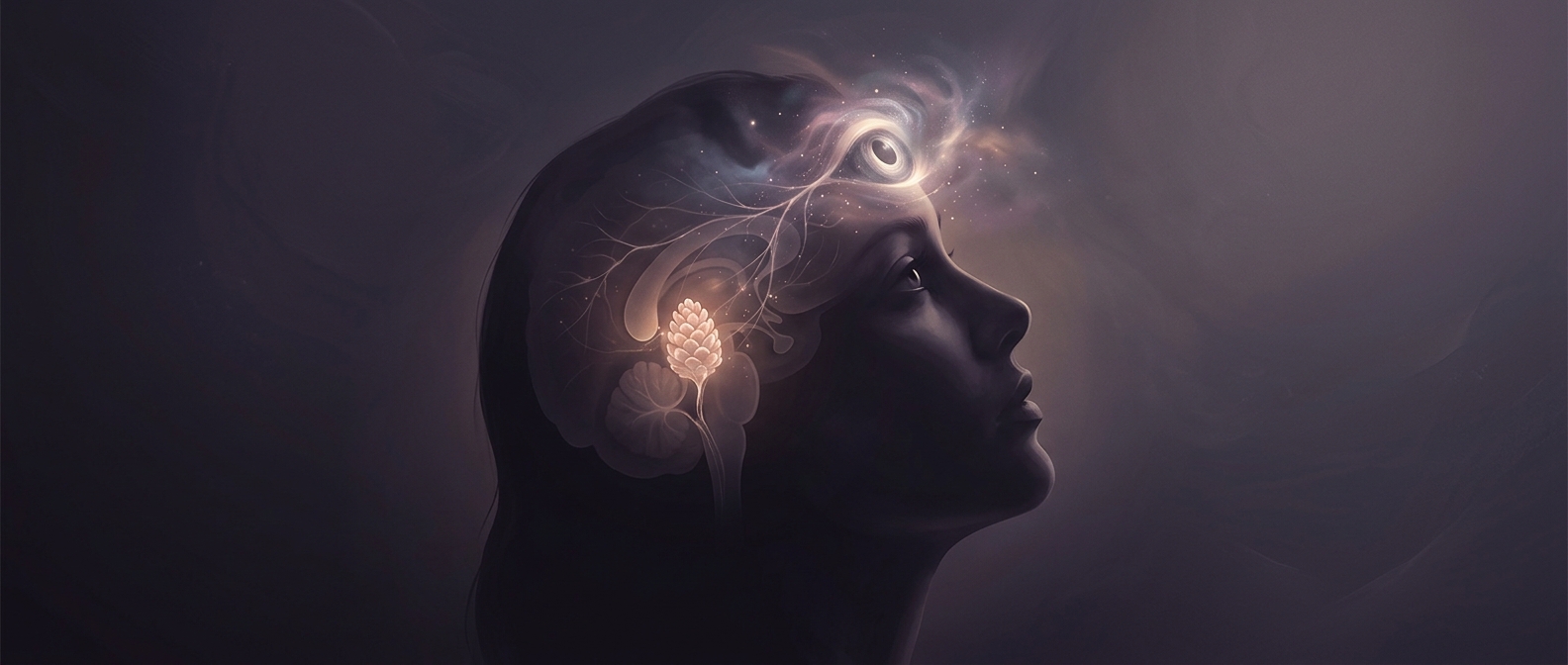
In the 17th century, René Descartes tried to explain how an immaterial mind could influence a material body. He placed their point of contact in the pineal gland, a small structure deep in the brain. One reason it attracted him was that it appeared to be a single, central structure, unlike many brain parts that occur in pairs. He thought a unified soul needed a single place to act on the body.
Descartes did not mean that the gland was the soul. Rather, he imagined it as the body’s control point: the soul could move it, and its movement could redirect physical processes in the brain.
From thought to muscle movement
Those processes involved what Descartes called animal spirits. The phrase sounds supernatural now, but he meant extremely fine, material particles—produced from blood and carried through the brain and nerves. In his model, sensory signals altered the movement of these spirits; the soul could also shift the pineal gland to guide them. The spirits then traveled through nerves and made muscles move, much as pressure in a system of tubes can drive motion.
This account offered a mechanical explanation for bodily actions while leaving room for a nonmaterial mind to initiate them. It was an ambitious attempt to bridge two kinds of explanation: physical causes inside the body and conscious thought.
Where the model meets modern anatomy
The pineal gland does have a real biological role: it produces melatonin, a hormone involved in regulating the body’s daily sleep-wake rhythm. Modern anatomy does not support Descartes’ proposed traffic of animal spirits or the gland’s role as a junction between soul and body. His choice of the gland reflects the anatomical knowledge and philosophical problem of his era, not a hidden function that science later confirmed.
The enduring puzzle in Descartes’ proposal is not where the soul sits, but how a thought—something experienced from the inside—can lead to a physical action, such as deciding to lift a hand and then lifting it.