The Heart as the Body’s Inner Sun
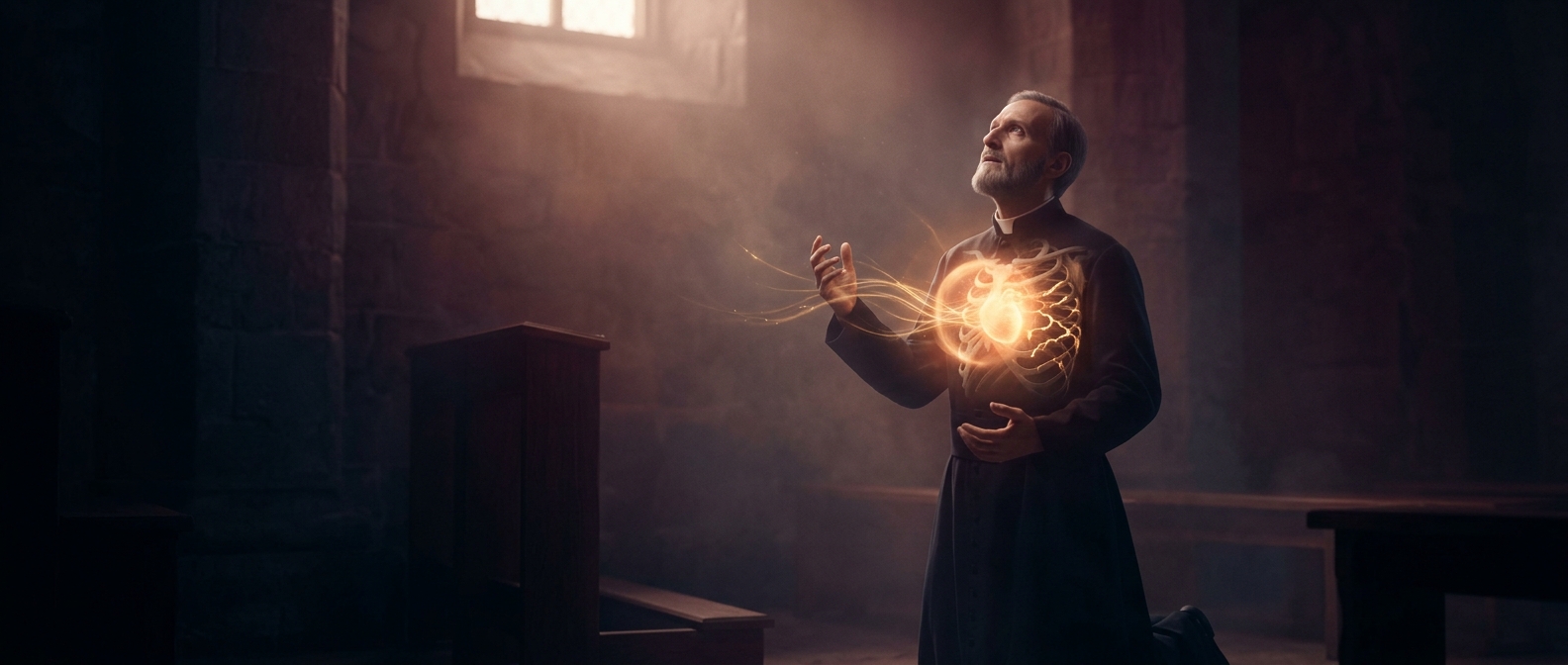
In some esoteric philosophies, the heart was understood as more than an organ that kept blood moving. It was the body’s central source of life and warmth, corresponding to the sun’s place in the cosmos. The comparison belonged to a worldview in which patterns in the human body and the heavens could reflect one another.
Calling the heart a “literal sun” captures the strength of that correspondence: the heart was treated as an active, life-giving center, not just as a poetic image. “Literal” here does not mean that scholars thought the organ was a star made of fire. It means that the parallel was part of how they explained the body’s underlying order.
A Shared Pattern of Center and Motion
The analogy joined two visible rhythms. The sun appeared to govern the day and warm the world; the beating heart made life perceptible within the body. Both could therefore be imagined as centers whose activity sustained everything around them. In this way of thinking, the body was a small-scale reflection of a larger, ordered cosmos.
That framework also changed how the heart’s importance could be understood. Rather than viewing it only as one part among many, a scholar could see it as the point from which animation and bodily vitality radiated. The idea is worth remembering because it shows how earlier thinkers used the heavens not merely as scenery, but as a model for explaining what made a living body alive.