The track was meant to solve a farm’s worst-season problem
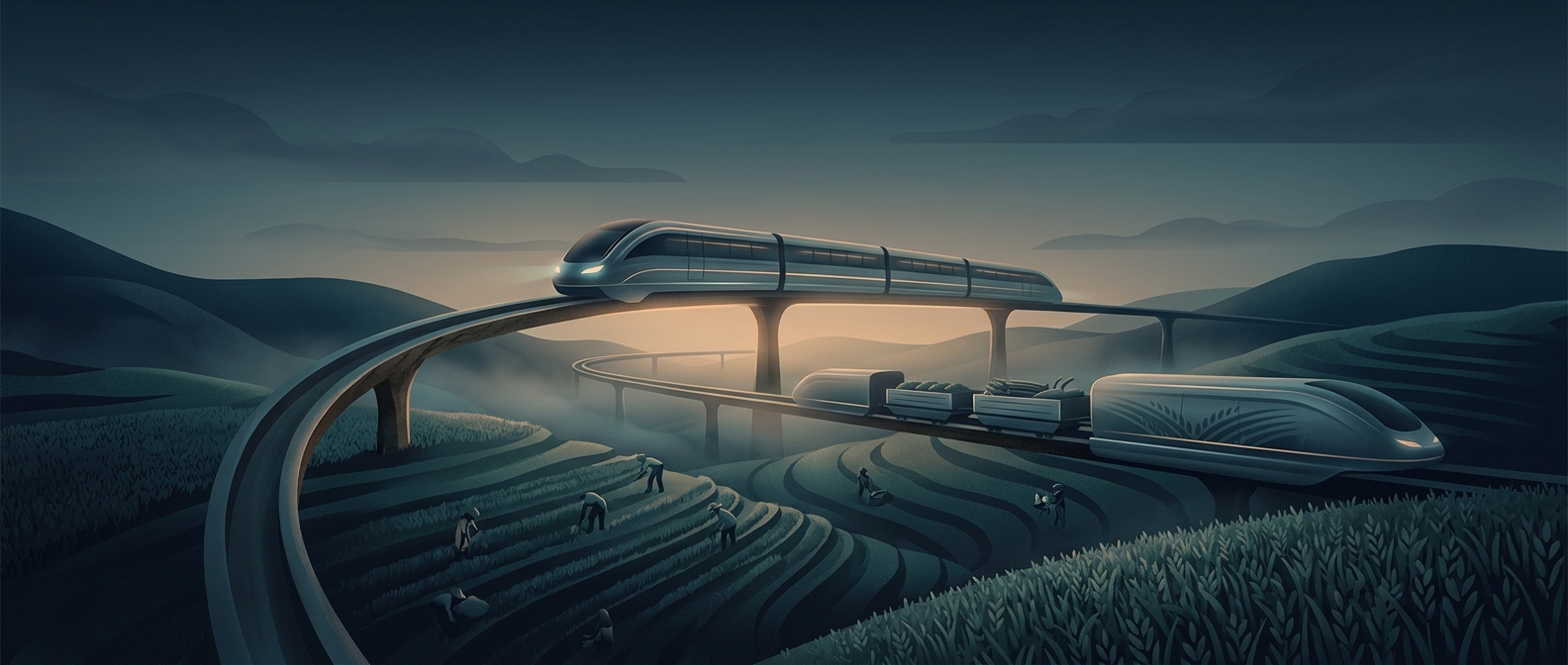
A field that was easy to cross in dry weather could become a bottleneck after rain. Wheels sank, animals struggled to pull loads, and moving harvested crops across soft ground took time and labor. An elevated track offered a different route: carry the load above the mud instead of trying to make the ground firm enough for carts.
Early monorail proposals treated the rail as a narrow, raised path for farm goods. A wagon or carrier could travel along it while the land below remained available for planting, drainage, or ordinary farm work. The appeal was practical, not futuristic: keep crops moving when the field itself was difficult to cross.
One rail changes the engineering bargain
A conventional railway spreads a vehicle’s weight across two rails. A monorail concentrates its support on one, so the vehicle needs a way to stay aligned and balanced—often through wheels or guides arranged around the rail. That arrangement can make the track compact, but it also puts more responsibility on the carrier’s design and on the supports holding the rail steady.
For a farm, the tradeoff was between building a dedicated track and repeatedly coping with unreliable ground. A raised line could bypass mud, but it required structures and equipment that a simple cart did not. The idea therefore belonged to a broader search for ways to move goods through awkward terrain, not just to later visions of sleek urban transport.
That origin makes the monorail’s later futuristic image a little misleading: its earliest promise was less about escaping the city than about getting a crop from one side of a wet field to the other.