Why staying dry once required money
A useful umbrella had to do more than cover someone’s head. Its canopy needed to shed rain, its frame had to hold its shape in wind, and its handle and joints had to survive repeated opening and closing. Making those parts work together required materials and skilled handwork—costs that made an umbrella a substantial purchase rather than an everyday accessory.
A practical object that also displayed status
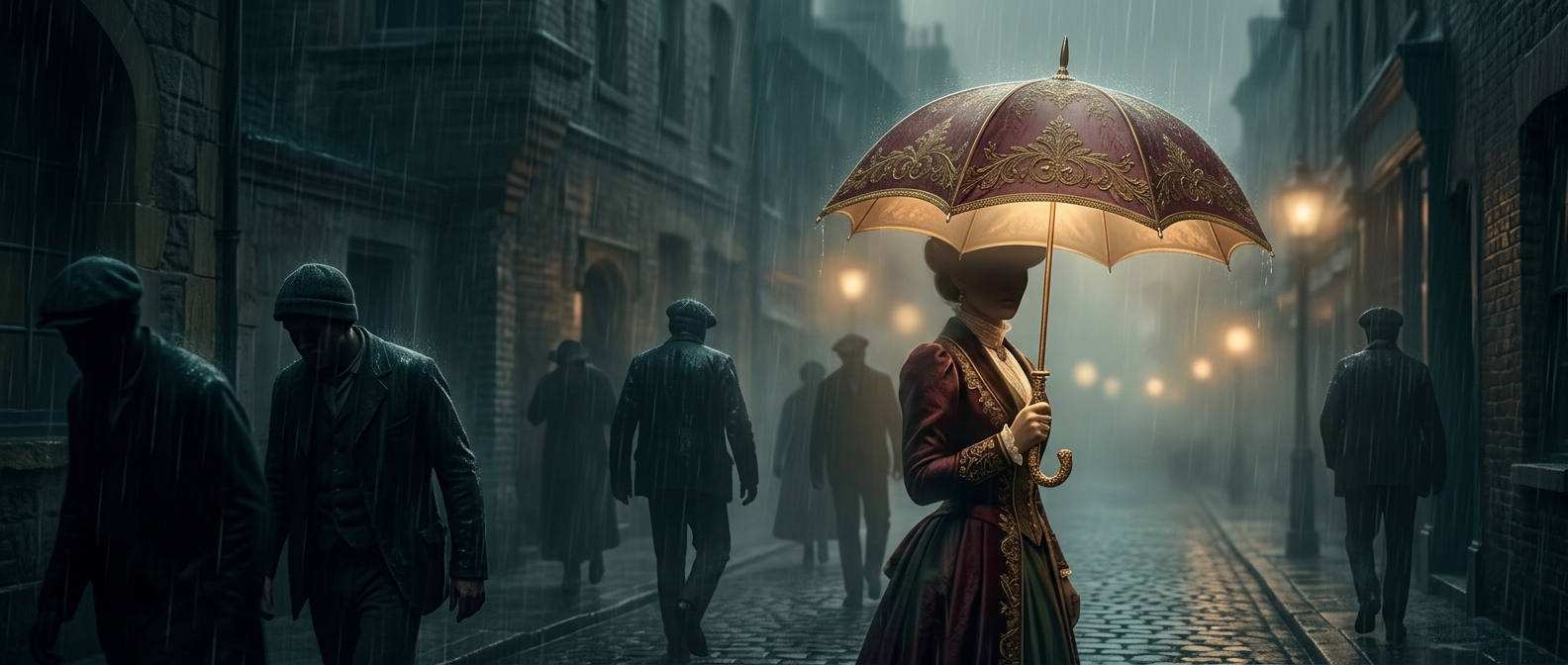
Before inexpensive, standardized manufacturing made umbrellas widely available, a well-made one could signal that its owner could pay for personal comfort. Carrying one also meant having a convenient way to protect clothing and hair from rain, instead of simply enduring the weather or seeking shelter. That mattered especially in places where appearance and well-kept dress carried social weight.
The object’s visibility strengthened the signal: unlike many household comforts, an umbrella was carried in public. Its owner could be seen arriving protected while others walked through the rain.
From costly craft to ordinary equipment
As production became more efficient and umbrellas easier to buy, protection from rain stopped being a privilege reserved mainly for people with money. The change was not just about fashion. It turned a crafted possession into routine equipment—something people could keep by the door and take along when the sky looked uncertain.
That shift is why an umbrella can seem so unremarkable today: a once-expensive way to command a little shelter now folds into a bag.