Portable darkness for the well-to-do traveler
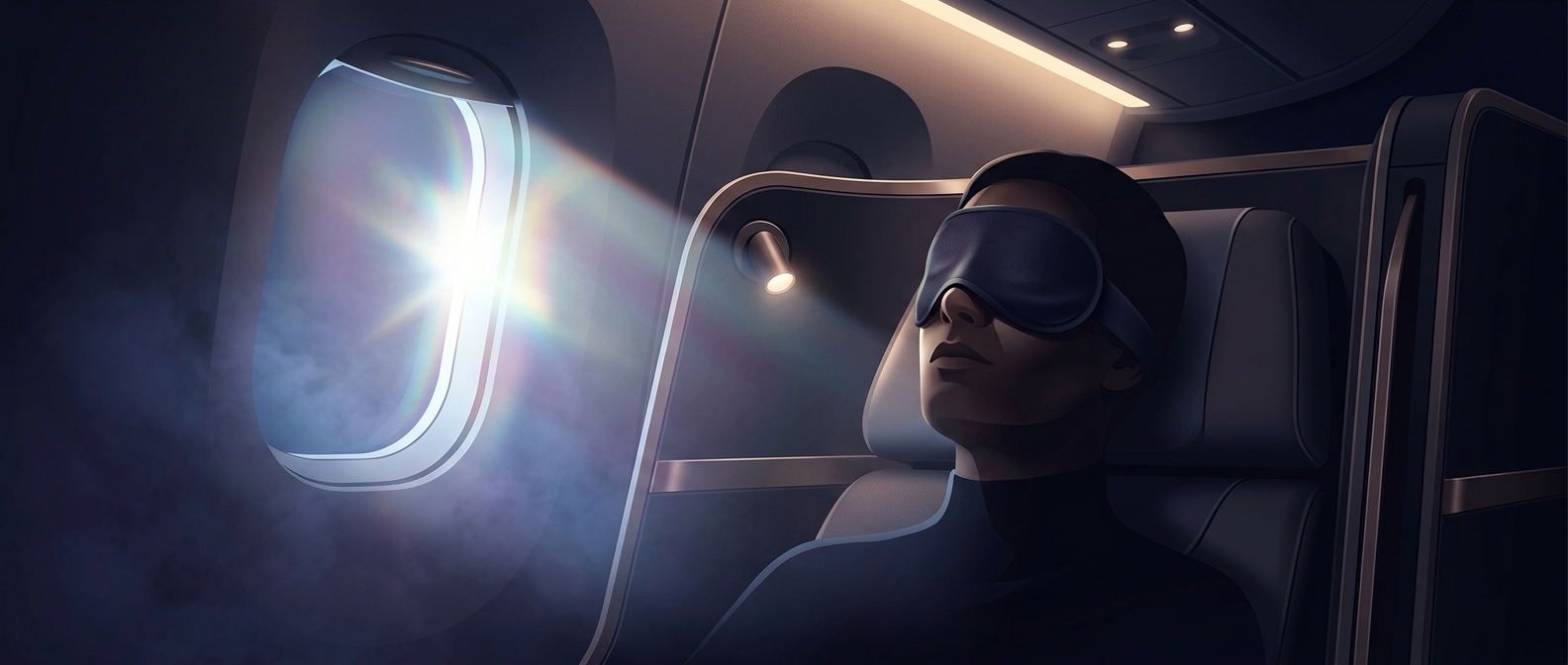
In the 1930s, an eye mask offered travelers a small version of a comfort that was hard to guarantee on the move: darkness. Unlike curtains or a private room, a mask traveled with its owner and covered the eyes directly, making it useful when a journey’s light and surroundings were beyond the passenger’s control.
That practical function also carried a social meaning. A mask could help shield a sleeper from other people’s gaze, turning rest into a more private experience even in shared travel spaces. Its appeal was not simply that it blocked light; it suggested that the traveler could bring personal comfort and seclusion along.
A small object, marketed as luxury
The mask’s association with wealthy travelers came from how it was presented: as a refined travel accessory for people who expected rest and privacy away from home. It made an ordinary need—closing out light—feel like part of a carefully appointed journey.
That positioning helps explain why eye masks became popular as luxury goods rather than merely being treated as practical coverings. They offered a portable boundary between the traveler and the outside world: modest in size, but tied to the promise of sleeping undisturbed wherever the journey led.