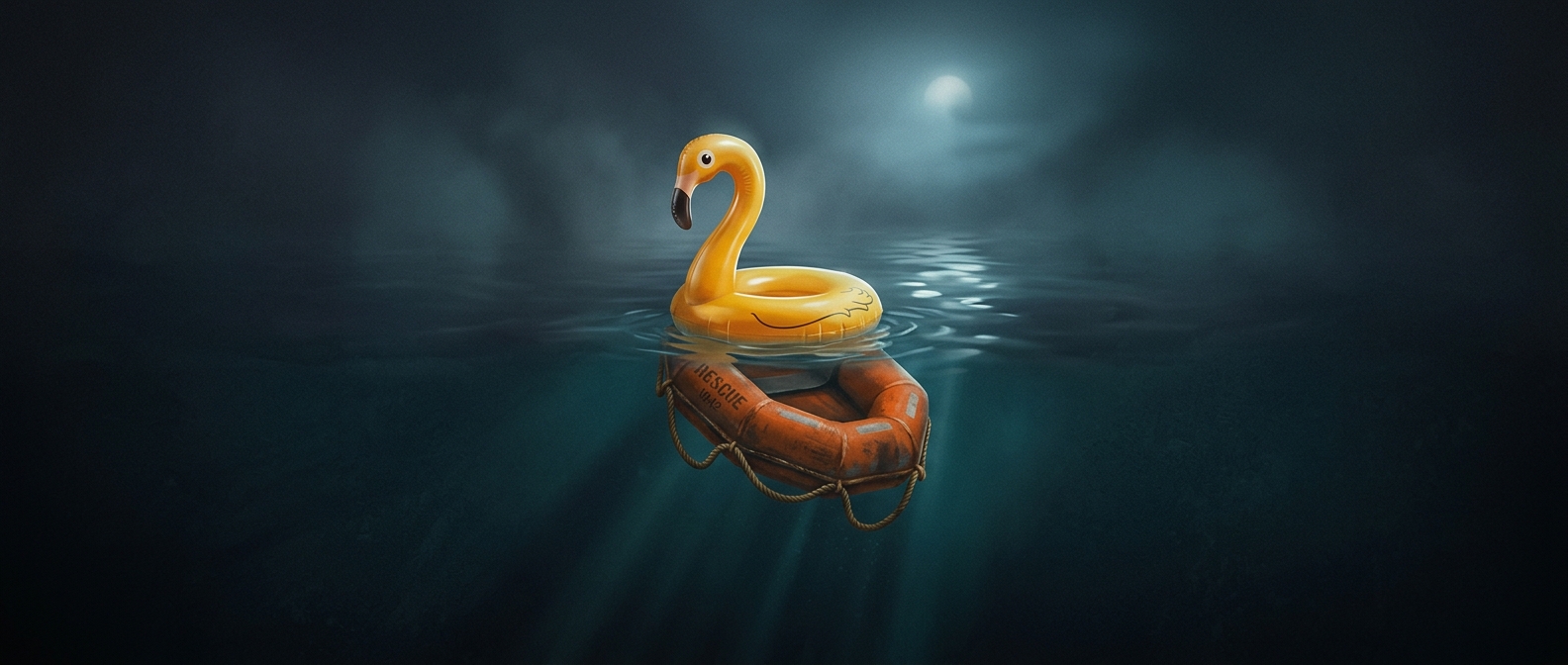
From emergency equipment to leisure gear
An inflatable raft solves a practical problem: it must provide buoyancy when needed, yet fold down small enough to carry before use. Military emergency rafts helped develop the design approach behind later inflatables, including sealed air chambers, dependable valves, and flexible materials that could be packed and inflated quickly.
Those features translate neatly to a pool. Air trapped inside a float displaces water, creating the upward force that keeps the float—and its rider—at the surface. When the air is let out, the toy becomes light and compact, much easier to store or take on a trip than a rigid platform.
A shared design, a different job
Pool floats adapt the basic idea for comfort and fun. Their shapes can be broad, contoured, or built with raised edges; multiple chambers can help a float keep its form. But the resemblance is about design principles, not an equal level of protection. A pool toy is made for recreation, not for keeping someone safe in an emergency.
That shift—from equipment meant to be ready in a crisis to something brought out for a sunny afternoon—helps explain the float’s appeal: it borrows the convenience of a raft while turning portability into part of the pleasure.