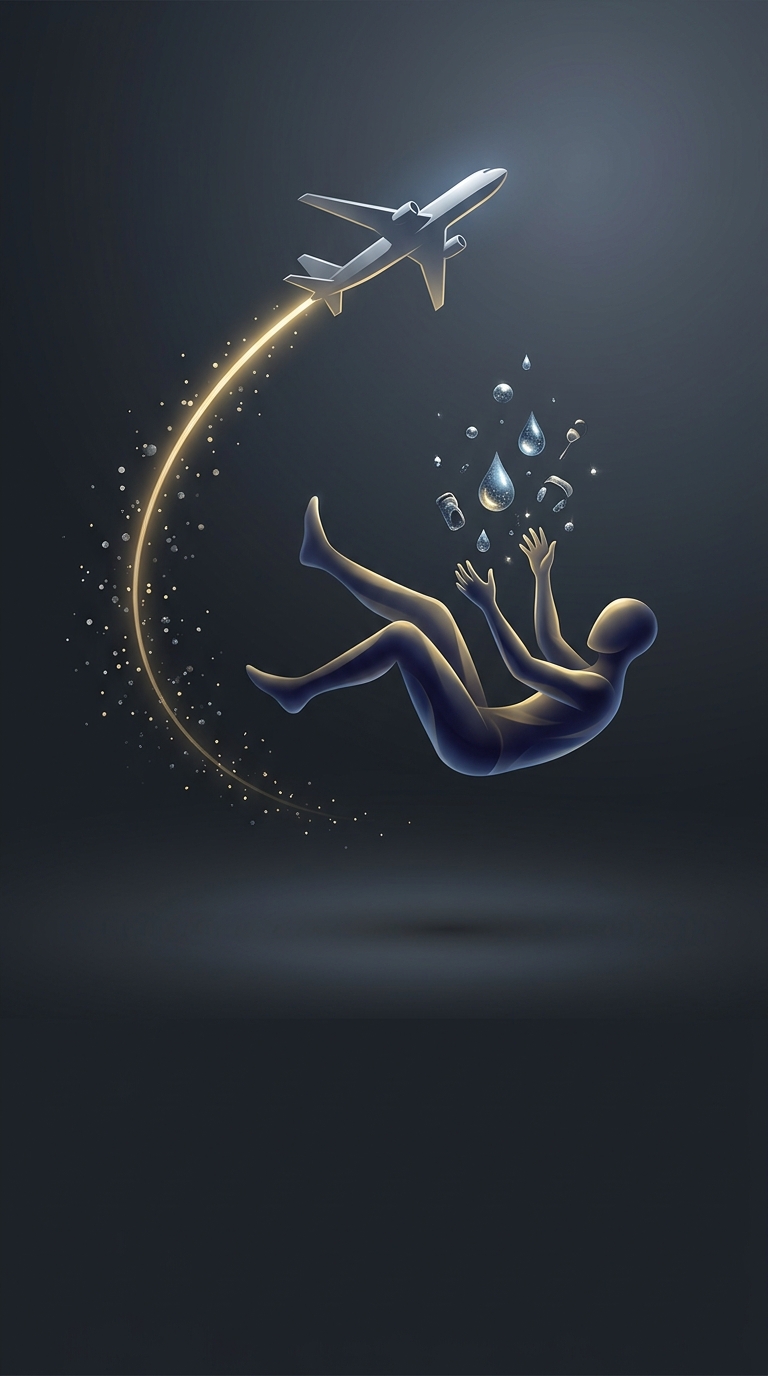
How a passenger plane creates weightlessness
The aircraft does not switch gravity off. Instead, its pilots fly a carefully timed parabola, a curved path like the arc of a thrown ball. The plane first climbs, then tips over the top and descends. During the central part of that arc, the aircraft and everything inside it are falling together under gravity.
Because the floor is no longer pushing up against passengers in the usual way, they feel weightless. Gravity is still acting; the sensation comes from sharing the aircraft’s free fall. When the pilots pull out of the dive, the floor presses against passengers again, ending the float.
Why the floating comes in short bursts
Each arc provides only a brief stretch of weightlessness before the plane must recover and begin another maneuver. The transition matters: passengers move from feeling heavier during the pull-up, to floating, and then back to feeling heavier as the plane levels out. A sequence of parabolas gives travelers repeated chances to float, but not one continuous spell.
The route and timing are shaped by the need for open airspace and room to perform the maneuvers safely. These flights therefore offer a controlled experience in the sky, not a trip into space—and they depend as much on the pilot’s precise changes in motion as on the aircraft itself.
Why the motion can upset stomachs
The inner ear senses changes in movement, while the eyes may see a cabin that seems steady. When those signals do not match, the brain can interpret the mismatch as a reason for nausea. Repeated shifts between climbing, floating, and pulling out can make that conflict especially noticeable.
That is the tradeoff behind the experience: the same repeated motion that creates the sensation of floating also makes it difficult to keep a stomach settled. A passenger may spend the weightless interval drifting across the cabin, then brace for the next change in acceleration.