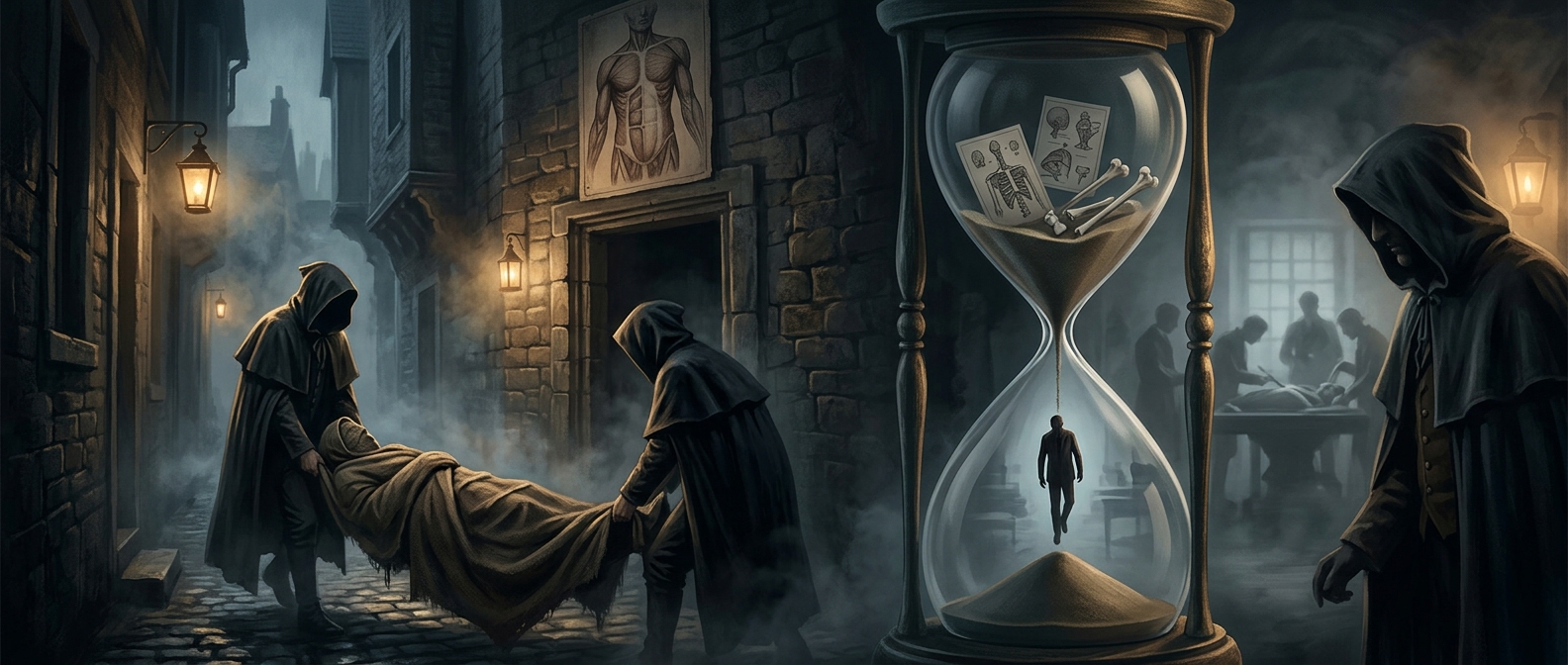
Why anatomy created a market for the dead
In early-19th-century Britain, medical students needed human bodies to learn anatomy by dissection. But the legal supply was severely limited: bodies for teaching generally came from people executed for serious crimes, and executions could not meet the schools’ demand. Grave robbers—often called “resurrectionists”—filled part of the gap by stealing newly buried corpses and selling them to anatomists.
That illicit trade depended on speed. A recently buried body was more useful for dissection than one that had decomposed, so buyers valued a fresh corpse. William Burke and William Hare bypassed even the graveyard: rather than waiting for someone to die and then robbing a grave, they killed people and sold their bodies.
From hidden crime to public scandal
The murders took place in Edinburgh in 1828. Burke and Hare targeted people who were vulnerable and unlikely to be quickly missed, then delivered the bodies to the anatomy school run by doctor Robert Knox. The arrangement turned a familiar black-market exchange into something far more disturbing: the supply chain no longer began at a graveside, but with murder.
The crimes came to light after the killing of Margaret Docherty, whose body was found before it could be sold. Hare gave evidence against Burke in exchange for immunity from prosecution. Burke was convicted and executed; Knox was not charged, though the case left his role in buying the bodies under a harsh public spotlight.
A new word for killing to conceal
Burke’s name became a verb: “to burke” meant to kill by suffocation, especially to obtain a body for dissection. The word captured the method associated with the murders, while later usage broadened it to mean suppressing or silencing something.
The scandal also sharpened the debate over how medical schools could obtain bodies legally. Britain’s Anatomy Act followed in 1832, widening the lawful sources available for dissection. It addressed the shortage that had helped sustain body snatching, though Burke and Hare’s crimes remain a stark reminder of what could happen when demand outran legitimate supply.