Why a farewell could hold up a French train
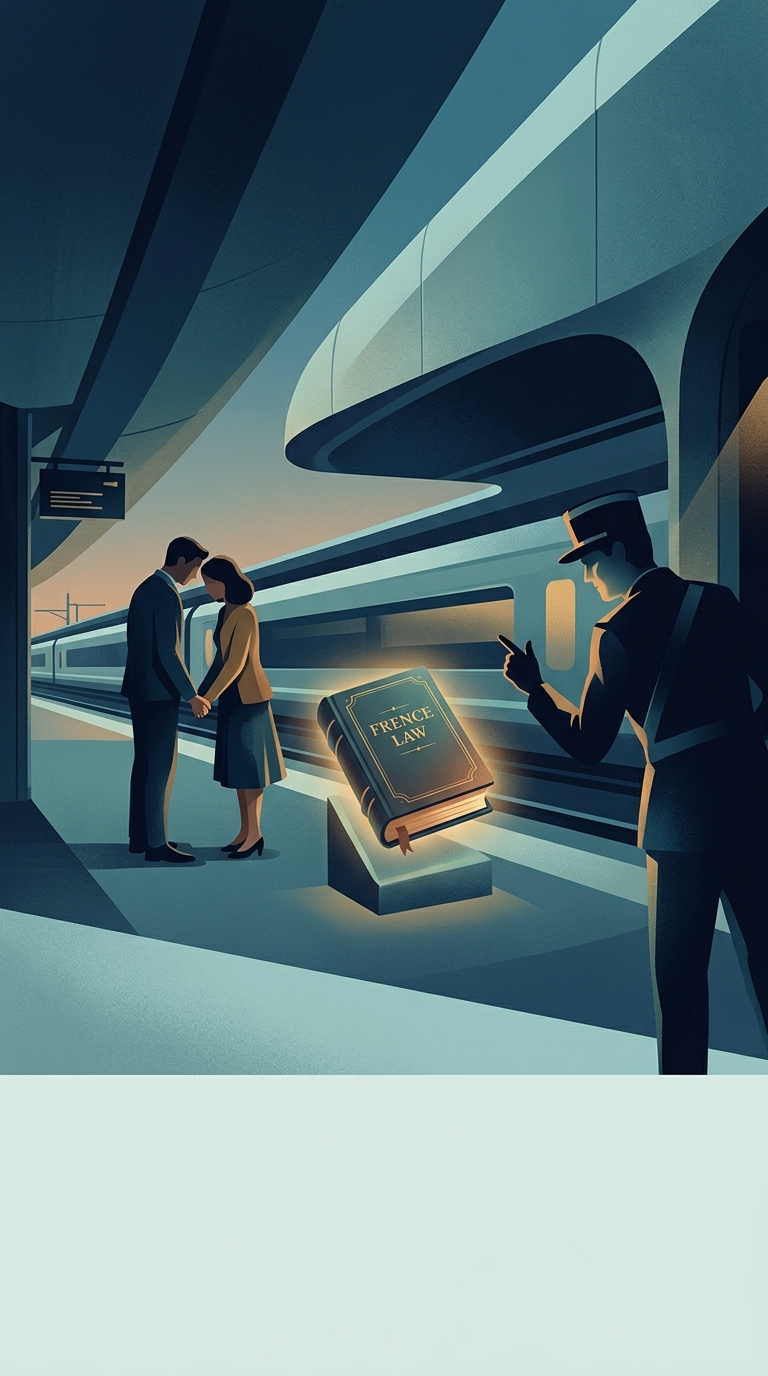
The story behind France’s 1910 station-kissing ban is less about romance than railway timing. A platform is a tightly managed working space: passengers must board, doors must close, and trains need to depart on schedule. When couples lingered in a last embrace, even briefly, they could obstruct other passengers or delay the departure process.
The restriction is often described as a law, but it is more accurately treated as a railway-station rule than as a broad criminal ban on kissing. Its practical target was lingering on the platform, where a personal goodbye could interfere with the train’s operation.
The platform was the problem
Railways had reason to keep farewells moving. A departure depends on many small actions happening in sequence, and a crowd gathering near a carriage can slow boarding or make it harder for staff to clear the platform. A rule against prolonged embraces turned a familiar nuisance into something railway employees could address before it became a delay.
That makes the anecdote a distinctly travel-minded bit of romance: the issue was not affection itself, but where and when it happened. Couples could still say goodbye; they simply had to do it without holding up the train.