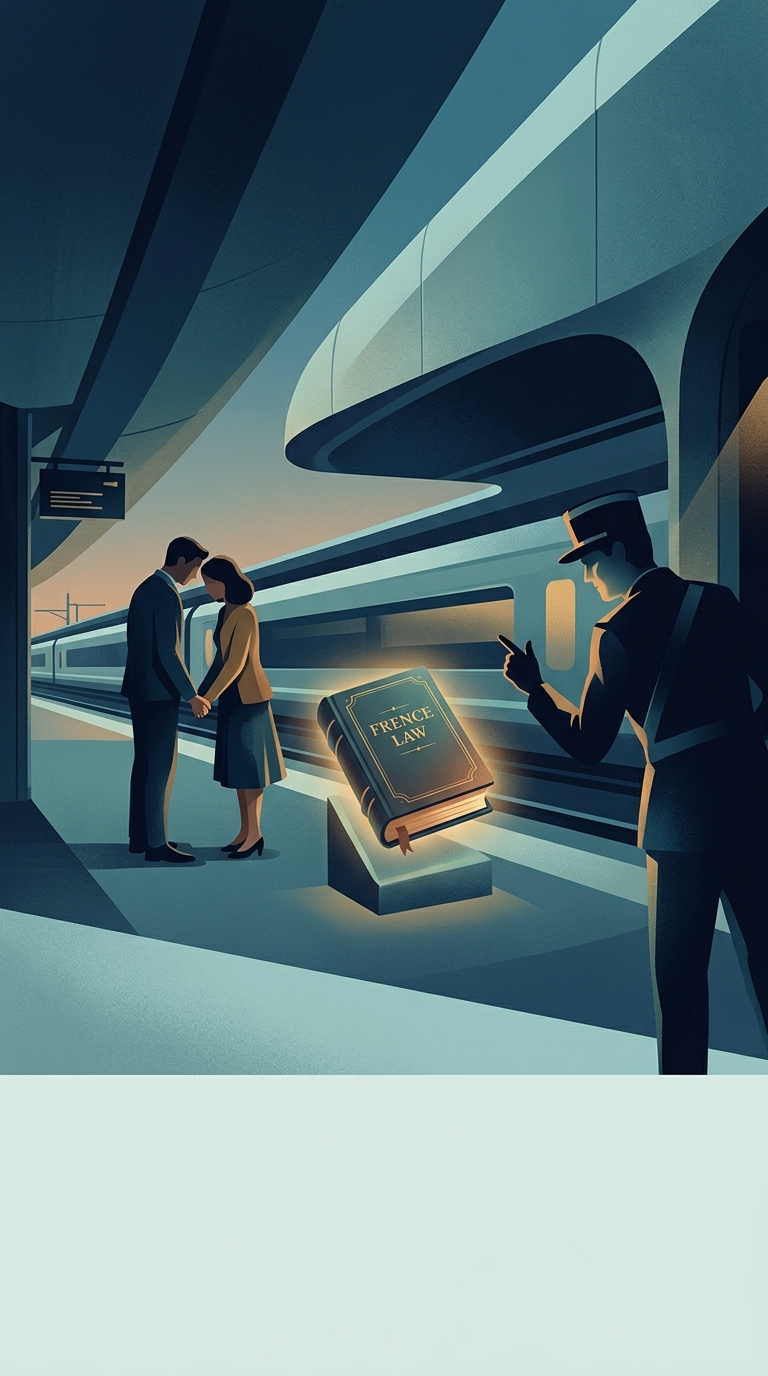
Why French stations once tried to hurry goodbyes
A crowded platform is part of a working railway, not just a place to wait. Trains arrive and depart on tight schedules, and passengers need room to board, leave the carriage, and move along the platform. A lingering farewell can become a small obstruction when other travelers are trying to pass or reach a train.
That was the practical concern behind the French rule introduced in 1910: authorities sought to prevent prolonged platform goodbyes from contributing to delays. Its memorable target was kissing, but the operational issue was time and movement at the station.
A rule that outlasted its purpose
The prohibition is said to remain on the books, although police rarely enforce it. That gap between a rule’s formal existence and its everyday use is common with old regulations: a provision may survive even after it stops shaping ordinary behavior.
The detail worth remembering is not that French stations are routinely policed for romance. It is that railway punctuality once reached into one of life’s most personal moments—and that a law can linger long after the practical problem behind it has faded.