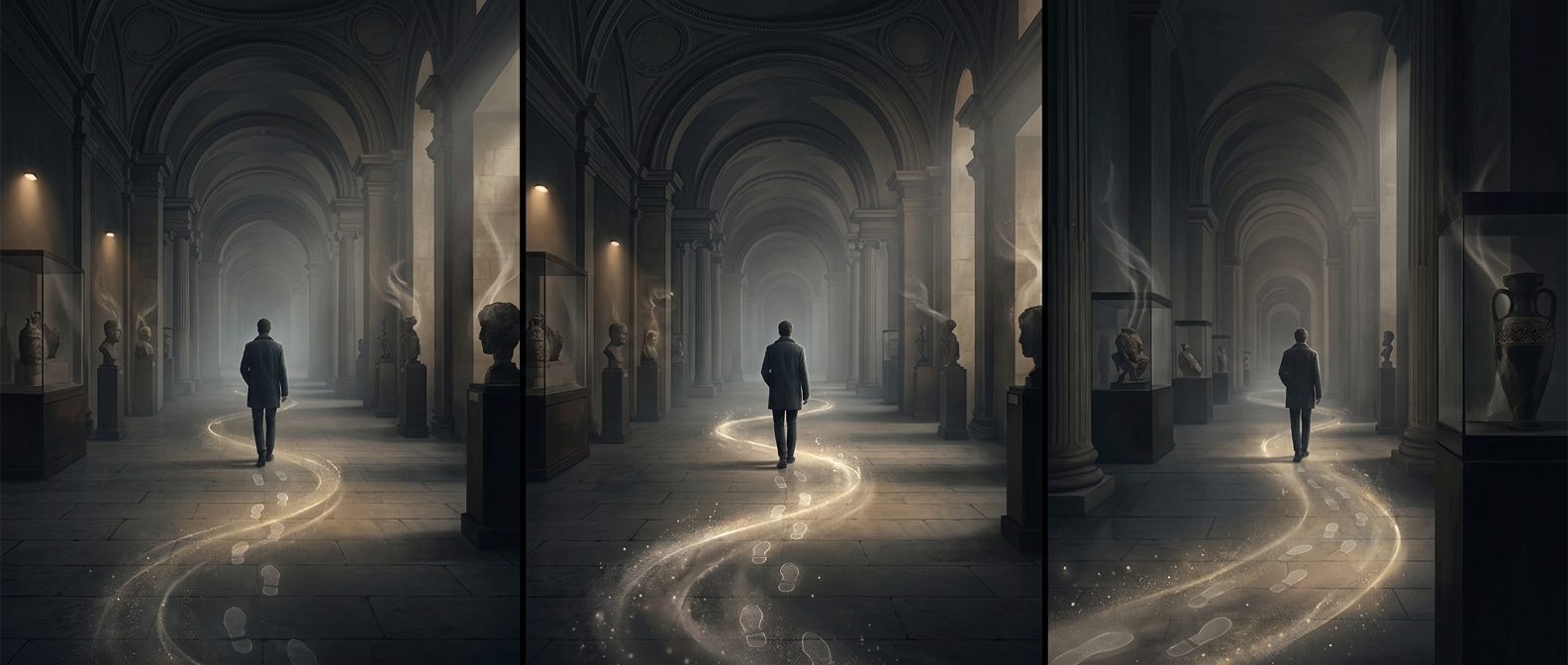
Why the Louvre takes longer than a checklist
A quick glance is not the same as seeing a work. Even a short visit to a single painting can involve stepping back to take in its composition, moving closer to notice details, and waiting for other visitors to clear the view. Repeat that across thousands of objects, and the difference between passing by and paying attention becomes enormous.
The building is part of the journey
The Louvre is not one uninterrupted row of galleries. Its collections occupy a vast former palace, so visitors move between rooms and sections as well as between artworks. Finding the next gallery, crossing the building, and pausing to get oriented all consume time that a simple object-by-object calculation leaves out. The scale is physical as well as artistic: even a purposeful route involves a great deal of walking.
Choosing what to see is unavoidable
That is why most visits work better as a selection than as an attempt to finish the museum. A visitor might follow one collection, focus on a handful of works, or leave time for the rooms themselves. The memorable part is often not how many objects were counted, but how long one had to look before a detail—or the scale of a room—came into focus. At the Louvre, deciding what to skip is part of seeing anything well.