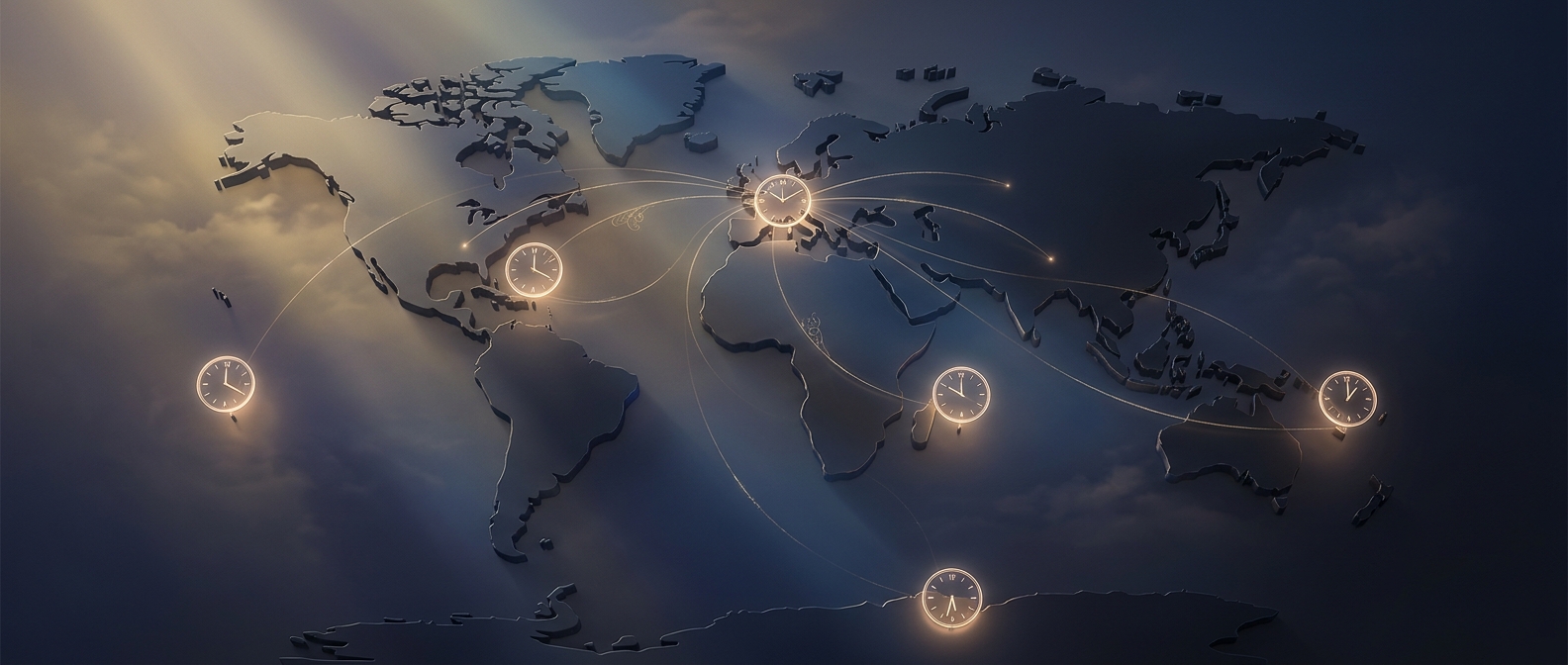
How France’s map reaches around the world
The answer lies not in the shape of mainland France, but in the places governed as part of the French Republic. France has overseas territories in the Caribbean, the Indian Ocean, the Pacific, and off the coast of South America. Because these islands and regions sit at widely separated longitudes, their local clocks differ by hours.
A time zone is a region that uses the same standard time. As Earth rotates, noon arrives at different times in places farther east or west, so each distant territory needs a clock suited to its position—not one set to Paris.
One country, many local clocks
The count of 12 refers to France’s standard time zones across its territory, including overseas areas; it does not mean mainland France itself uses a dozen clocks. Metropolitan France follows Central European Time in winter and Central European Summer Time in summer. Overseas locations keep their own local time, and some also change clocks seasonally.
That arrangement makes everyday coordination a small exercise in geography. A meeting scheduled from Paris may fall on a different calendar day for a territory on the other side of the world. The country’s time-zone count is therefore a practical consequence of governing places spread across the globe—and a reminder that France’s political map extends far beyond Europe.