A canal built to move boats—and water
The Canal du Midi links Toulouse, on the Garonne River, with the Mediterranean at Sète. Its route crosses the uneven landscape of southern France, so boats could not simply follow a level channel. Instead, they pass through locks: chambers that raise or lower a boat by filling or draining water. Each lock turns a change in elevation into a short, controlled lift or descent.
Keeping the canal supplied was another feat. Its designer, Pierre-Paul Riquet, organized a network of channels that carried water from the Montagne Noire to the canal, with the Bassin de Saint-Ferréol serving as a major reservoir. The canal was therefore not just a trench through the countryside; it depended on capturing and guiding water from a separate watershed.
The towpath makes the engineering visible
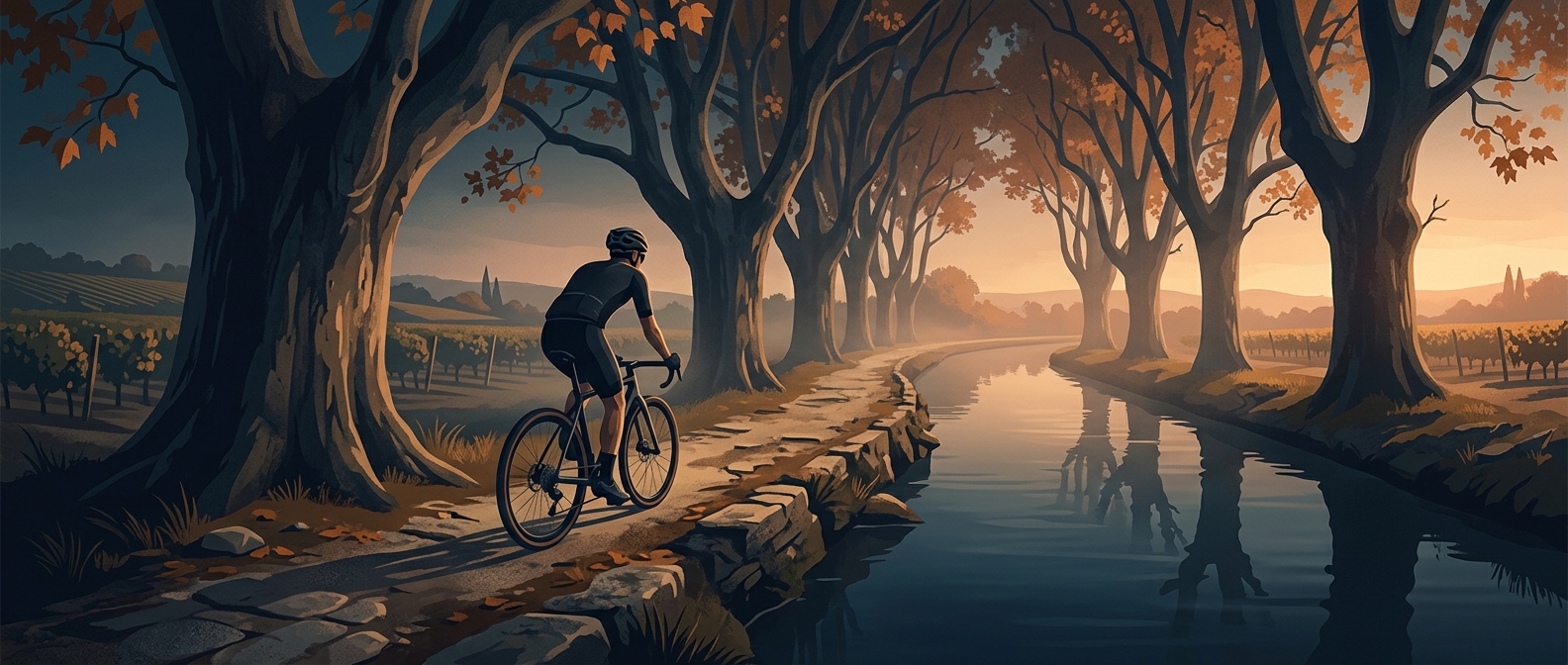
Today, cyclists follow sections of the towpaths that once let horses pull barges against the current. From the path, the route’s practical logic comes into view: a lock, a bridge, a shaded stretch beside the water, then another change in level. The canal’s bends and structures are reminders that this was a working transport system designed around terrain, water supply, and the effort needed to move heavy cargo.
The riding surface varies, so the towpath is not one uninterrupted smooth cycle track. But that unevenness is part of the experience: the old route still traces the narrow corridor where boats, horses, and people once had to fit together.