A computer case became a design reference
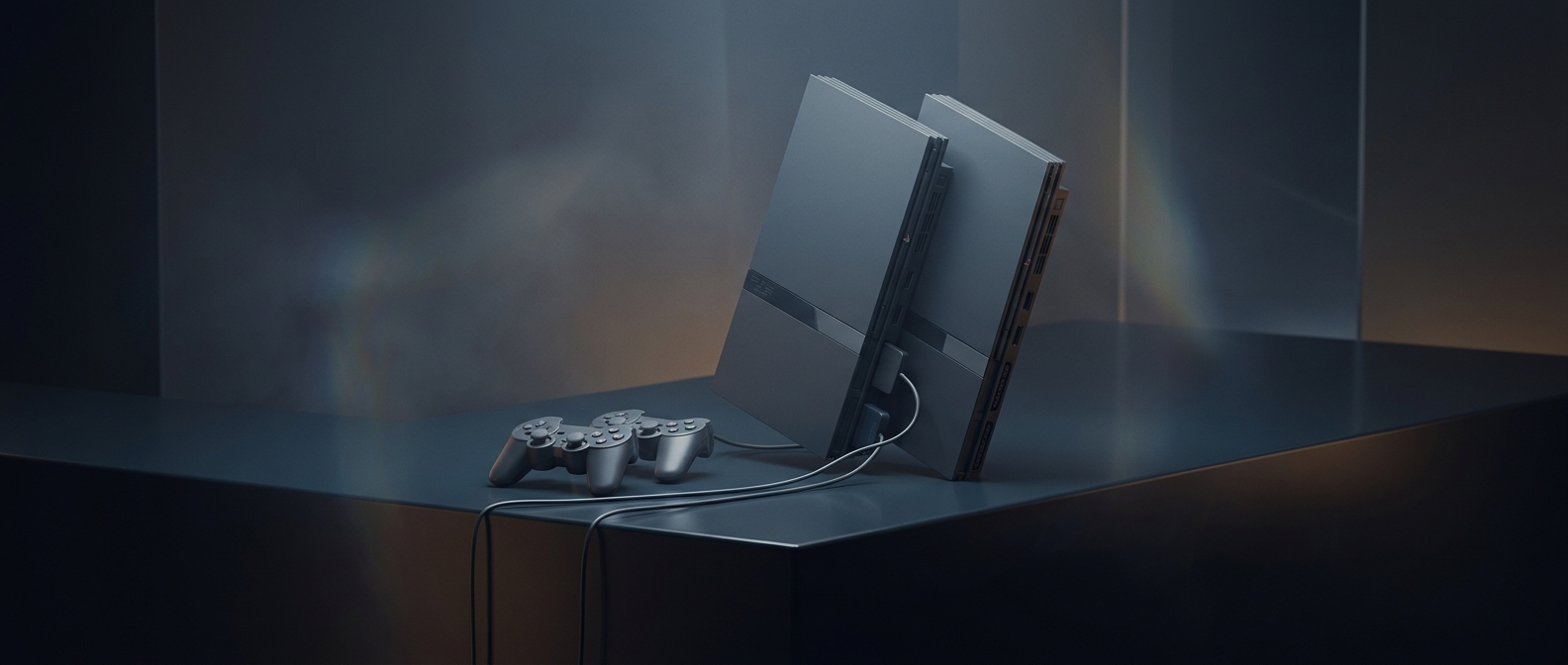
The Atari Falcon 030 Microbox was a computer from Atari’s late era, when the company was trying to remain relevant in a market increasingly dominated by other personal-computer makers. It never became a widely adopted product. Yet its compact, boxlike form caught the attention of Sony designers working on the PlayStation 2.
The connection was visual, not technological: the PS2 did not inherit the Falcon’s computer hardware. Designers can look beyond a product’s intended category for useful ideas about proportion, shape, and how an object occupies space. A computer case can suggest a different way to make a game system look like a piece of consumer equipment rather than a conventional console.
Influence without a shared machine
That distinction matters because “inspired by” does not mean copied outright. The Falcon Microbox served as a reference point for the PS2’s appearance; Sony still had to shape the console around its own components, cooling needs, and placement in the home. The final design had to work as hardware, not merely resemble an intriguing computer.
The episode is a reminder that industrial design has a longer memory than product success. A machine can disappear from the market while its shape remains useful to designers elsewhere. The Falcon Microbox did not find a large audience as a computer, but its afterlife was visible in a far more successful game system.