When the Player’s Body Becomes the Controller
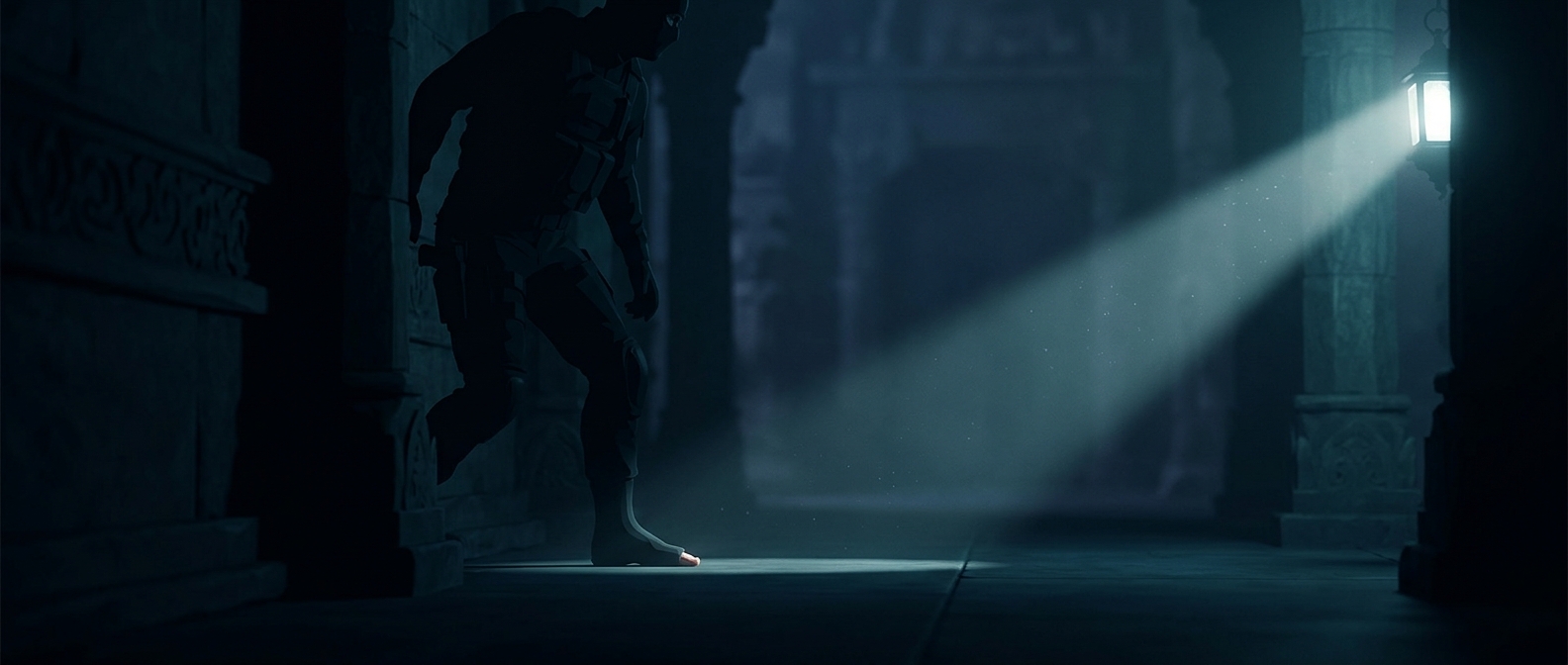
Most horror games let players respond to danger with familiar inputs: move, hide, attack, or run. This one turns restraint into the main action. At a critical moment, the player has to keep their hands still and hold their breath; a small movement can set off the character’s death.
That changes what “playing carefully” means. Instead of steering the character through danger, the player is managing their own urge to react. A sudden threat can make a person tense up or reach for a control without thinking—the very response the game punishes.
Tension Through Withholding
The mechanic works because it makes an ordinary reflex feel risky. In many games, motion is a way to regain control. Here, motion itself may be the mistake. The player must wait through the frightening moment rather than act, and even a tiny adjustment can carry consequences.
That also makes the quiet stretches active rather than empty: the player is watching for danger while trying not to move. The suspense comes not only from what the character might face, but from whether the person holding the controller can stay still long enough to let them survive.