Why a Small Drone Can Sound So Loud
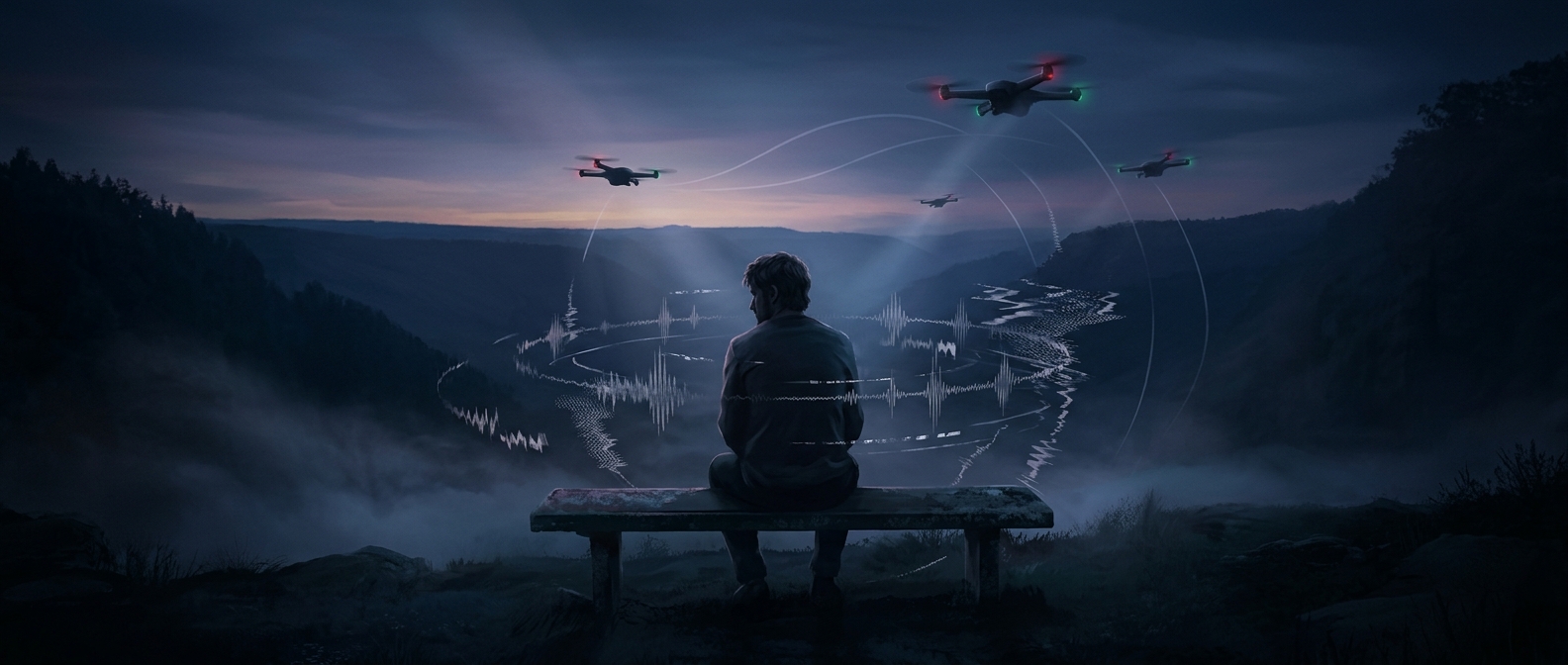
A drone stays aloft by spinning several propellers quickly. Each blade pushes air downward; the repeated chopping motion creates a steady whine, often with a higher buzz from the electric motors. The aircraft may be small, but its sound is concentrated in a moving source rather than spread across a landscape. When it hovers nearby, there is little change in position to make the noise fade.
The Camera and the Crowd Get Different Experiences
From the camera’s perspective, distance smooths the scene into a broad view of beaches, rooftops, or mountain paths. On the ground, the drone may be close enough for its sharper tones to stand out from wind, surf, or conversation. Those tones can be especially noticeable because they sit above lower, more familiar background sounds.
The camera also does not record the scene the way a person hears it. Many finished videos use music, narration, or replacement ambience, while the drone’s own noise may be reduced or omitted. The image can therefore suggest calm even when filming required a noisy aircraft overhead.
A Tradeoff in Making the Shot
A drone operator may need to hover or make repeated passes to frame a moving subject, extending the time people nearby hear it. Moving farther away can reduce the disturbance, but may make the subject harder to capture clearly. The serene shot is not necessarily fake; it simply leaves out an audible part of how it was made. On a quiet vacation spot, that difference can be the most memorable thing about the filming.