Yeats’s Rituals Made an Invisible Threat Feel Manageable
W. B. Yeats’s fear of psychic attack belonged to the world of ceremonial magic he explored through the Hermetic Order of the Golden Dawn, a secret society devoted to ritual, symbolism, and occult study. In that setting, an “astral vampire” was not a blood-drinking creature but a supposed unseen force that could sap a person’s vitality. Yeats believed a rival was using such forces against him.
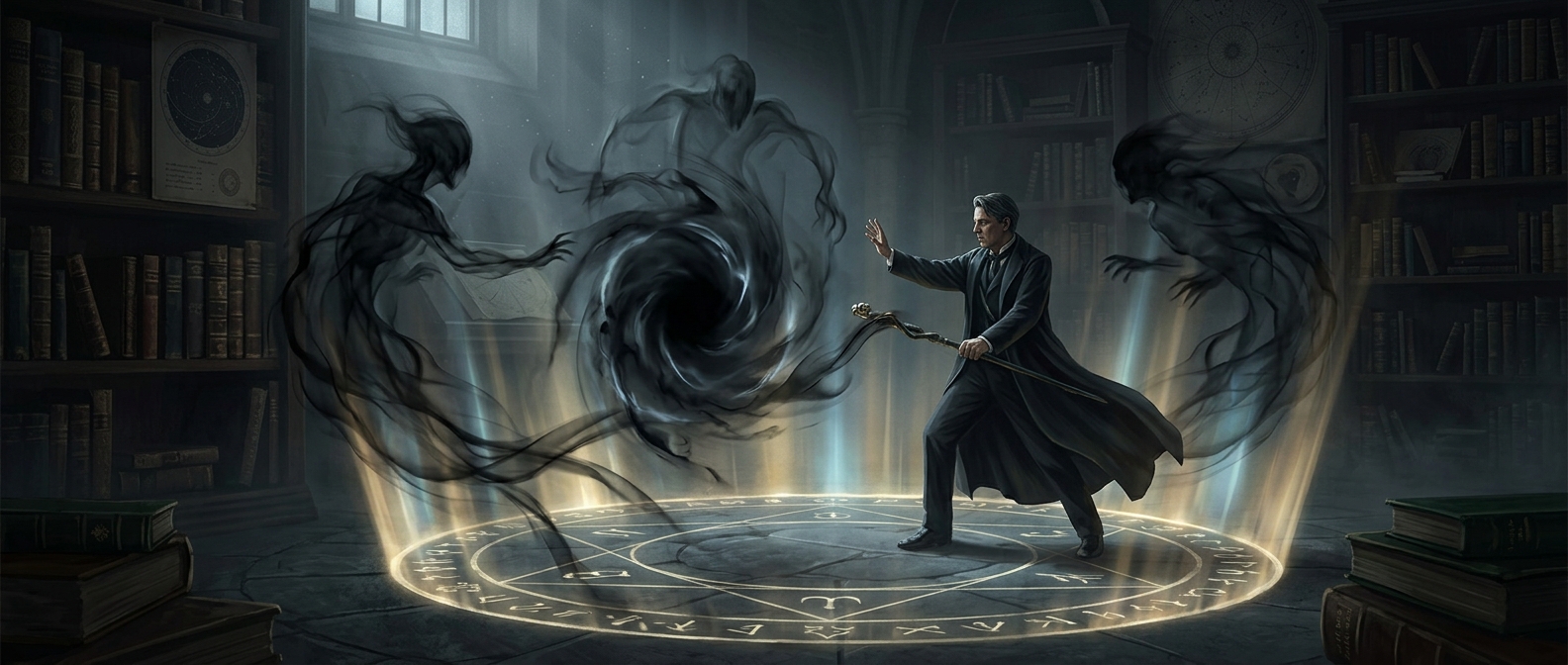
The rituals offered a way to respond to a danger that could not be confronted by ordinary means. A pentagram—a five-pointed star used in some magical traditions—could be drawn as a protective boundary. Banishing rituals were meant to drive away harmful presences and restore control over a space or person. Their logic was symbolic and procedural: identify the threat, mark protection, then carry out prescribed gestures and words.
Magic, Conflict, and Yeats’s Imagination
The Golden Dawn’s practices treated symbols and ritual actions as tools for engaging with hidden forces. For Yeats, who took occult systems seriously, that framework could make personal conflict feel cosmic: an adversary’s hostility might seem to extend beyond the physical world. His repeated protective acts show how thoroughly he inhabited that worldview, not that astral attacks can be verified as real.
The episode also sits beside Yeats’s literary life. He drew on occult ideas in his poetry and later developed an elaborate symbolic philosophy, but his magical practice was not merely a literary pose. The same imagination that gave him material for art also shaped how he interpreted danger—and what he did to feel defended against it. All the pentagrams and banishings could do, within that belief system, was turn an unseen threat into a sequence of actions he could perform.