What the Book of Soyga Actually Contains
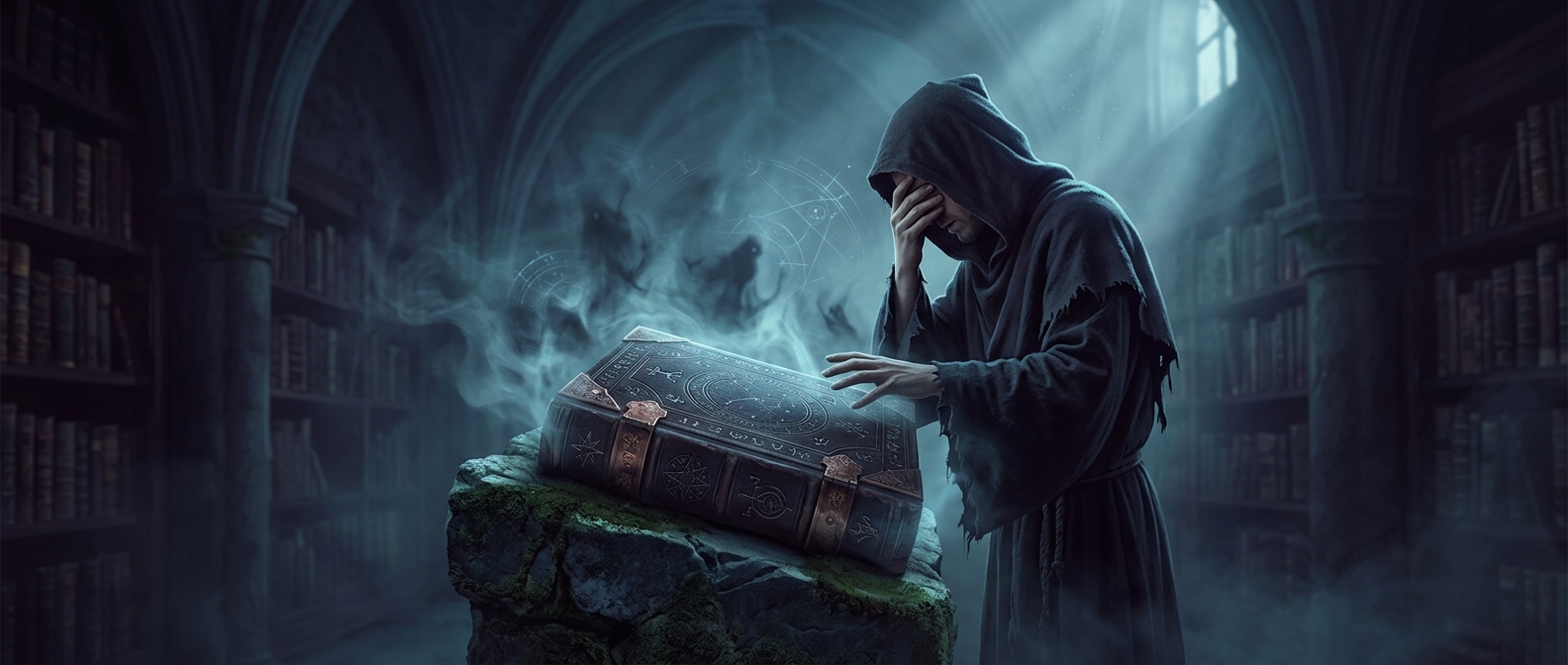
The Book of Soyga is a sixteenth-century manuscript of occult writing, including material on astrology, spirits, and magic. Its most puzzling feature is a set of dense letter tables: they look like encrypted messages, but they are not simply ordinary prose written in a secret alphabet.
That distinction matters. In 1994, researcher Jim Reeds worked out how the tables were constructed, revealing a method behind their apparently scrambled letters. Decoding that system did not turn every page into a straightforward, fully understood text; the manuscript’s other material and its intended use remain separate questions.
Why a Death Curse Became Attached to It
The manuscript attracted the attention of the English mathematician and court adviser John Dee, who owned a copy in the sixteenth century and sought supernatural guidance about its secrets. That history helped give the book an aura of dangerous knowledge. Later retellings sharpened the aura into a specific claim: that deciphering it would bring death within a set period.
The curse is a story about the book, not a demonstrated effect of reading it. The tables can be investigated as a human-made system, and the people who studied their construction survived. Their work replaced one kind of mystery with a more grounded one: how the manuscript’s author built such elaborate tables, and what they were meant to accomplish.
The striking detail is that the book’s most forbidding-looking feature yielded to analysis—not because it revealed a supernatural trap, but because its patterns had rules.