A shortcut can also be a steering wheel
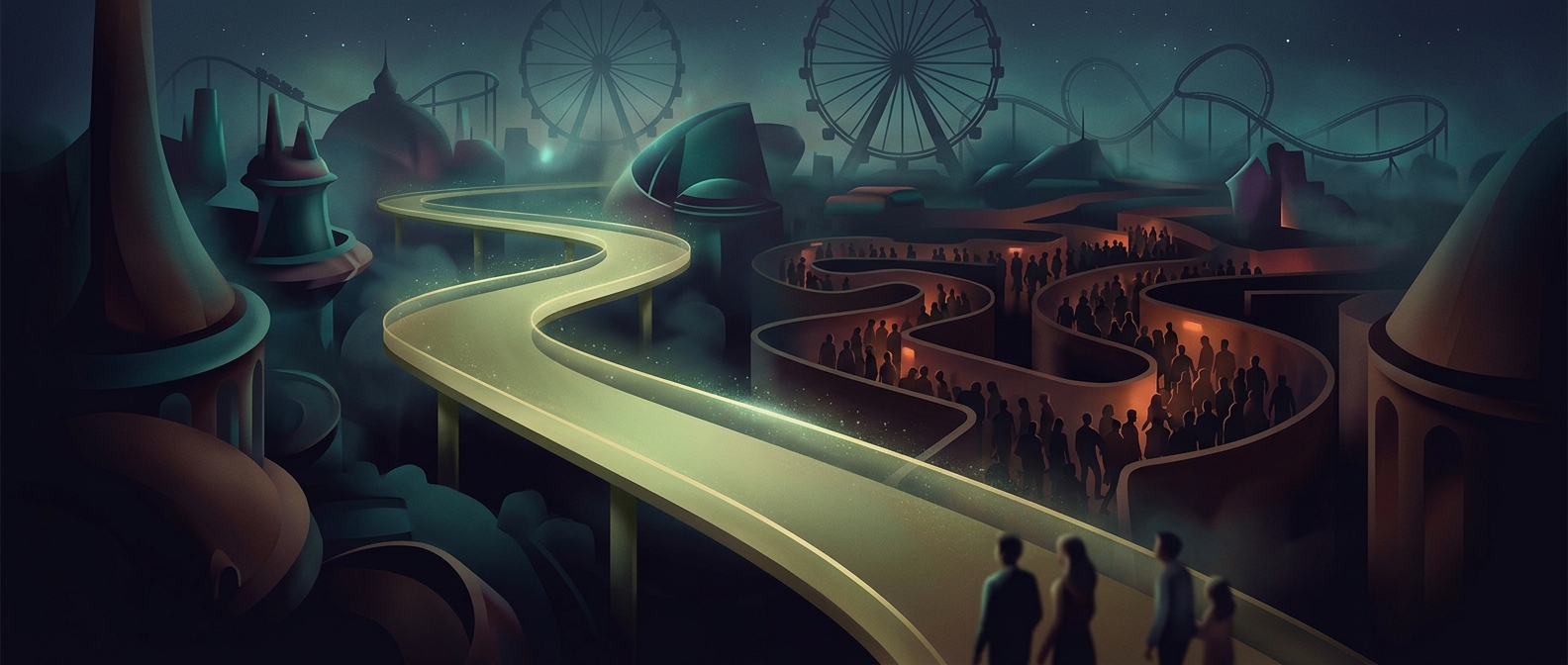
A paid wait-skipping option does more than sell time back to a visitor. It gives the park a way to influence where that visitor goes next. If access is offered for certain attractions or times, the park can make a less-crowded ride the more appealing choice—by making it easier or cheaper to visit than a packed one.
That matters because a park’s attractions have limited capacity: each ride can take only so many people per hour. When too many guests converge on the same popular ride, its line grows even if other attractions have room. A changed price or available return time can nudge some visitors toward those underused attractions, spreading demand across the park.
Who pays for the saved time
The park gains twice: it earns revenue from visitors willing to pay for convenience, and it may use that demand to ease pressure on busy areas. But the shortcut does not create more ride capacity. It changes who gets access sooner and, potentially, which queues fill up. A priority lane can still become crowded if too many people choose it.
For visitors, the tradeoff is money for less waiting and more control over the day. For the park, it is a way to manage demand without building another ride. The system’s effect depends on how access is priced and directed: a fee can be both a premium service and a tool for redistributing crowds.