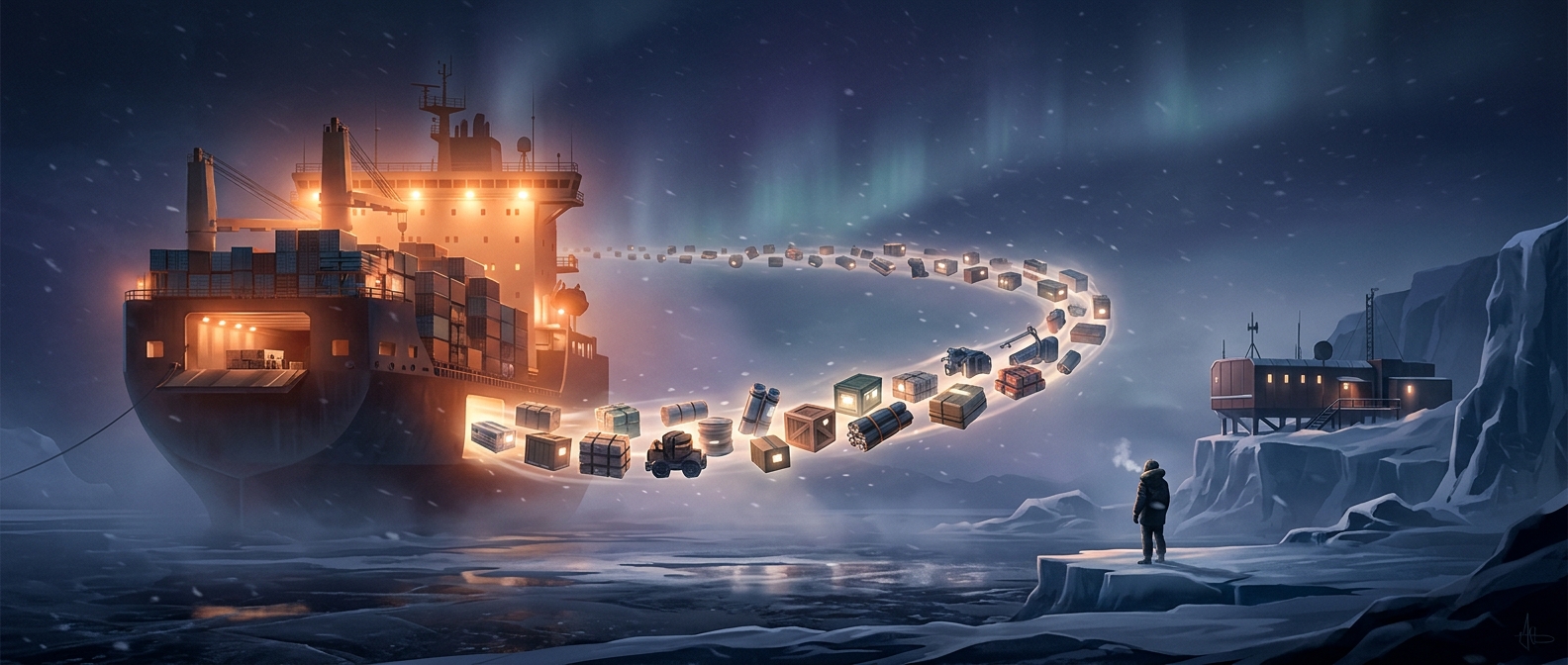
A station must plan around its next delivery
At an Antarctic station, supply is not a routine trip to a warehouse. Cargo has to cross a vast ocean or reach the continent by air, and the weather, sea ice, and distance can limit when and how it arrives. That makes resupply a planning problem: teams must estimate what they will need well before a shipment can reach them.
The timing matters because ships can carry bulky loads but may have only a narrow window to approach a station. Aircraft can move people or urgent cargo more quickly, but they carry far less and require suitable weather and landing conditions. A missed delivery can therefore mean waiting for the next practical opportunity—not simply ordering another shipment.
Every load competes for scarce capacity
Food, fuel, spare parts, and construction materials all take up room and weight. Fuel is especially consequential: it supports heat and power in an environment where going without either can become dangerous. Yet bringing extra fuel or equipment also consumes transport capacity that could carry other necessities.
Stations manage that tradeoff by keeping inventories and building in reserves for delays or failures. A replacement part that would be easy to obtain elsewhere may have to be packed in advance, because a broken component can sit idle for months if no suitable shipment is available. The cost is not only the cargo itself; it includes the limited ship or aircraft space needed to get it there.
The supply chain shapes life on the ice
Because local food production and material supply are so limited, station operations depend on what can be delivered and stored. That links everyday choices—from menus to repairs—to distant transport schedules. In Antarctica, a spare part is valuable not just because it fixes a machine, but because having it on hand can prevent a small breakdown from becoming a season-long problem.