Why a Live Quartet Has Little Room to Get Cheaper
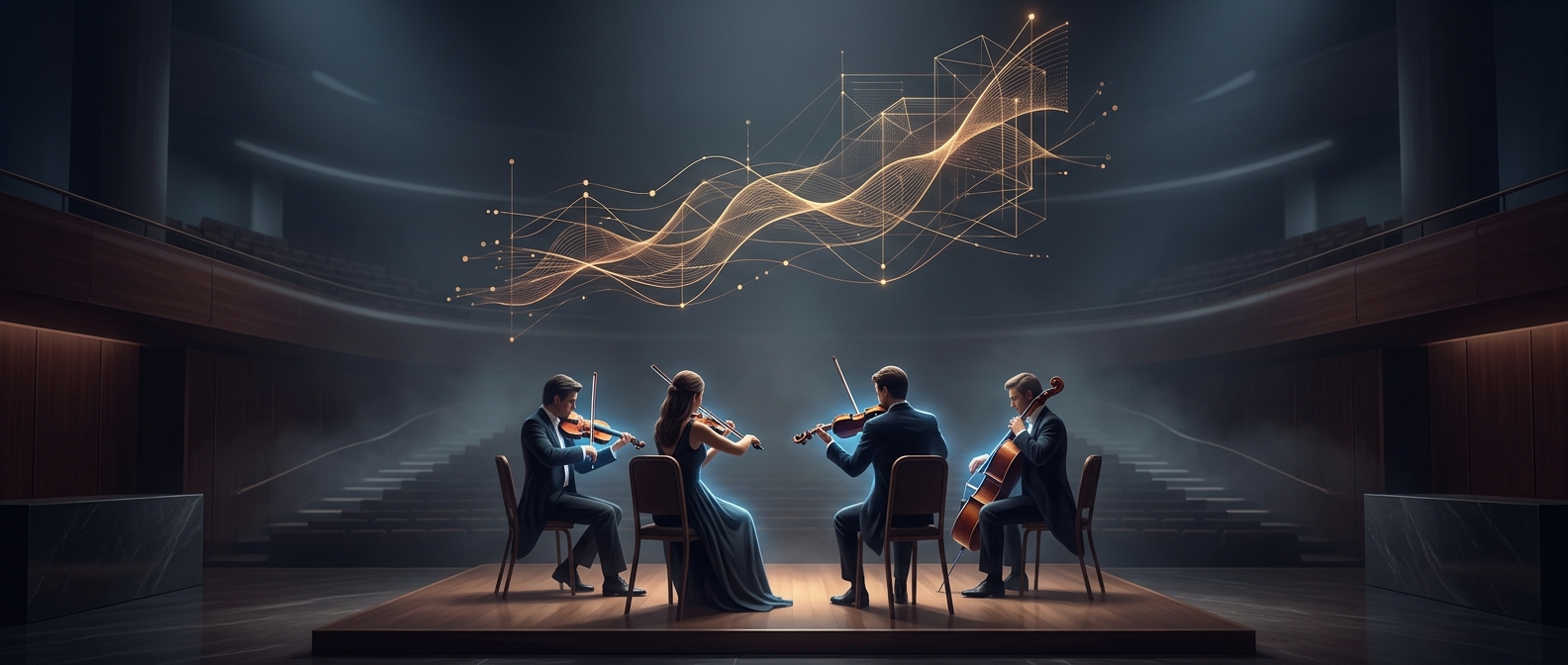
A quartet’s main input is skilled time. Four musicians must rehearse and perform together; the parts cannot be played simultaneously by fewer people without changing the arrangement. And while a factory can sometimes make more goods per worker by upgrading equipment, a live performance still takes roughly the time the music requires. Playing the notes faster would change the work, not make the same performance more efficient.
That creates a mismatch with the rest of the economy. In industries where technology lets each worker produce more, businesses can raise wages without raising the price of each unit as much. Musicians compete for workers who have other career options, so their pay cannot remain frozen simply because a quartet’s labor needs have not changed.
The Cost Rises Even When the Music Doesn’t
Economists call this pattern cost disease: labor-intensive services become relatively more expensive when wages rise across the economy but productivity in those services is hard to increase. The term describes a pressure, not a claim that the musicians are doing less work. A performance still requires the same coordinated attention, preparation, and time; its labor cost just takes up a larger share of what it costs to put on the event.
That pressure can show up in ticket prices, or be covered partly by donors, institutions, or public support. Each source shifts who pays, but none makes the musicians’ hours disappear. The basic tradeoff remains: a quartet can change its repertoire, venue, or funding model, but it cannot scale up a live performance the way a factory scales up production. The audience gets the same span of music, while the cost of assembling the people who make it has to keep pace with the world around them.