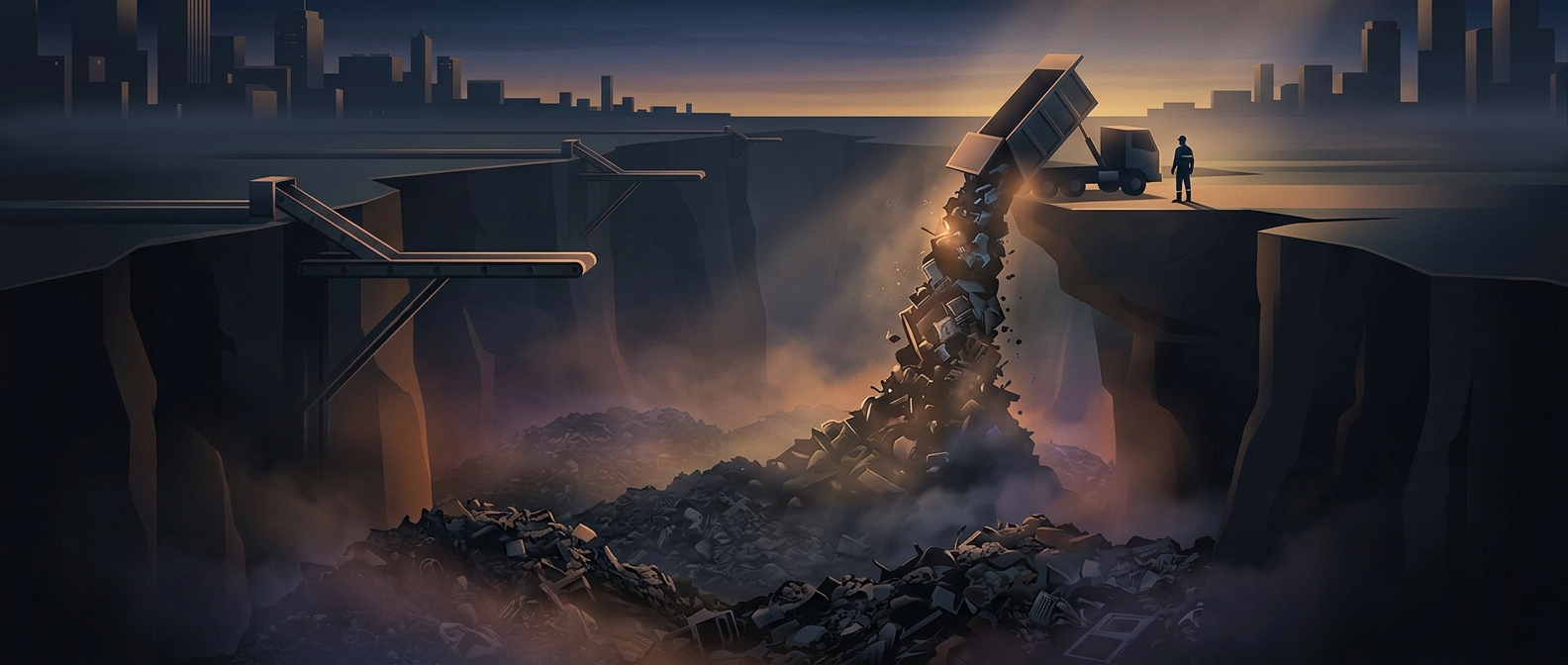
The Cost Begins After the Bin
Once scraps leave a household, the city must move and process them. Collection trucks burn fuel and require drivers, maintenance, and routes; at a transfer station, waste may be loaded onto larger vehicles for a longer trip. The municipality then pays a landfill’s disposal fee or sends the material to a composting facility, which has its own operating and transport costs.
Food is especially costly to handle because it is heavy and wet. A truck carrying scraps can reach its weight limit before it fills up, so the city is paying to move substantial mass. And disposal charges are only part of the bill: collection and transport continue whether the destination is a landfill or a compost site.
The Route Changes the Tradeoff
Landfilling can be simpler when a city already has a disposal contract and no nearby facility that accepts food scraps. But buried food decomposes without much oxygen and produces methane, a heat-trapping gas; many landfills capture some of it, though capture is not perfect. Composting keeps scraps in a managed process where they break down into soil-like material, but it depends on access to a facility and on keeping unsuitable items out of the stream.
That creates a practical municipal tradeoff. Separate food-scrap collection may require new bins, routes, and sorting rules. If residents put packaging or other contaminants in the bin, the facility may have to remove them, adding work and expense. A program’s economics therefore depend not just on the price of composting, but on distance, collection design, and how cleanly residents sort.
Small Choices Scale Up
A household’s discarded meal is a minor item on its own; across a city, it becomes recurring truckloads and disposal contracts. Preventing edible food from being thrown away avoids those handling costs altogether. For what cannot be eaten, the bill depends on where the city can send it—and how efficiently it can get it there.