How a Poodle’s Coat Becomes a Dragon
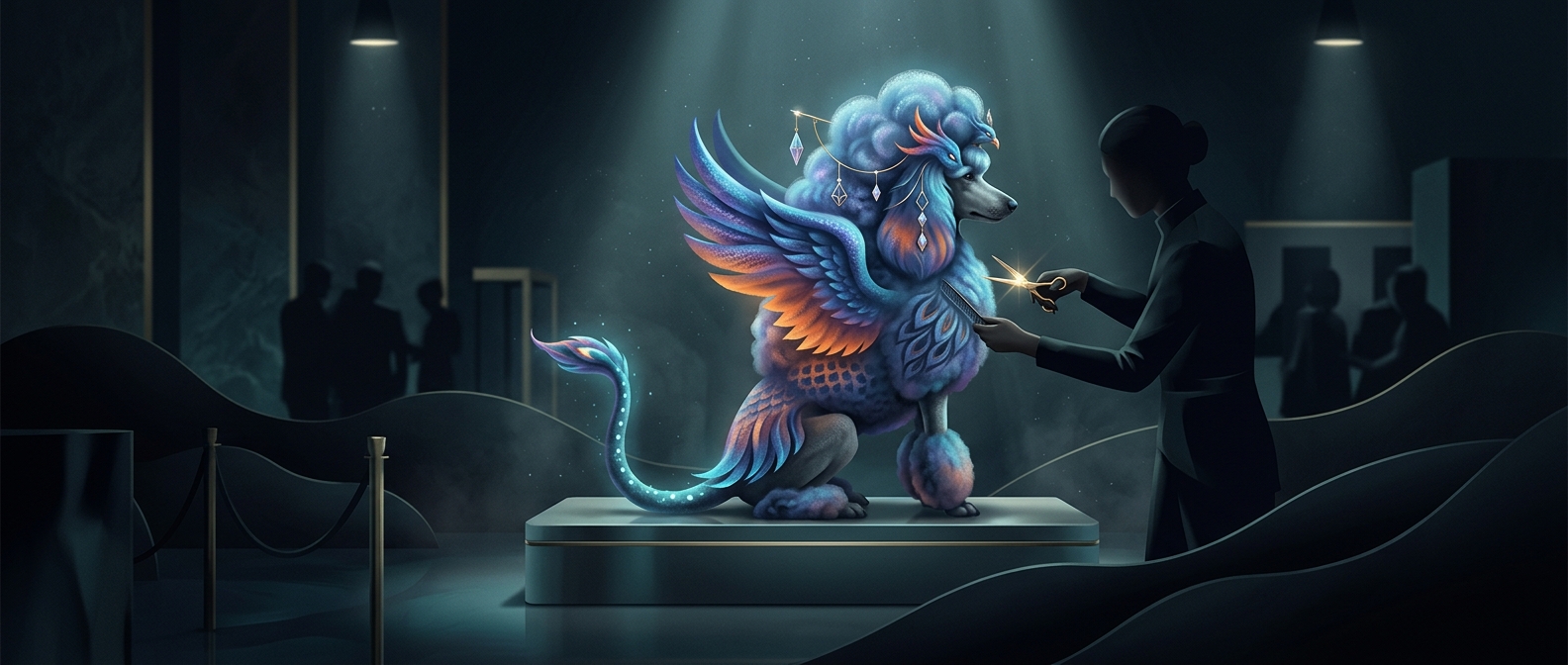
The transformation works because viewers do not need a literal dragon-shaped body to recognize one. They read a few visual cues—an exaggerated outline, raised ridges, dramatic color, perhaps a tail-like flourish—and mentally assemble them into a creature. Groomers use the dog’s existing silhouette as a canvas, building those cues into the coat through clipping, scissoring, and color.
A poodle’s dense, curly coat offers material that can be shaped into distinct forms. The groomer has to plan how those forms sit on a living animal: a design must follow the dog’s body rather than a flat drawing, and the coat has to remain groomed and presentable as the dog moves. Color helps separate features that might otherwise blur together, while changes in length and contour create the illusion of scales, fins, or other fantasy details.
The Craft Behind the Spectacle
The challenge is not simply to make the dog look unusual. A successful design has to be legible from a distance and coherent up close, while still showing controlled grooming. That is why visual transformation and technical skill go together: an imaginative idea only works if the groomer can translate it into precise shapes in the coat.
The result also depends on the dog’s participation. The poodle is not a statue; it must tolerate the grooming process and then stand or move while the finished design is seen. That practical constraint keeps the fantasy tethered to a real animal, even when the outline suggests something mythical. The striking trick is that the dragon is never built as a separate object—the viewer recognizes it in the carefully reshaped coat of a dog.