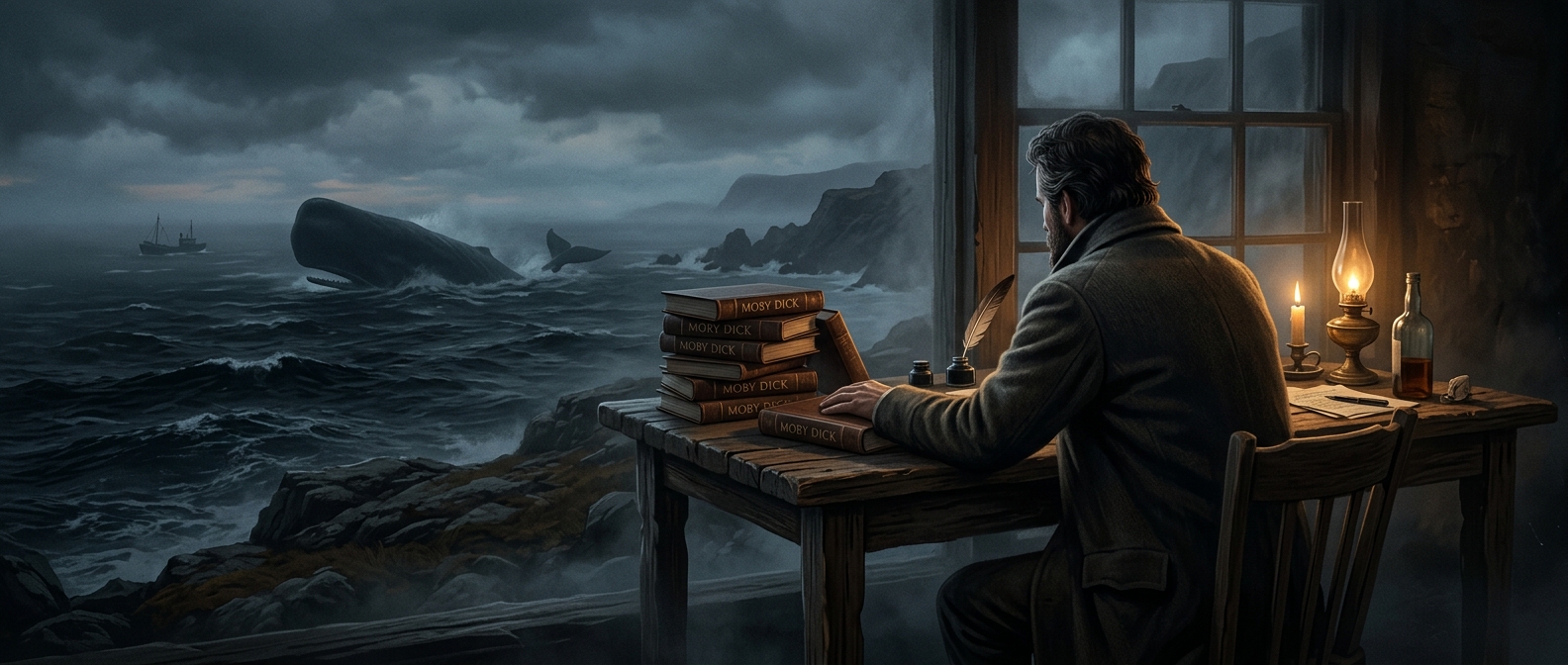
A whaling voyage that resisted easy reading
In 1851, readers could approach Moby-Dick as a sea adventure: a ship, a determined captain, and a hunt for a whale. But Melville repeatedly steers away from a straightforward chase. The narrative pauses for explanations of whales, whaling practices, and life aboard ship, while shifts in voice and form make the book feel part novel, part meditation, part reference work.
That ambition gave the book its depth—and made it harder to sell as conventional entertainment. Reviews were harsh or divided, and the novel did not find a large audience. Its scale and digressions could frustrate readers expecting a more direct adventure story; its darker, more speculative elements also resisted a simple category.
When the market moved on
The poor reception had practical consequences. Melville’s earlier novels had brought him more attention, but Moby-Dick did not establish him as a successful novelist. He eventually turned away from novels and took a steady job as a customs inspector in New York, writing poetry rather than pursuing another major novel.
The irony is that the qualities that complicated the book’s first reception—its unusual structure, dense detail, and refusal to stay within one genre—later helped make it compelling to new readers. During Melville’s lifetime, however, that future reputation did not translate into a living from fiction: the book sold fewer than 3,200 copies.