A terminal built to turn trains around
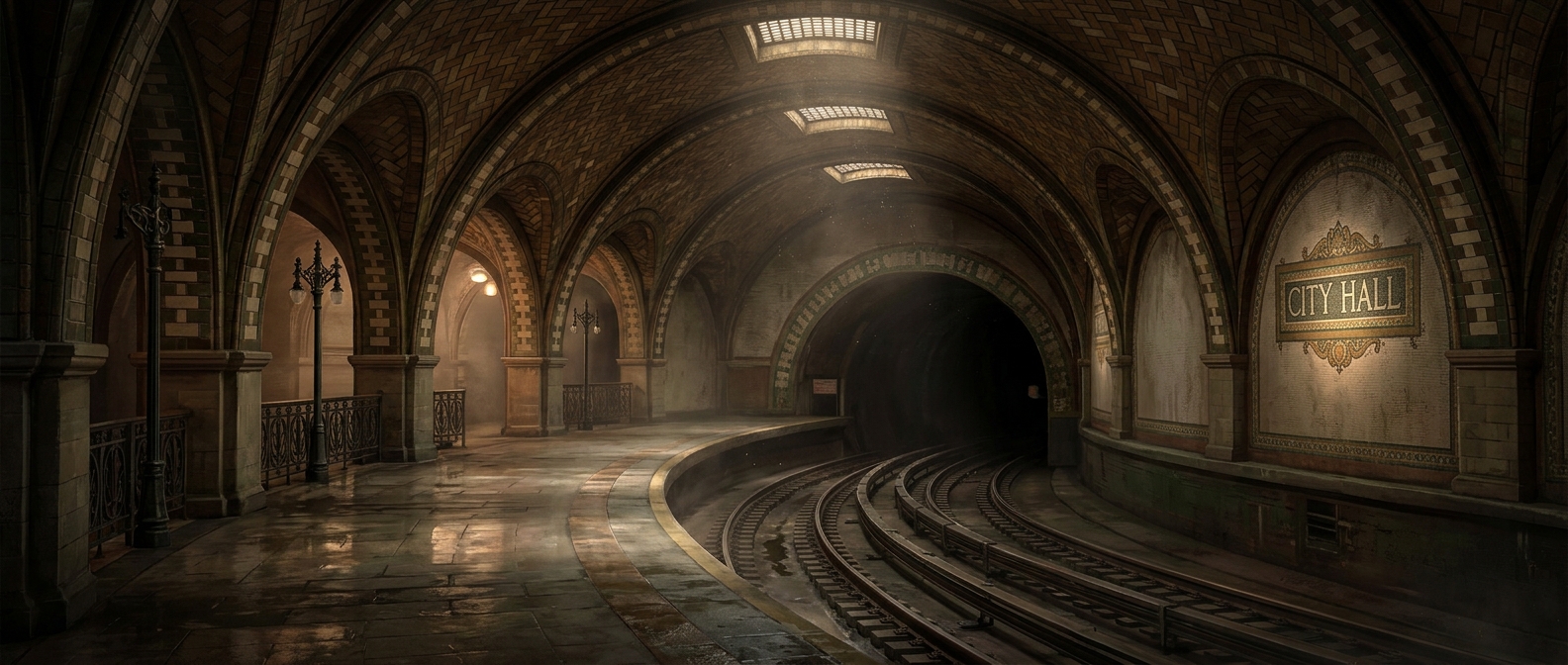
When New York’s first subway opened in 1904, City Hall was its southern terminal. Trains reached the end of the line, curved around a loop beneath the plaza, and headed back uptown. The station’s sweeping shape followed that track: it was designed around a turning train, not as a straight passage through the city.
That layout made sense for the original service, but it became less useful as the subway network grew. Trains could run onward to other destinations instead of ending their journeys at City Hall, while the nearby Brooklyn Bridge station offered a more practical stop for passengers in the area.
A beautiful curve with a costly drawback
The station’s curve was especially tight. On a curved platform, the distance between the platform edge and a train’s doors varies along the train; at City Hall, that left gaps that were awkward and potentially hazardous for boarding. The station was also short by the standards of the longer trains that came into use, so it could not accommodate them properly.
Keeping it open would have meant maintaining a stop that served relatively few riders while imposing limits on train operation and passenger access. Closing it in 1945 let trains use the loop without stopping there. The station’s ornate vaulted ceiling and tiled arches remained underground—not as a functioning terminal, but as a striking remnant of a subway built for a very different network.