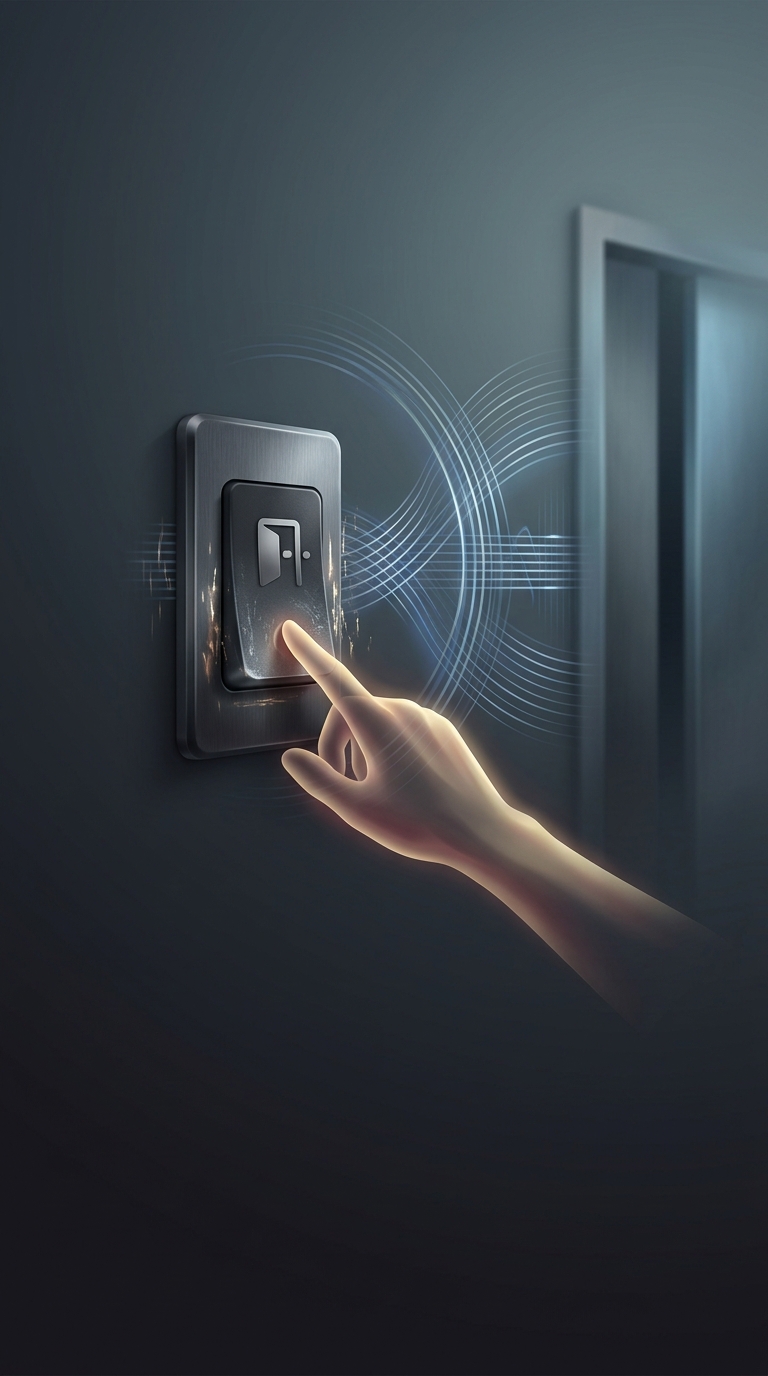
Why the Door-Closing Button Can Seem Pointless
An elevator does not simply shut its doors as soon as someone presses a button. Its controller manages a door dwell time: a period the doors remain open so passengers can enter and exit. That pause matters most when people move slowly, use mobility devices, or need extra time to clear the doorway.
In some modern elevators, pressing “close door” during ordinary service does not shorten that interval. The button may be inactive, or its command may be limited by the elevator’s programmed timing. So a passenger can press it and still watch the doors wait.
The Doorway Has to Be Kept Safe
Closing also depends on sensors. Devices such as light curtains detect someone crossing the entrance, while safety edges can trigger a reopening if the doors meet an obstruction. If a passenger is approaching or a doorway is blocked, the controller can keep the doors open regardless of a button press.
That protection is part of the tradeoff: a faster departure is convenient, but a door that closes on someone rushing to board can cause an injury. Building accessibility rules also shape how long doors remain open and how the controls behave, so settings vary by elevator and jurisdiction.
When the Controls Change
Firefighters can use special operating modes to control an elevator during an emergency. In those modes, door controls may behave differently from the buttons passengers use during routine trips. That does not mean every ordinary “close door” button is reserved for firefighters; on some elevators it works normally, while on others it has little or no effect during the standard door-opening cycle.
The practical result is familiar: the doors wait while a coworker finishes a story, because the elevator’s controller is prioritizing a safe, accessible boarding window over shaving a few seconds off the ride.