Why a Pool Cue Needs Chalk
A cue tip is small and rounded, while the cue ball is smooth. On a shot away from the ball’s center, the tip must push sideways as well as forward to create spin. Without enough grip, it can slide across the ball’s surface instead. That slip—often called a miscue—can send the ball off course and produce far less spin than intended.
A Thin Layer Changes the Contact
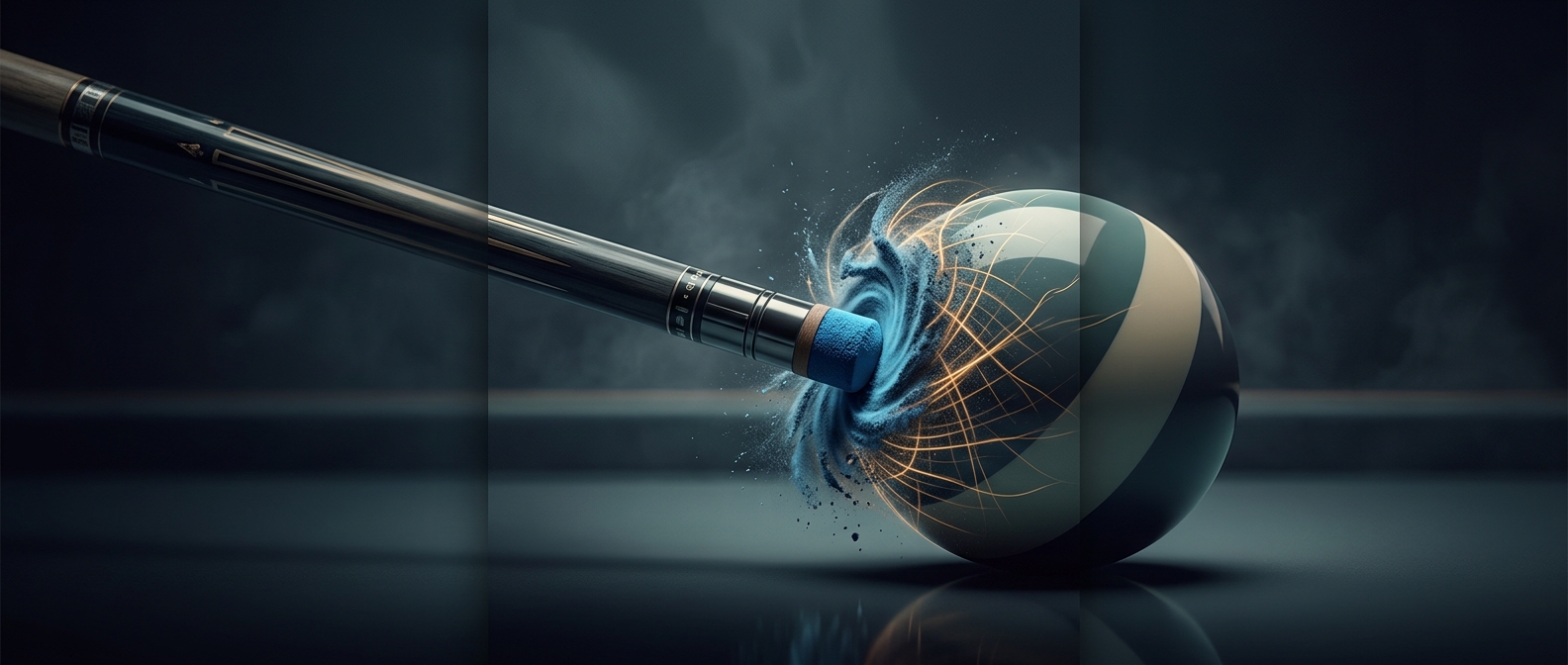
Pool chalk is a fine, abrasive powder applied to the leather tip. It leaves tiny particles and roughness at the point of contact, helping the tip hold its position against the ball during the brief impact. The chalk does not make the cue stick to the ball; it gives the contact enough friction for the player’s angled hit to transfer spin reliably.
The more a player strikes away from the ball’s center, the greater the sideways force at the tip—and the more likely it is to slip. Chalk therefore matters especially for shots that call for substantial sidespin or top- and backspin. It cannot eliminate the limits of the shot: hit too far from the center, and the tip may still miscue.
Why Players Reapply It
Chalk wears away as the cue tip contacts the ball, and some is lost between shots. Players apply it regularly to keep the tip’s grip more consistent, particularly before a demanding off-center hit. That small ritual is a practical adjustment to a basic constraint of billiards: the cue has to deliver a controlled sideways push through a tiny, fleeting contact.