How a Pond Becomes a Threshold
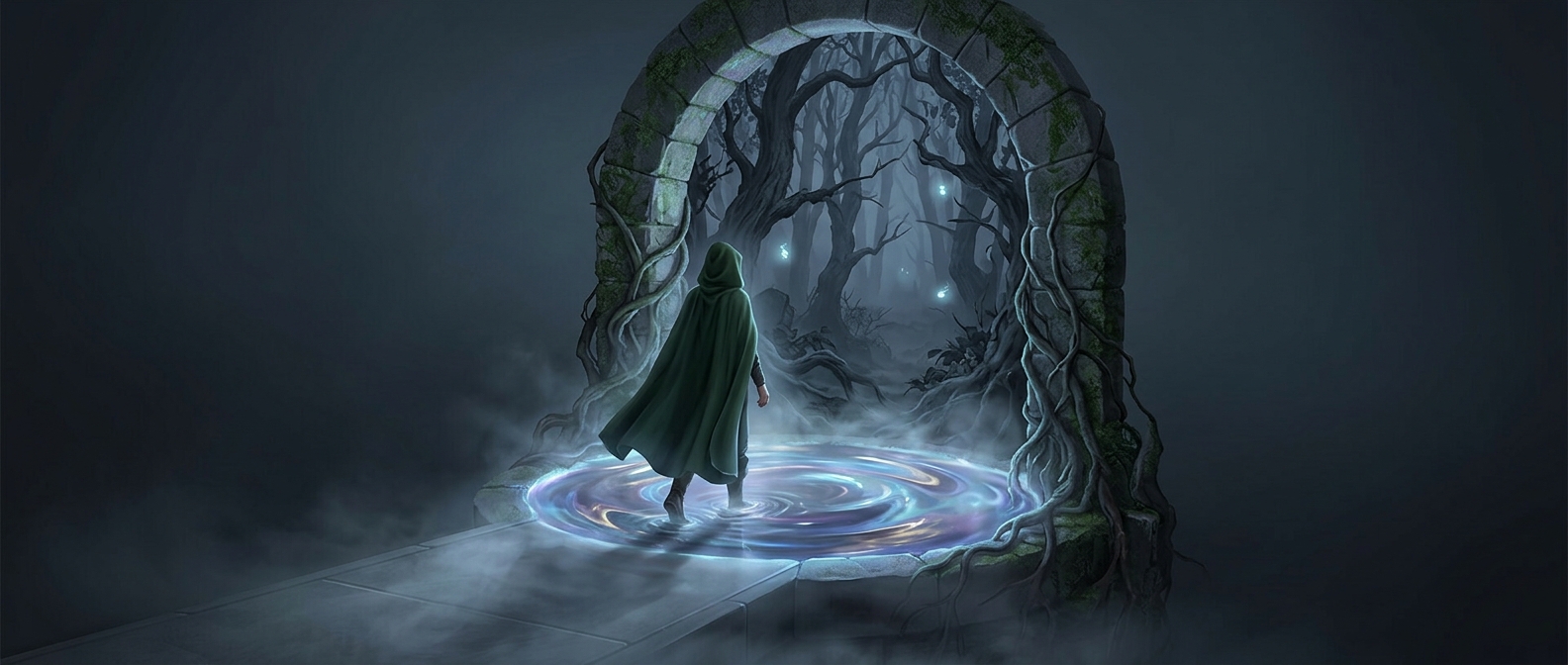
A boat ride can change its setting without a sharp transition. Water gives the eye a moving surface to follow, while reflections blur the boundary between the pond and its far bank. As the boat advances, the trees gradually occupy more of the view. What first reads as scenery across the water begins to feel like the next place the boat is entering.
That gradual shift is doing practical work as well as atmospheric work. The pond gives riders time to register the landscape before the shoreline takes over their attention. Because the boat carries them forward at a steady pace, the change feels like a journey rather than a scene switch.
The Ride’s Quiet Handoff
The effect depends on a change in what the rider notices: first the broad, reflective water; then the wooded shore. The surface can make the trees appear to continue below their visible edges, softening the line where water ends and land begins. As that line draws nearer, the woods seem less like a backdrop and more like a destination.
That makes the pond a kind of scenic threshold. The boat does not merely pass a pretty view; its movement gives the view a direction and turns the approach into part of the experience. The memorable moment is the handoff itself: by the time the shore fills the scene, the ride has already made the woods feel like somewhere the boat is taking you.