A Frame That Turns Into a Doorway
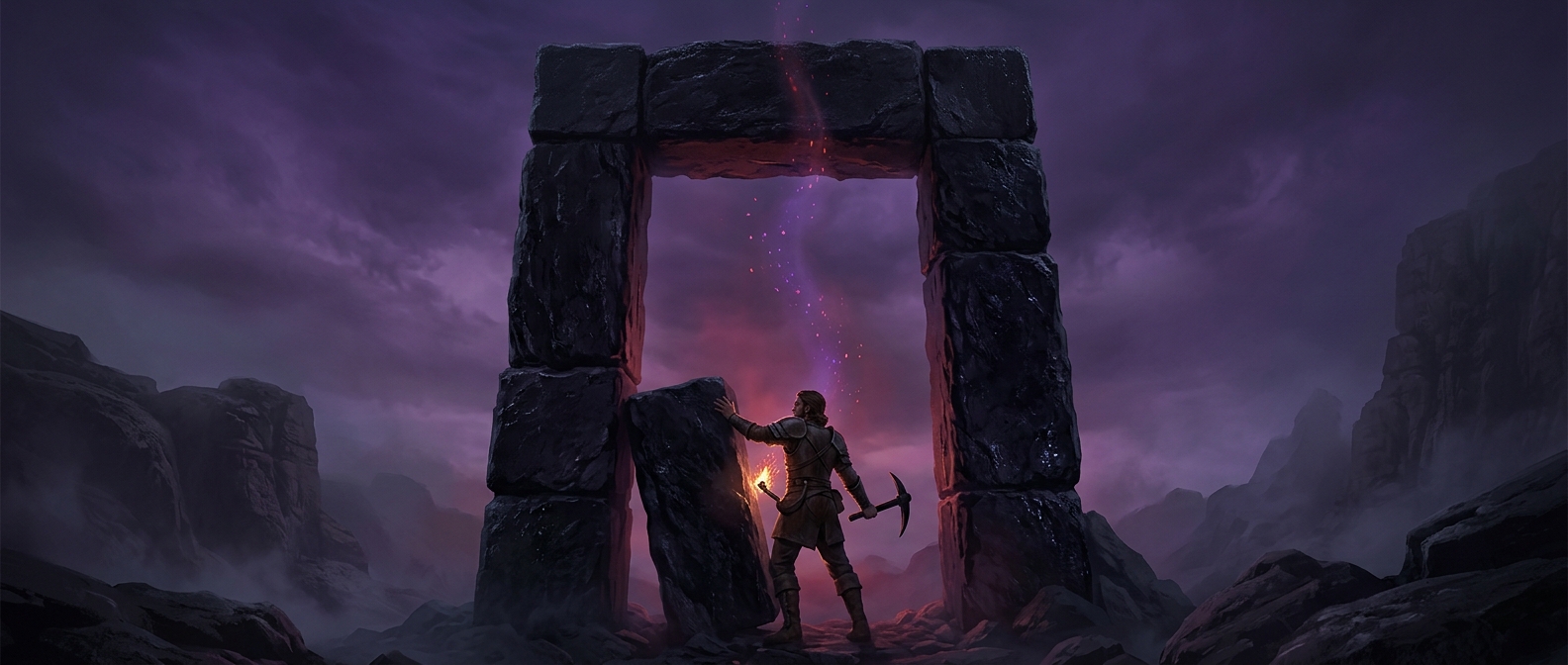
A Nether portal is built from obsidian, the dark, durable block left when water meets a lava source. The usual frame is four blocks wide and five tall on the outside, leaving a two-by-three opening. The four corner blocks are optional, so a basic portal can be made with just ten obsidian blocks. Larger rectangular frames work too, within the game’s size limits.
The frame alone is inert. A player uses flint and steel, a fire charge, or another source of fire to ignite the space inside it. That changes the opening into portal blocks—the shimmering purple surface that carries a player to the Nether. The obsidian is the structure; the portal blocks are the active passage.
Why the Shortcut Changes the Map
Travel does not send players to a fixed destination. Minecraft uses the portal’s location to look for a corresponding portal in the other dimension. Horizontal distance is compressed: moving one block in the Nether corresponds roughly to eight blocks in the Overworld. A route that would take a long trek across the Overworld can therefore become a much shorter journey through the Nether.
That compression makes portal placement matter. A portal built in the wrong spot may connect to an unexpected destination or create a separate route, so players often plan entrances around the places they want to reach. The dramatic rectangle is not just a doorway—it is a coordinate shortcut.