A Route Written in Symbols
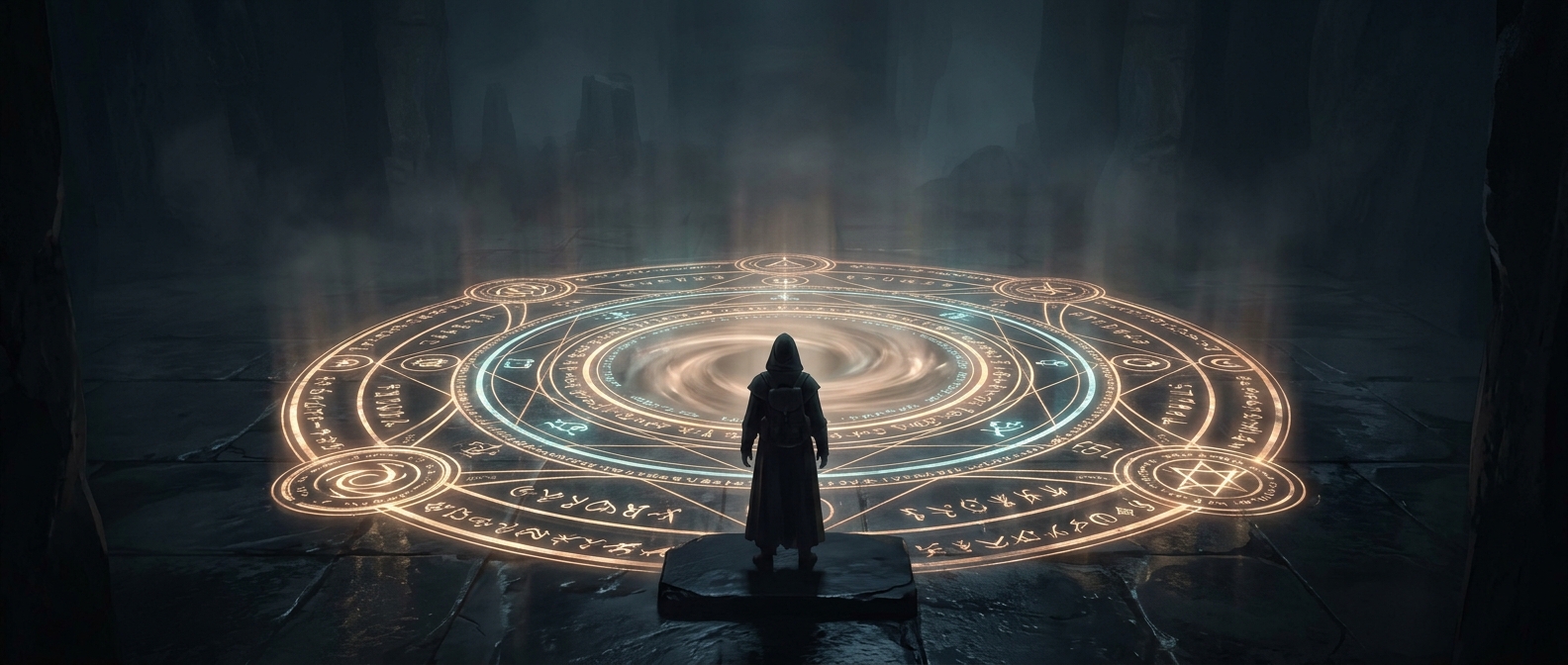
A teleportation circle is less like a doorway than a set of instructions laid out on the floor. Its sigils—purpose-made magical symbols—divide the work: some encode where the traveler should arrive, while others give the spell the structure needed to carry them there. The circle succeeds only when those parts form a usable whole.
That division makes the design easier to understand, but not necessarily easier to execute. A destination is not just a name scribbled in the middle; it has to be expressed through the symbols that the spell can interpret. If even one mark is misplaced or malformed, the instructions may no longer describe the intended route correctly.
Why the Floor Becomes a Checkpoint
The circle’s elaborate appearance is functional. It puts the spell’s components in a fixed arrangement, where the wizard can inspect the destination information and the spell structure together before anyone steps inside. In effect, drawing the circle is also a form of route planning: the caster must translate an intended journey into a precise magical pattern.
That creates a distinctive tradeoff. The traveler avoids the time and hazards of crossing the distance, but the wizard has to get the setup right before departure. The circle makes travel instant only after the slow, exact work of writing the route is done—so a rushed hand can turn a shortcut into a very consequential mistake.