A Doorway Disguised as Furniture
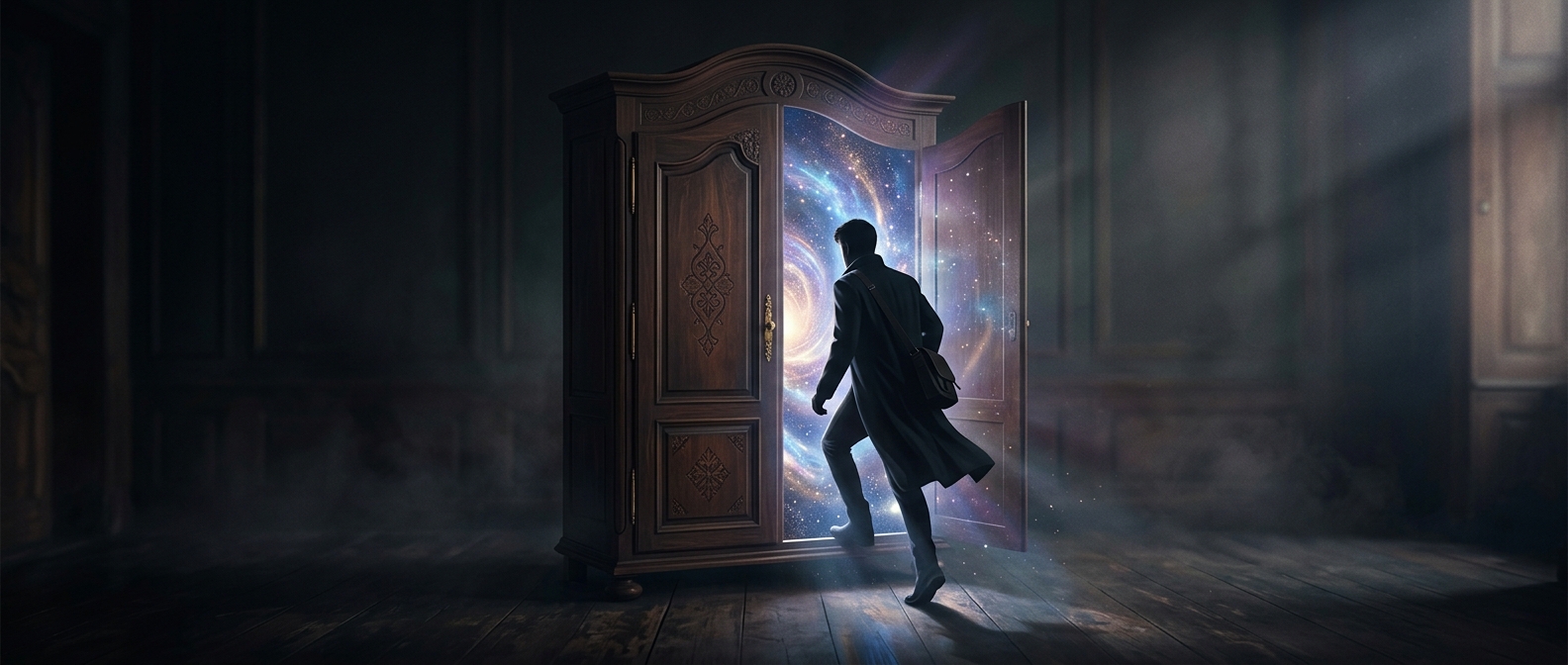
The wardrobe’s trick is not that it transports anyone like a vehicle. It offers a threshold: the children move forward under their own power, but the space they expect to end at—the back of a cupboard—gives way to another world. That makes the crossing feel startlingly physical. They do not step through a glowing gate; they brush past coats and keep walking.
Why the Coats Matter
The coats make the transition gradual. At first, the children are still in a familiar room, surrounded by ordinary belongings. Fabric and darkness narrow their view, so they cannot tell at once whether they have reached the cupboard’s end. Then the sensation of coats gives way to open air and snow. The change arrives through touch and temperature as much as through sight.
That sequence turns a household object into a believable route within the story. A wardrobe is already a place to disappear among hanging clothes; the impossible extra depth extends that ordinary experience rather than replacing it with a complicated machine. The children discover the passage by continuing forward, not by learning a code or operating a device.
The Crossing Changes the Story’s Scale
The route also makes the shift from the children’s everyday world to Narnia intimate and immediate. The entrance is small enough to hide in a bedroom, while the world beyond opens into snowy woods. Because the crossing is just a few steps, the boundary between the familiar and the fantastic feels close at hand—and the children can return by retracing their path through the coats.