Why Darkness Makes a Convincing Route
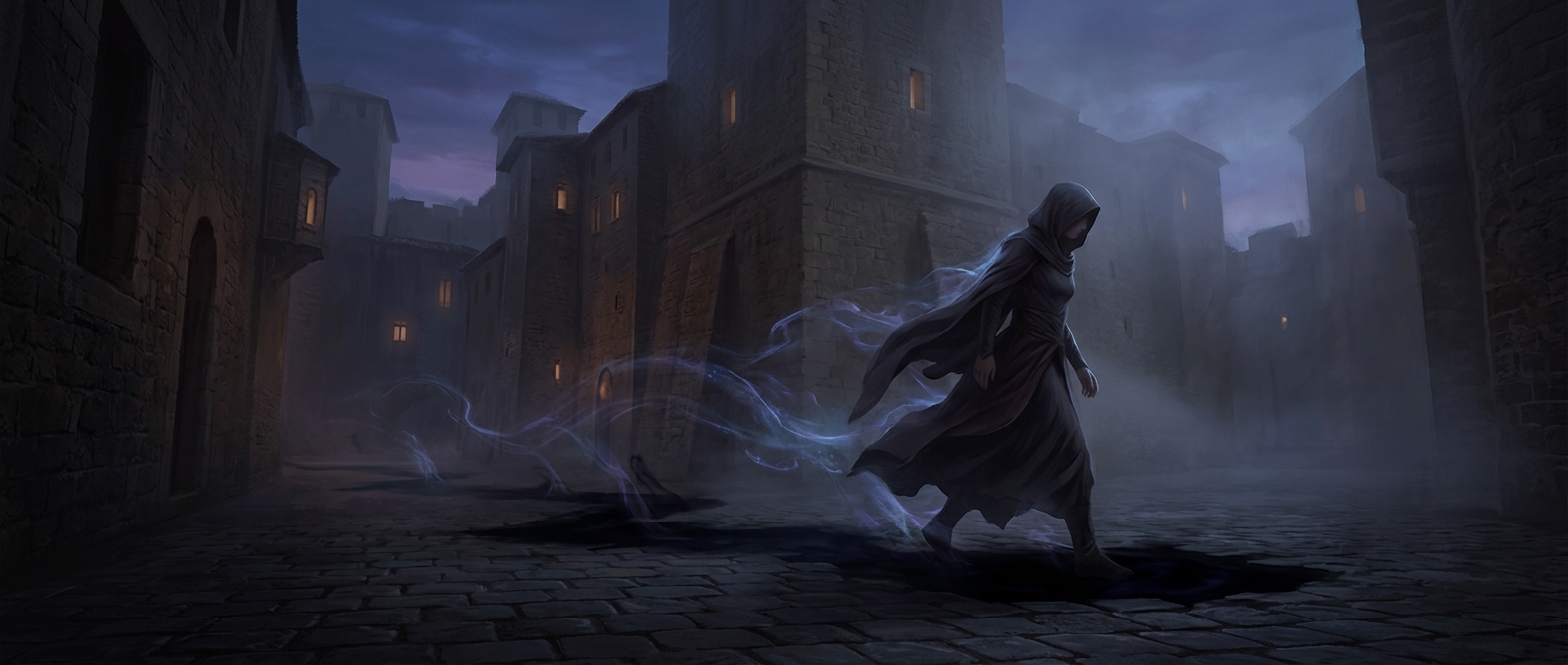
A shadow is not a substance or an opening; it is a place where an object blocks some light. Shadow-travel stories turn that ordinary effect into a fictional threshold. The trick works because darkness already hides visual information: if a character steps into a dim corner, an audience cannot easily see what happens next. The story can make that gap in sight feel like a gap in space.
For the power to feel like a transport system rather than a free escape button, the writer has to give shadows rules. A traveler might need darkness at both ends, a continuous route, or enough cover to conceal an entire body. Bright light then becomes more than atmosphere: it can cut off an exit, expose a hiding place, or force the traveler to take a longer path.
The Route Changes the Stakes
Once shadows connect places, ordinary security becomes a question of lighting. A locked door may stop someone walking down a corridor but do little if a dark patch inside the room offers another entrance. Conversely, a brightly lit, open space can become a barrier without a wall. That shifts the useful defenses from keys and locks to visibility and control of light.
The same rules create tension for the traveler. A route that depends on shadows can fail when a lamp turns on, the sun moves, or someone steps between a character and a light source. Those limitations make the power legible: readers can understand why one patch of darkness is a doorway and another is not. The shadow is most convincing as a shortcut when it remains tied to the changing light of the scene—not simply wherever the plot needs an exit.