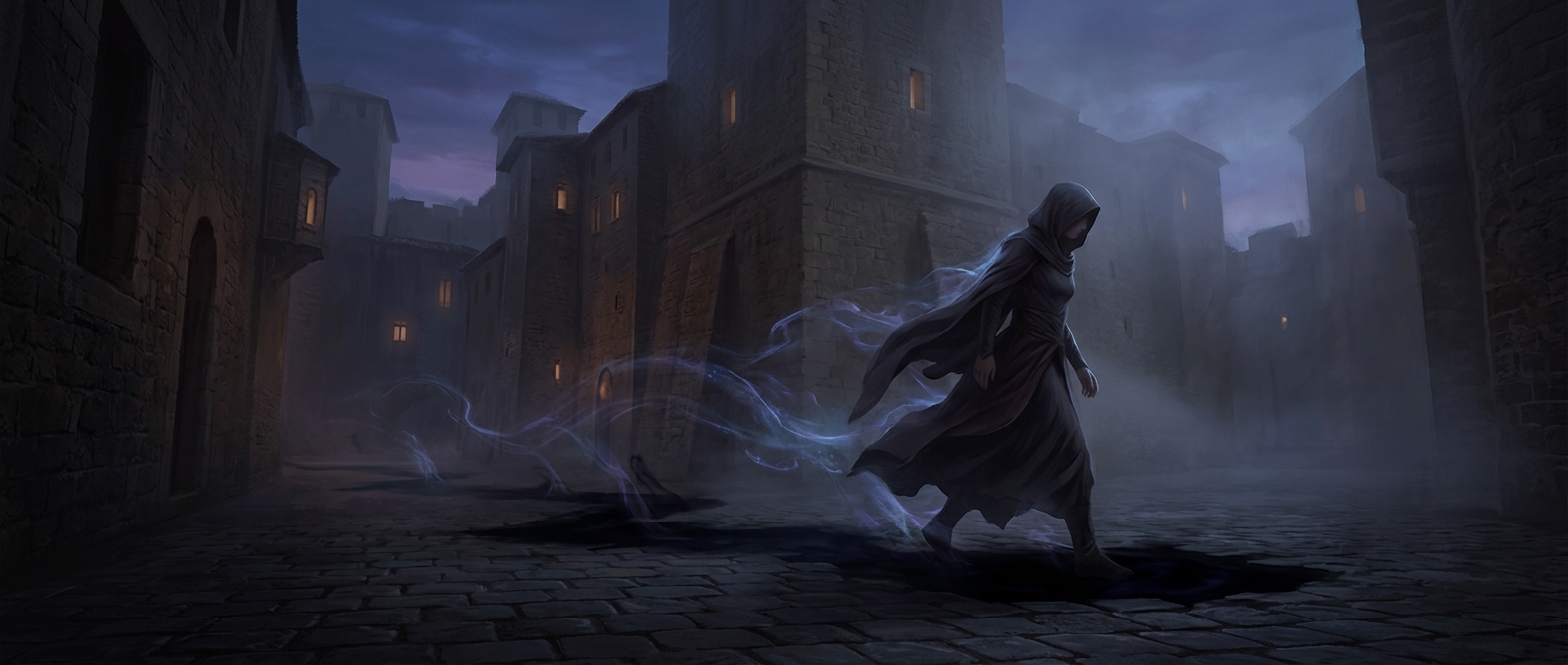
A Knife Makes a Door by Finding the Seam
In this imagined form of travel, a silver knife is less a weapon than a precision tool. Its edge traces a boundary where two worlds lie close enough to touch. The cut does not carve through ordinary space; it opens a narrow passage between realities, turning an invisible join into a temporary doorway.
That distinction explains why the blade’s material matters. Silver is assigned the delicate work: keeping the opening clean and controlled rather than tearing a ragged breach. The knife finds the seam, but it does not choose what lies on the other side. The traveler still has to trust that the neighboring world is somewhere they mean to go.
A Shortcut With a Difficult Threshold
A doorway made this way could bypass the distance between places, but it would trade a long journey for a risky threshold. A conventional route lets travelers follow landmarks and turn back. A slit between worlds offers no obvious map, and the opening may be only as wide and stable as the cut that made it.
So the knife’s most important feature is not sharpness alone; it is control. A careful slice suggests a passage that can be opened just enough to inspect or cross, while a careless one could leave an unpredictable gap. The unsettling hinge is part of the idea: the blade can make an entrance, but it cannot make the destination familiar.