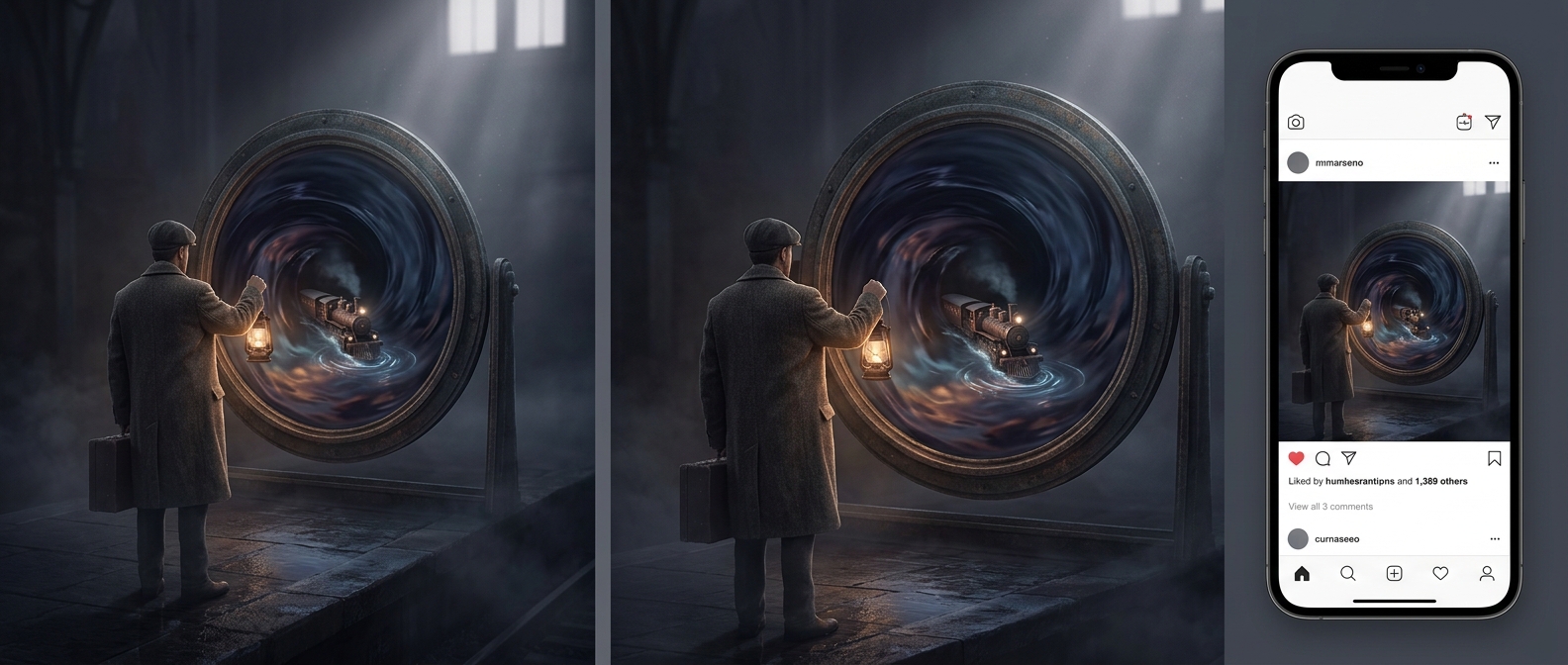
The Door Is the Interface, Not the Vehicle
A starship carries people through the space between worlds. A portal door changes the problem: the traveler crosses a threshold, and the distance in between simply does not enter the trip. The frame gives the opening a fixed, recognizable place on this side; the destination is selected somewhere beyond it.
That makes the door less like a tiny spacecraft and more like a switch in the map. Its usefulness depends not on speed or fuel, but on whether it can connect this doorway to the intended world—and whether someone can safely step through.
Distance Disappears; Access Does Not
Skipping the journey does not automatically solve every transport problem. Travelers still need to reach the door, know where it leads, and pass through the opening. If many people rely on one portal, the doorway itself could become the bottleneck: a whole cosmos might be reachable, yet everyone would still have to queue at the same threshold.
The striking consequence is that the most important piece of interworld transport need not look like a machine at all. It can be an ordinary door, because the extraordinary engineering—if it can be called engineering—is concentrated in the connection the door makes.