A Message Fastened to the Front of the Car
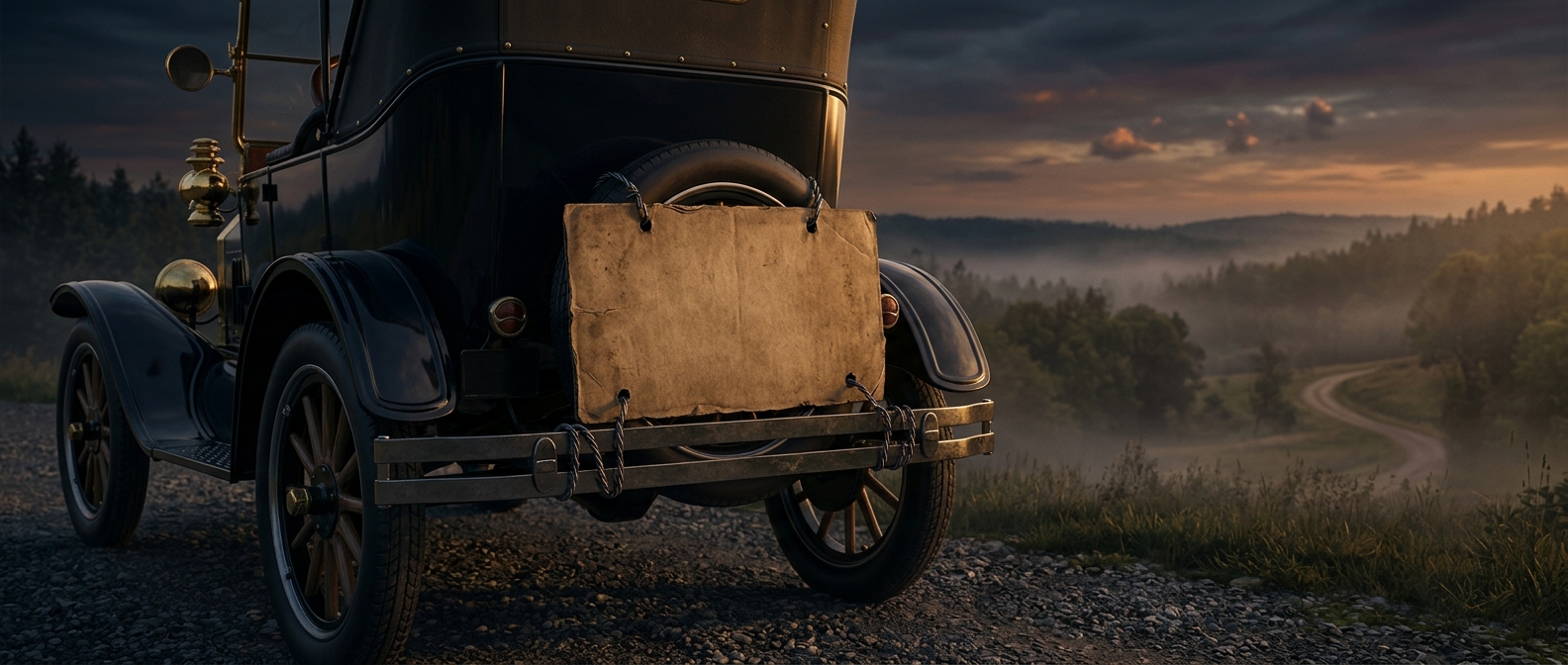
Before a slogan could simply be peeled from a backing and pressed onto a vehicle, displaying one on a car meant solving a small engineering problem. Early motorists put political messages on the grille—the open framework at the front of the car—and secured them with metal wire, tightened with pliers.
The wire did what an adhesive could not: it physically held the sign in place. It could be threaded through the grille’s openings and wrapped around the message, turning the car’s front end into a moving display. That attachment also had to endure the ordinary jolts and weather of a drive; a message that came loose would no longer reach anyone on the road.
From Handwork to Peel-and-Stick
This method made political advertising possible on cars before waterproof adhesive backing was available, but it demanded tools and a few minutes of manual work. The grille’s openings provided ready-made places to anchor a message, so motorists did not need a modern sticker surface to carry a visible opinion.
The contrast is easy to miss today: a political message on a car now looks like a simple decoration, but its early form was closer to a small sign wired onto the vehicle. A pair of pliers helped turn the grille into public display space.