Turning an Insult Into Something She Could See
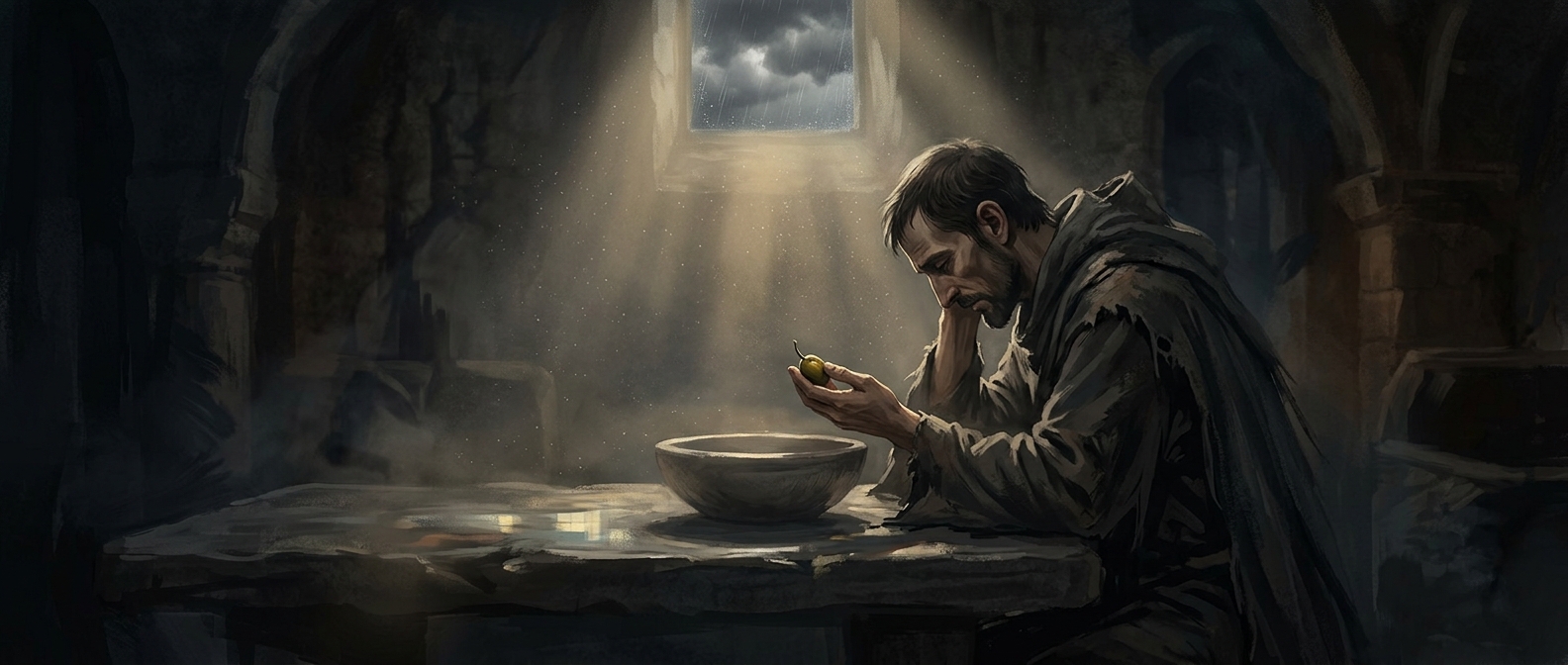
In the story, Lalleshwari—also known as Lal Ded—does not answer mockery with an argument. She drops a stone into her pot each time she is insulted. The gesture gives an invisible injury a visible form: instead of letting each remark vanish into the next, she makes its accumulation something she can notice.
A pot that grows heavier is a plain, bodily measure of what repeated hostility can do. The image also changes the pace of the encounter. An insult may arrive in an instant, but the stone remains; the next one adds to a burden already there. Lalleshwari’s response is not to deny that people are cruel, but to practice seeing their words without being pulled into a fresh reaction each time.
Detachment Is Not the Same as Approval
The tale is often read as a lesson in detachment: another person’s contempt need not dictate one’s inner life. That does not mean the abuse is harmless or deserved. The pot makes its weight unmistakable. Rather, the practice creates a pause between being insulted and deciding what the insult will mean.
Lalleshwari is remembered as a Kashmiri poet and mystic, and stories about her often carry spiritual teaching through concrete acts rather than abstract argument. This one needs no elaborate explanation: a stone is easy to count, and a pot is hard to carry once enough stones have collected. Its lasting force lies in that ordinary physical consequence—what we refuse to examine can still add weight.