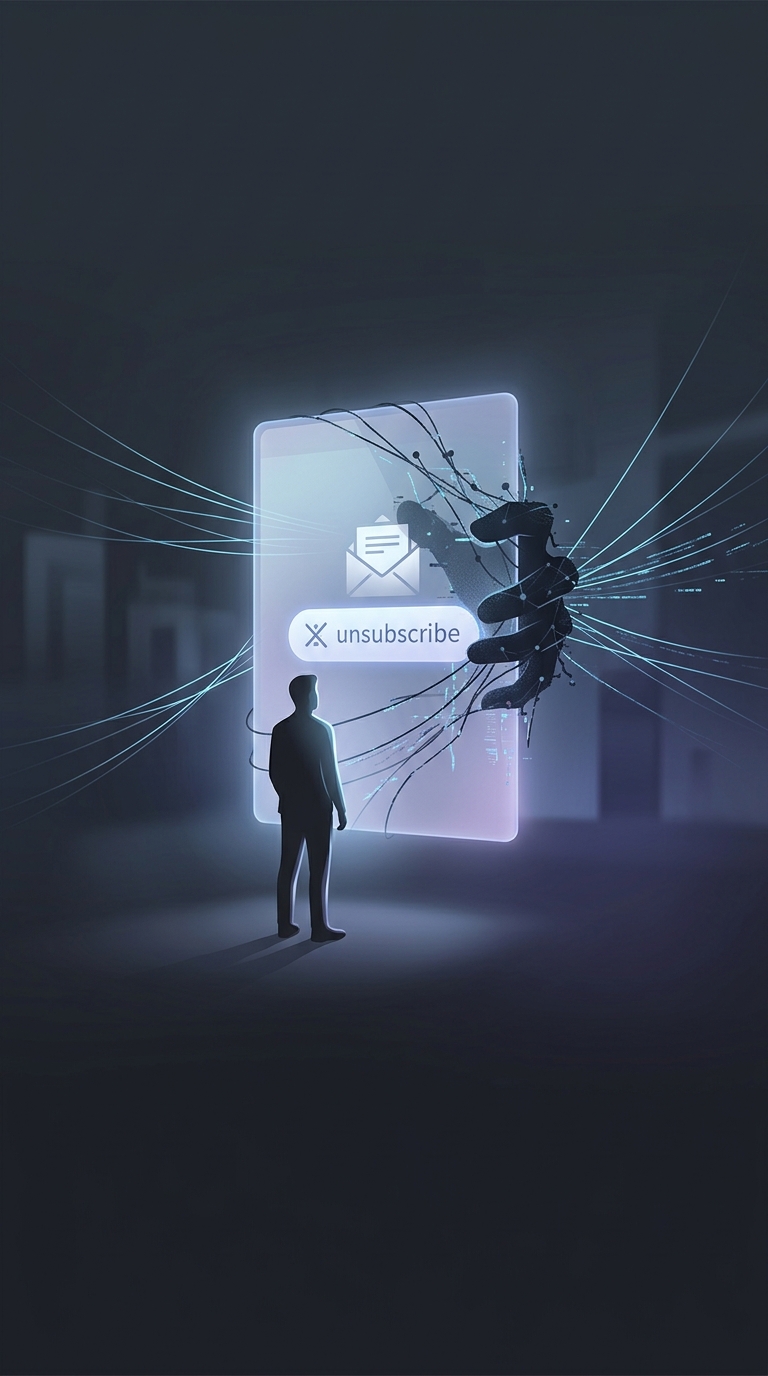
A Click Can Confirm Your Address Is Active
An unsubscribe link in a real mailing list is meant to remove you. In an obvious spam or phishing message, the link may do the opposite: tell the sender that someone reads mail at your address and is willing to click. That can make the address more valuable for future spam or targeted scams.
The link may contain a unique code tied to your email address. When you open it, the sender’s system can record the visit—even if you never enter any information. Some links also route through tracking services before taking you elsewhere.
The Link May Lead Somewhere Worse
A fake unsubscribe page can ask for personal details, prompt you to sign in, or send you to a site designed to steal credentials. Less commonly, a page may try to trick you into downloading something or approving a browser notification. The word “unsubscribe” is only a label; it does not prove the destination is safe.
What to Do Instead
For a message you recognize from a company you actually signed up with, its unsubscribe link is generally the appropriate way to stop the mail. For suspicious messages, use your email service’s report spam or report phishing option, then delete the email. That lets the service filter similar messages without notifying the sender through the link.
The key distinction is who controls the link: a legitimate sender may honor your request, while a scammer may treat the click as confirmation that your inbox is a live target.