How a Belgian snack acquired a French name
The name “French fry” can point in the wrong direction. Wallonia is the French-speaking region of southern Belgium, so American soldiers encountering fried potatoes there during World War I could describe the food using the language they heard around them. The label then traveled home in English, where “French” came to sound like a claim about the dish’s national origin.
That is a linguistic shortcut, not a map of where the food was made. In Belgium, the dish is commonly called frites or frieten—French and Dutch words, respectively, reflecting the country’s two major language communities. The English name preserved the soldiers’ impression while dropping the detail that made it understandable: they were in Belgium.
The story behind the potatoes
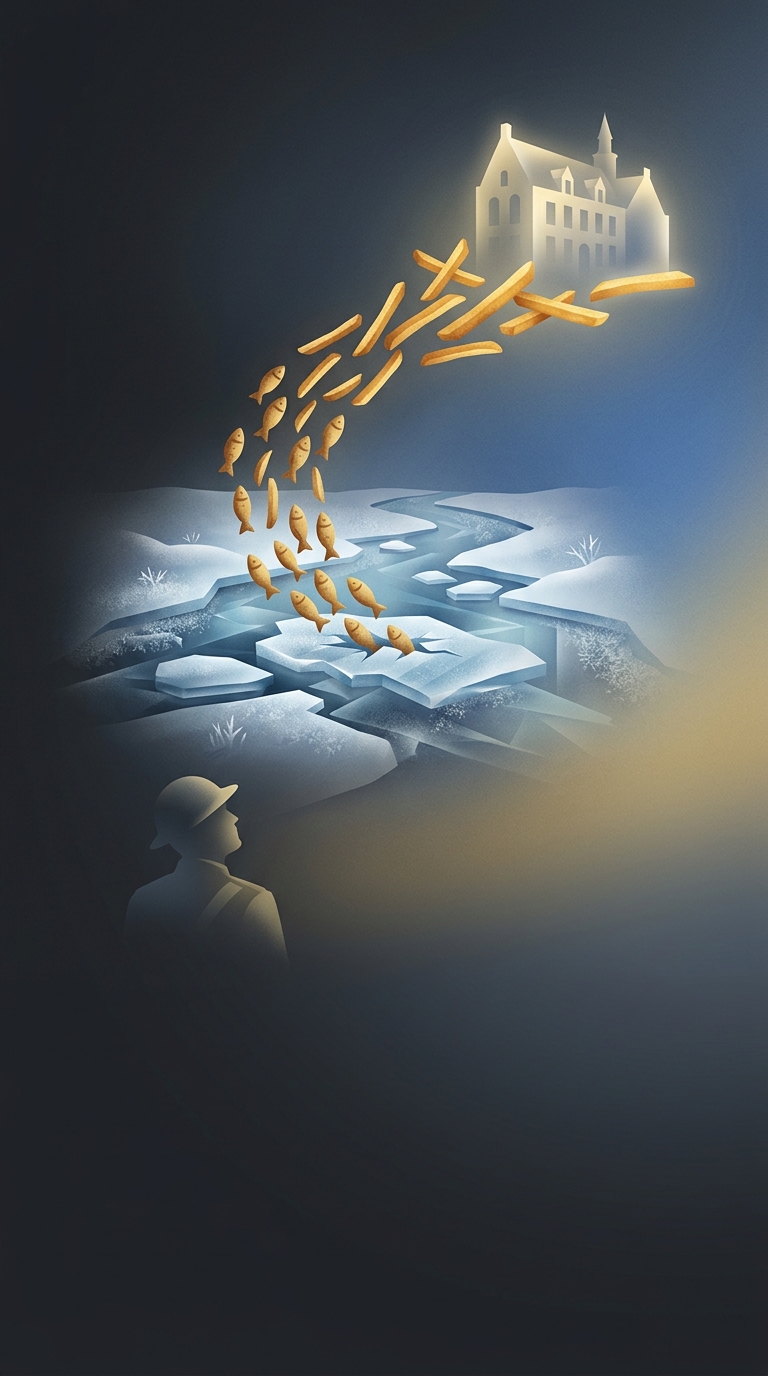
One Belgian origin story reaches back to 1680, when villagers supposedly cut potatoes into fish shapes and fried them after frozen rivers made small fish hard to catch. The tale links the food to a practical substitution: keep the familiar shape and cooking method, but use an ingredient available on land. It is best understood as a traditional explanation, rather than a precisely established account of the first serving.
That story also helps explain why the food is more than a side dish in Belgian life. A humble potato could stand in for a scarce catch, then become a familiar street food in its own right. When the soldiers’ name crossed the Atlantic, it carried the taste of a Belgian region under a French-sounding label—an everyday reminder that food names often record who encountered a dish, and in what language, as much as where it began.