How a spinning cloud became a planetary plane
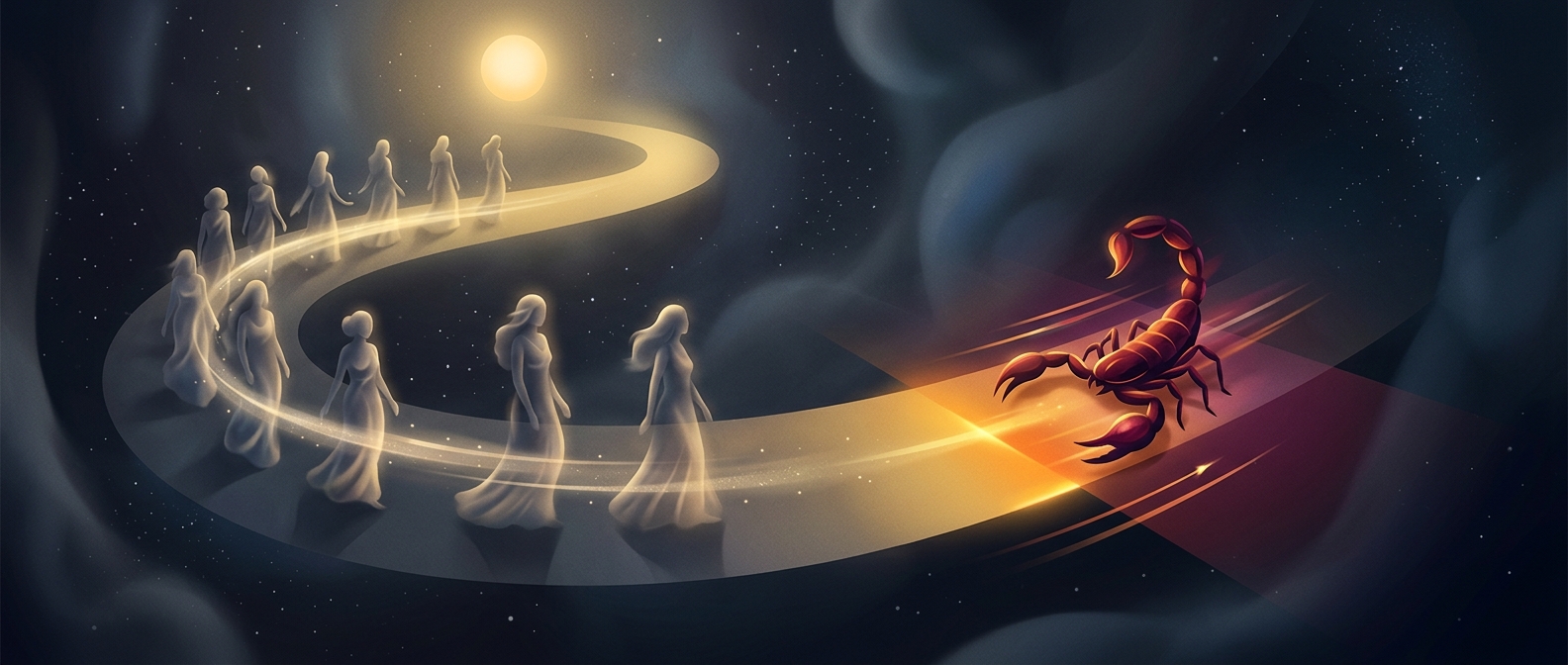
The solar system began as a vast cloud of gas and dust. As gravity pulled the cloud inward, its slight overall rotation sped up—much as a spinning skater turns faster when drawing in their arms. The material could not all fall straight toward the center, so it spread into a rotating disk around the young Sun.
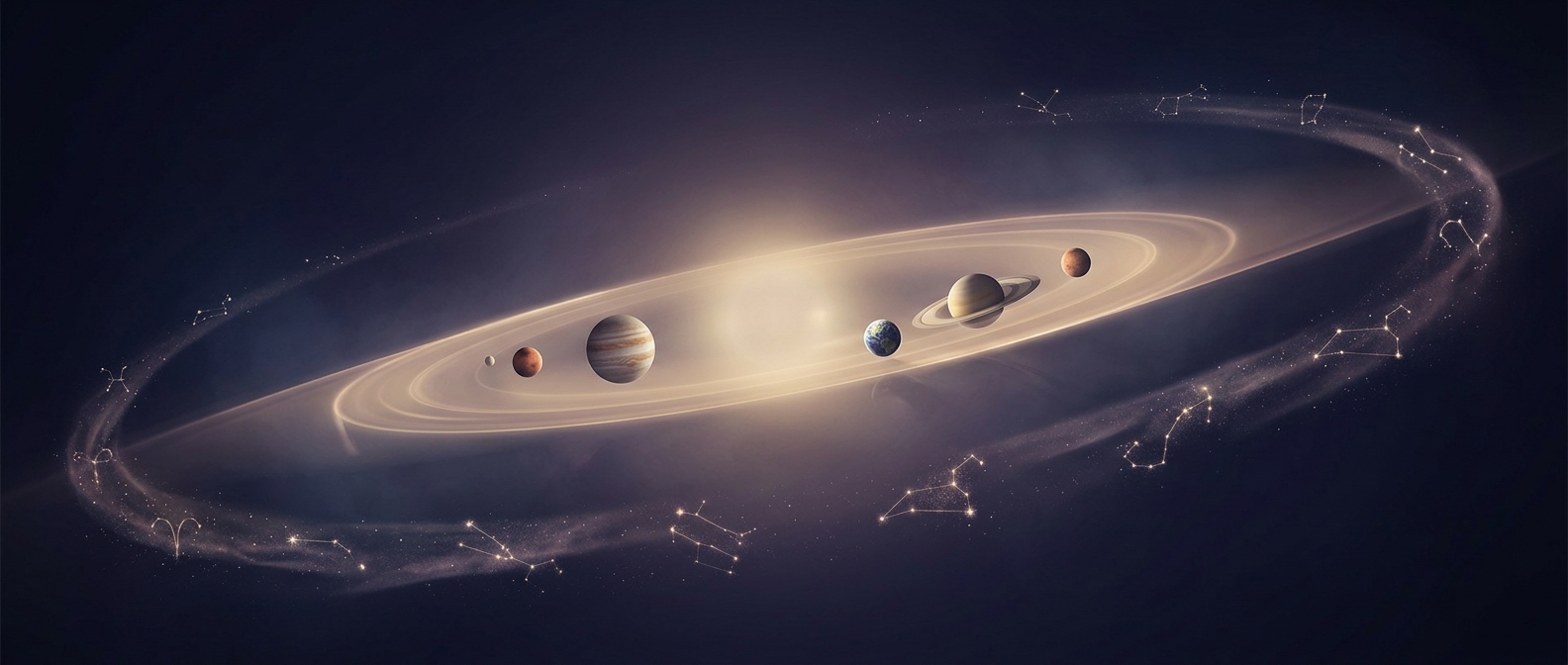
Dust grains and larger rocky bodies repeatedly collided within that disk. Those collisions tended to cancel motion that carried material far above or below the disk, while motion around the Sun persisted. Over time, the planets formed from material moving in broadly the same flattened arrangement. Their orbits are not perfectly aligned, but the shared disk left them close to one plane.
Why the planets appear in a strip of sky
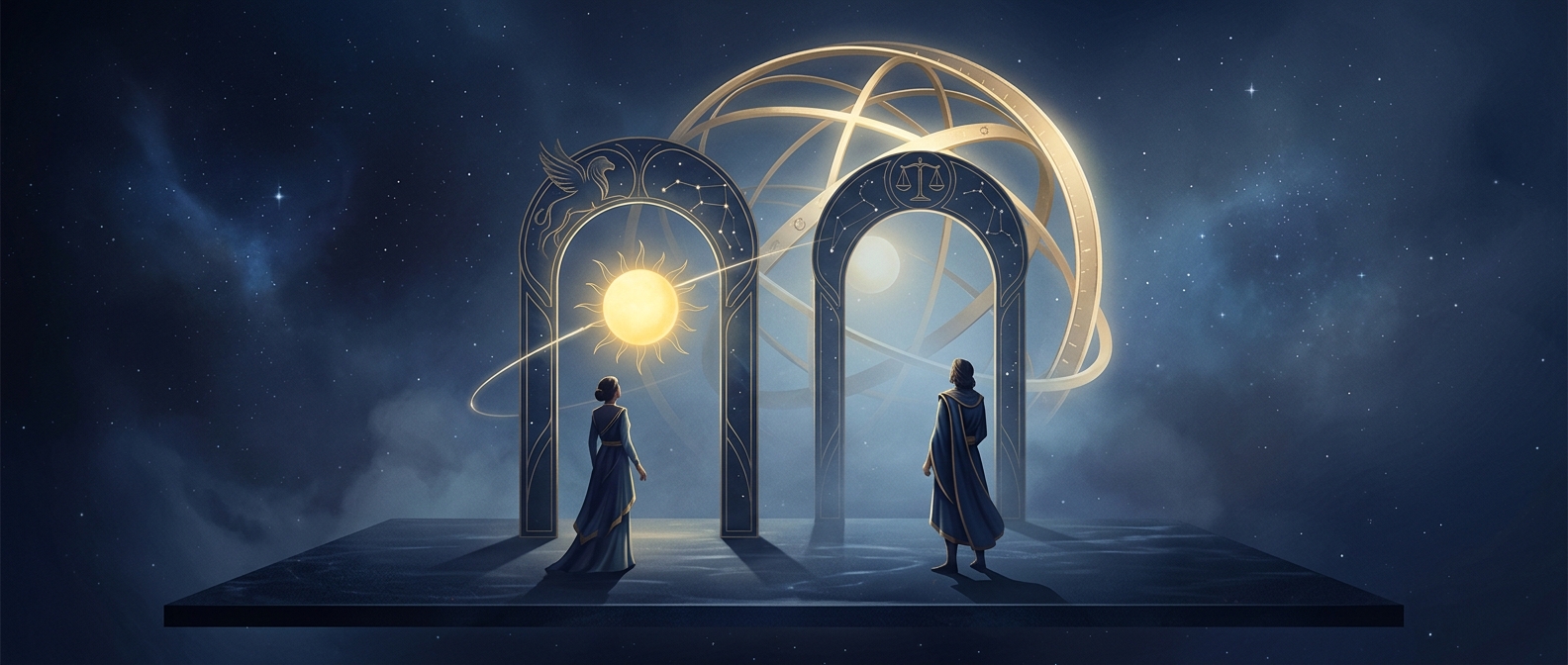
Earth sits in that same plane. Looking outward toward another planet is therefore much like looking across the disk rather than above or below it. The planets can appear at different distances from the Sun in the sky, but they stay near a common line called the ecliptic—the apparent path of the Sun across the sky over a year.
Constellations lie behind that line from our viewpoint. The zodiac is the band of constellations near the ecliptic, so the Sun and visible planets appear in or near it as they move across the sky. The constellations themselves did not form because of the planets; their alignment is a perspective effect of our location within a flattened solar system.
That geometry is why a planet-watcher can scan a relatively narrow stretch of sky instead of searching in every direction.