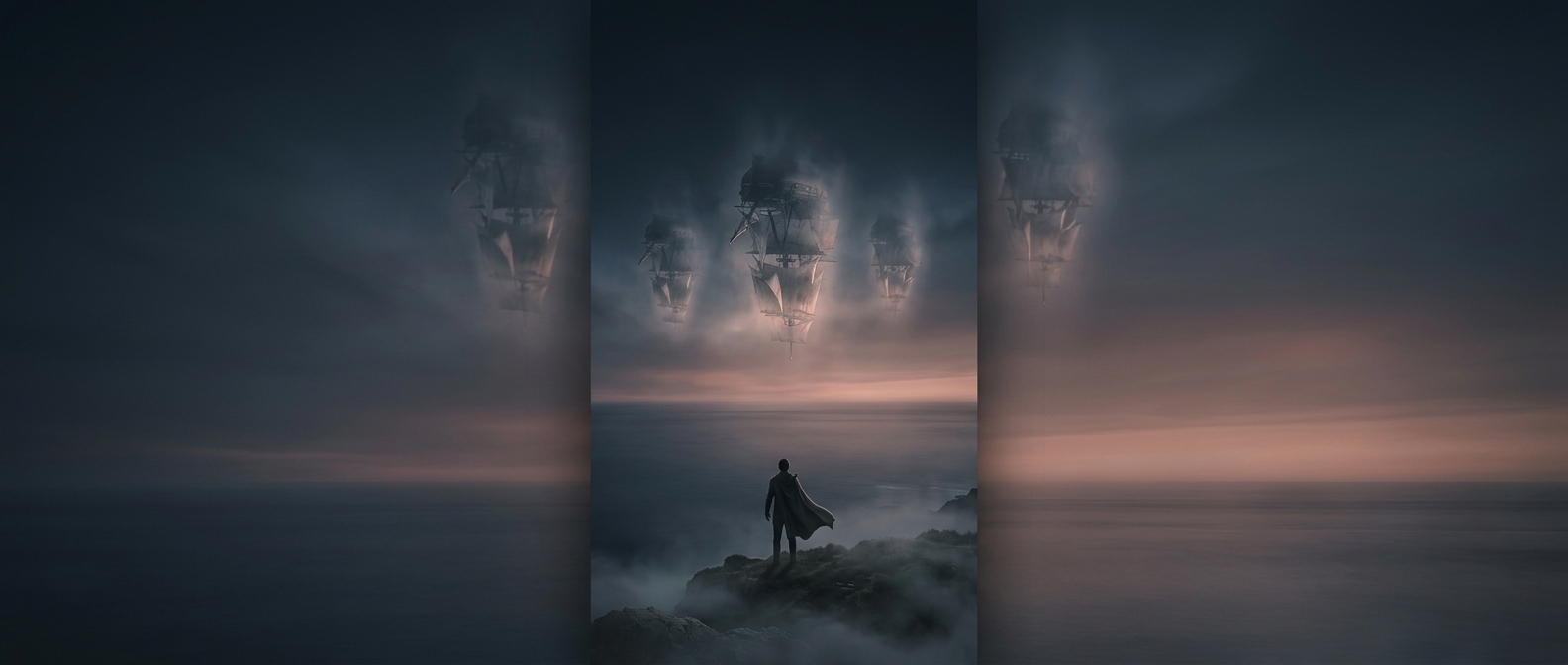
How a ship can appear above the sea
A floating-ship mirage is an optical effect, not an object suspended in the air. It happens when air above the ocean is arranged in layers at different temperatures. Often, a layer of cooler air lies beneath warmer air—a setup called a temperature inversion. Because light travels at slightly different speeds through air of different temperatures, it bends as it crosses those layers.
The atmosphere acts like a shifting lens
Light from a distant ship normally travels in a nearly straight path to an observer. In layered air, the path curves instead. That bend can bring light over the horizon into view, or shift the ship’s image upward, making it seem detached from the water. The eye and brain trace the arriving light back in a straight line, so the ship appears to be where the light seems to come from—not where the vessel actually is.
These mirages can also stretch or distort a ship, sometimes producing stacked or wavering images. The air layers are not perfectly stable, so small changes in temperature and wind can alter the bending. A vessel may seem to rise, sink, or change shape as the viewing conditions shift.
Why the illusion can look so convincing
The effect is strongest when the temperature layering bends light enough to reveal a distant object that would otherwise be hidden by Earth’s curvature. The ship is real; its apparent position is not. What looks like open sky beneath its hull is a visual consequence of light arriving along a curved route across the sea.