Why a Crystal Ball Can Start a Fire
A clear crystal ball can act like a lens. Sunlight entering its curved surface bends as it passes through the glass, and the ball’s shape can bring some of those rays together at a small, bright spot. This is focusing, not a special property of crystals: a water-filled sphere or another transparent, rounded object can do something similar.
The Bright Spot Is the Critical Part
Sunlight spreads across the ball, but at the focal point its energy is concentrated into a much smaller area. If that spot lands on a material that absorbs light—such as dark paper, dry leaves, or fabric—it can heat the material. Whether it actually catches fire depends on the sunlight, the ball’s size and shape, the distance to the target, and the target’s condition. A focused patch may warm an object without ever reaching ignition.
The ball does not create energy; it redirects sunlight. Moving the target away from the focal point, or blocking the light, removes the concentration and stops the heating effect.
A Fire Risk Hidden in Plain Sight
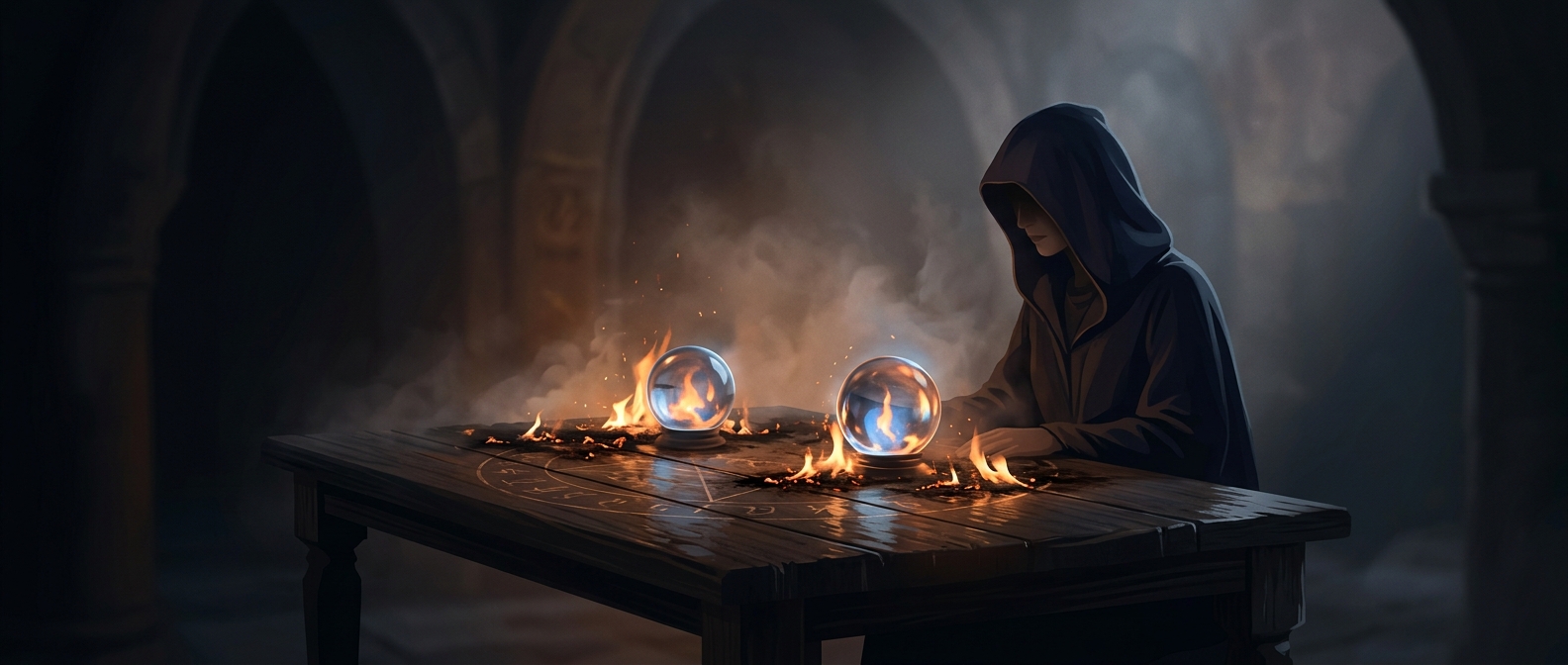
The same optical effect that makes a crystal ball look luminous can make it hazardous when left in direct sun. The focal spot may fall on a nearby combustible object even when the ball itself feels cool. Keeping transparent spheres out of direct sunlight—and away from curtains, paper, and other easily ignited materials—prevents the lens-like effect from concentrating sunlight where it can do harm.