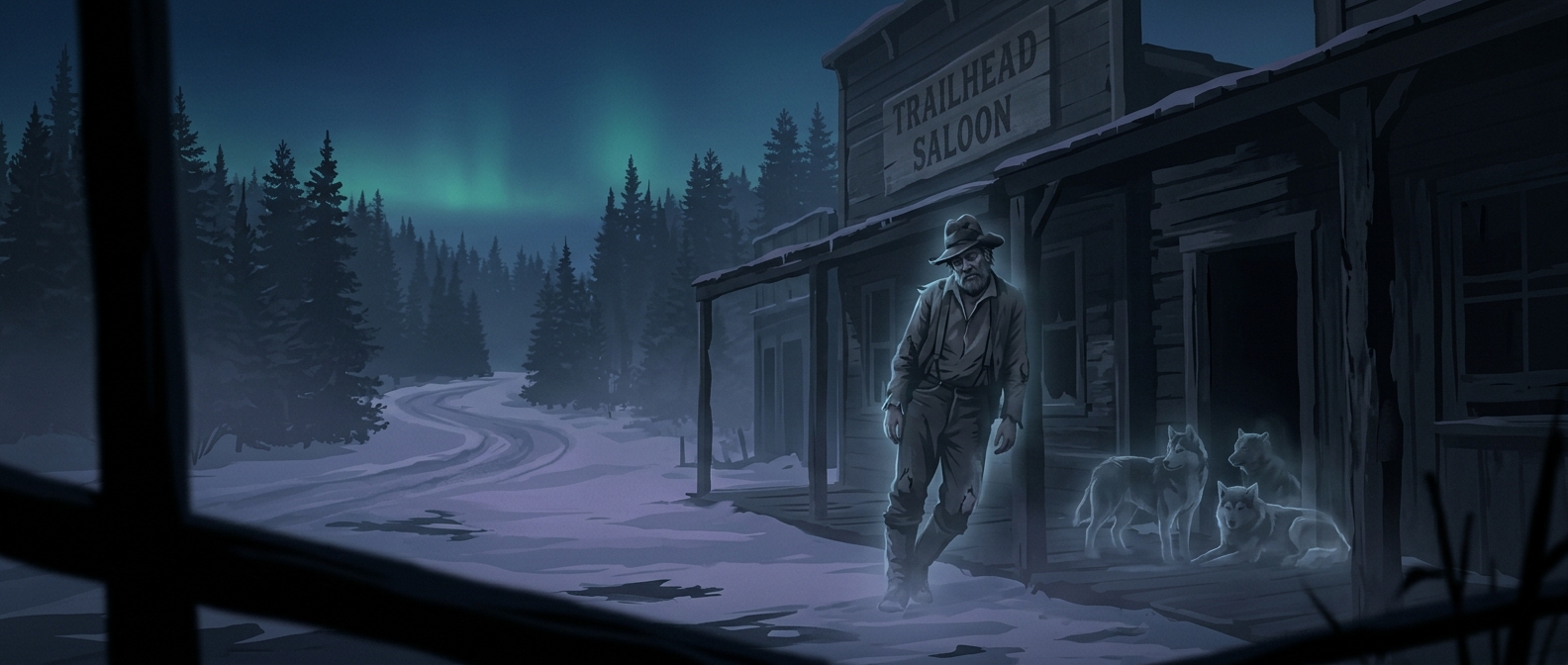
Knik’s old role lives on in a trail
Knik’s story is tied to a time when Alaska’s overland travel depended on sled dogs. Before roads and modern vehicles connected settlements, dog teams carried mail, supplies, and people across snowbound country. A busy stop on those routes could become a hub for mushers—one reason Knik earned its reputation as a center of dog mushing.
When transport routes shifted
Knik grew as a settlement in the Matanuska-Susitna region, but its importance faded as newer transport links and neighboring communities took over. When the routes people relied on changed, the businesses and services that had supported a mushing hub no longer had the same purpose. The settlement dwindled, leaving Knik largely abandoned.
A race through a changed landscape
The Iditarod keeps sled-dog travel visible in a very different era. Its route follows historic trails across Alaska, connecting communities and stretches of wilderness that once depended on dogs for practical transport. Passing through the old Knik area gives the race a local layer of history: mushers now travel a route associated with a settlement whose fortunes were once bound to the same kind of travel.
That contrast is what makes Knik more than a place name along the course. The race crosses a landscape where dog teams have shifted from essential transportation to a celebrated endurance sport, while the old settlement itself has nearly disappeared.